Ranging from movement workshops to beach cleanups, film screenings and lectures, to semester-length classes, we seek to educate, protect, and preserve our water systems though knowledge, action, and community empowerment.

Katie Pustizzi, MFA: Liquid Spine

On June 11, 2023 Liquid Spine completed their Global Water Dances Project. The project
culminated in a free, public performance in the East India Square Fountain in Salem, Massachusetts. The contemporary dance performance, informed by the research and work of Salem Sound Coastwatch, highlighted the needs of our coastlines. In particular, the performance embodied the following ideas/initiatives:

  1. The mitigation of effects on our coastlines due to erosion, rising sea levels, and climate change.
  2. The importance and impact of community, knowledge, and volunteering.
  3. The need for individual and communal action to preserve and protect coastal ecosystems and seaside towns now and forever.

The grant from The Art of Ecology enabled Liquid Spine (Katie Pustizzi, MFA) to hire a videographer to document the Global Water Dances performance. The video will be shared with Salem Sound Coastwatch, The City of Salem, Creative County of Essex, and beyond. The videoโ€™s continual presence will further the performanceโ€™s ecological call to action and message. View the video below on Instagram.

In March, 2023, Katie Pustizzi and Marissa (The Art of Ecology) chatted about the Liquid Spine project, the importance of water conservation, and how the artistic form of dance and movement can be used to increase environmental literacy.

Support Future Conservation Mini-Grants

The Art of Ecology strives to set an example. A portion of all art proceeds benefits conservation efforts by environmental groups (in the United States). Previously, it was a dollar to this group or two dollars to that group. This adds up, but isn’t as impactful as it could be. In 2021, The Art of Ecology started allocating these funds into a Conservation Mini-Grant for people to make the world a greener place in a meaningful way. By shopping Local/Small/Woman-Owned, you can be making a positive difference in the health of our planet!

camouflaged yellow-bellied sapsucker juvenile

Throughout the year, we can hear the resounding โ€œRap-tap-tappingโ€ of woodpeckers slamming their chisel-like beaks into the sides of trees, so why might we see more of them in autumn and winter?

The primary reason is because there is a lack of foliage to get in the way of our sight! Many of our local woodpeckers are small and can blend in with the tree bark, making them difficult to see, even if we can hear them really well. For example, the juvenile Yellow-bellied Sapsucker (seen in the image to the side here) has such incredible camouflage that if they are flush with the tree, it is so difficult to see them until they move!

So what woodpeckers might we see in this area?

Downy woodpeckers specialize in hammering away at trees in search of insects that bore into the wood, however they can also be seen pecking at black oil sunflower seeds.

Downy Woodpecker

This is the smallest of our local woodpeckers. It can be distinguished from the Hairy Woodpecker by its smaller size and short, stubby beak, otherwise they look very similar. The males have a red patch on the back of their heads, while the females lack that bright color. They primarily eat beetle larvae and caterpillars, however a small portion of their diet is herbivorous. They can be seen at feeders, picking at black oil sunflower seeds, suet, or berries.ย ย 

yellow-bellied sapsucker

Yellow-bellied Sapsucker

As mentioned earlier, this bird has incredible camouflage! The adults are primarily black and white with a red patch on their heads, although the males do have an extra red patch on their necks as well. The juveniles are brownish in color, which makes the checkered pattern on their backs difficult to see when they are perched on furrowed bark.

While they are classified as woodpeckers, they donโ€™t go after insects like most of the other local woodpeckers do. These birds create rows of tiny, shallow holes in tree bark which allows the sap to flow freely and they will lick up that sugary sap. Think of these wounds as paper cuts that we might get – easy to heal, but we still might bleed from them!

The Redbellied woodpecker loves hammering away at trees in search of insects that bore into the wood.

Red-bellied Woodpecker

This medium sized woodpecker has a vibrant red cap, although the femaleโ€™s red head doesnโ€™t extend to her beak like it does in the maleโ€™s. Their chests, despite the name, are primarily a whitish-cream color, but you can see a smidgen of rusty-cinnamon color there too! They are often seen in the tops of trees, foraging for spiders. They do eat plenty of nuts, however! The Red-bellied woodpecker can often be found picking apart pinecones in search of seeds, visiting peanut feeders, and cracking open acorns. While not super common, these birds can be vicious predators too, hunting small lizards and fish, as well as nesting birds!

Pileated Woodpecker female

Pileated Woodpecker

This is our largest woodpecker, with a wingspan of roughly 30 inches! They require woodland habitat, and rarely visit feeders, so these can be harder to spot. When hiking, search dead and dying trees for rectangular holes, which are uniquely made by the Pileated Woodpecker.ย  Contrary to what we might think this large birdโ€™s favorite insect food might be, they really love tiny ants! They can be seen foraging for a long period of time in one tree, slurping out termites and Carpenter Ants.

Protecting Woodpeckers

Most of our native woodpecker species require dead trees and cavities as nesting sites. Do you have a dead tree in your yard or community that needs to come down for the safety of buildings, cars, power lines, or people? Consider leaving a wildlife snag. This is a dead tree that has been specifically cut to reduce the number of limbs that could fall and cause damage during storms or high winds. Usually, 15-25 feet of trunk is left behind to provide habitat for wildlife and to be decomposed naturally. 

Another way to help them is to provide seed, nut, mealworm, and suet feeders in the late fall to early winter. Many insects have become dormant, so there is an increase in competition for food resources. You will fall in love with the biodiversity of birds that come to these sorts of feeders this time of year! 

Finally, shop wildlife and woodpecker merch from The Art of Ecology! Stickers are perfect for sparking conversations about ecology and the importance of woodland biodiversity. Plus, a portion of the proceeds benefits wildlife conservation efforts.

northern flicker
downy woodpecker
white breasted nuthatch
Left to Right: Red Fox, White-tailed Deer & jaw bone, Emu, Box Turtle

It’s spooky season! It may be spooky to find a skull or animal bones in the woods while hiking, however this decomposition process is an important part of the circle of life.

Trigger Warning – the next section of the post addresses death. Other autumnal/Halloween posts can be found below if you need to move on.

Circle of Life & Nutrient Cycling

Death is an important part of the natural world. As a plant or animal dies, it goes through the decomposition process. Carrion eaters, such as vultures, consume the flesh of recently dead animals. The remaining bones are then further broken down by fungi, small insects, and bacteria over time. The nutrients from the entire body are cycled back into the ecosystem. The vulture will eventually excrete its waste, and the fungi or beetles that eat the bones will die and feed the soil. 

The soil, now rich in nutrients in the organic layer, gets mixed and stirred by critters like moles, worms, and other microbes. This mixing allows plants to take up nutrients easily. Once the plants have the nutrients they need, they can produce seeds that germinate and provide food resources for more animals! The nutrients travel through the food web, and as the animals expire, those nutrients get cycled once again. Itโ€™s a very efficient system!

The process of breaking down bones, though, takes a while. Chances are, if you come across remnants of animals in the woods, youโ€™ll be left with bones, and the muscle and flesh will have been picked clean. Once you’ve found that set of bones on your adventures, did you know that you can find out a lot about that animal just by examining the skull?

How to ID Wildlife Skulls

First, examine the eye orbitals. Where are they located? If theyโ€™re on the front of the skull, youโ€™ve found a predator. If they are on the sides of the skull, youโ€™ve found a prey species. 

Next, examine the top of the skull. Is there a large line, or ridge down the center of the skull? If so, then youโ€™ve found an animal who really loves to chew and bite! This ridge is called the Sagittal Crest and is where the jaw muscles attach. The larger the crest, the more the animal needs strong attachment points. So we know that the animal was a voracious hunter. 

If not, move on to the teeth (really helpful for identifying mammals). Is the jaw still intact, or are teeth left in the top jaw? Prominent incisors with small canines show that the animal was most likely a herbivore that wouldnโ€™t need large canines to hunt. Herbivores will also have large, plate-like premolars and molars for grinding down plant matter. Large canine teeth (looks like โ€œfangsโ€) mean that the animal needed to bite and catch onto prey. Those hunters will have premolars on the top and bottom jaws that match up like a pair of scissors. These are called Carnassial Pairs. Those teeth allow the animal to shear through meat.

Now, if you find an animal whose incisors are extremely large compared to the rest of the teeth, then you most likely have a member of the rodent family. These ever-growing incisors are made to gnaw, which makes chewing through hard nuts and seeds easy!ย 

spooky season skull diagram

More ID Methods & Tips

There are so many other things to examine to ID the animal further, like the presence/position of the auditory bulla, rostrum size and shape, length of skull, etcโ€ฆ Below are some fun facts that might help you immediately identify the skull:

*NOT a skunk skull, but a raccoon! The skunk is winder and the rostrum (or nose part) is blunter than the raccoon. It will have similar incisors though.
  1. Rabbit skulls have sides that look like lace, rather than solid bone.
  2. Turtles have beaks! Their jaws will come together at a point and have no teeth.
  3. Bird skulls are very lightweight. Owls have extremely large eye orbitals compared to the size of the skull, which allows for great nocturnal vision, but limited eye movement since there isnโ€™t room in the skull for muscles!
  4. Here in Pennsylvania, if you find a skull with antlers, youโ€™ve either found a White-tailed Deer or Elk skull. The primary difference between those two is the size. Elks are much larger than deer!
  5. White-tailed deer do not have incisors on their top jaw, only the bottom!

Celebrate spooky season with my Skull Sticker Set! A portion of the proceeds benefits wildlife conservation efforts.

This is an example of an ecotone, where a forest butts up against a field.

In the ecotoneโ€”a transition area between two habitatsโ€”that is the entire region where I live (Southeastern PA), where nature butts up against suburbia, we can expect to have more engagements with wildlife than our city cousins.

Some encounters may be welcome, like watching a cottontail rabbit romping past or a bald eagle ascend overhead, while others may feel more intimidating, like an evening run-in with our largest local predator, the Eastern Coyote.

Eastern Coyotes stay together as families; with a monogamous pair and their offspring hunting and living together in a single territory. Occasionally, coyotes in other territories will help other groups hunt for food during April-late May when litters of 4-6 are born and there are more mouths to feed. Once the pups are a few months old, the coyotes move to a new den. When the pups are 6-8 months old, they may leave their family unit in search of a new territory or stick around to help raise their new, younger siblings for a short time. 

Many believe that the coyote population here is on the rise as there may be more human-coyote encounters, this may not actually be the case. As the human population increases and land development continues and people are out and about more, coyotes that were once hidden become visible, or audible! 

As a primarily nocturnal animal, we may not see a coyote, however many may hear them! During a hunt, coyotes display remarkable communication skills that range from yips to howls. Since coyotes hunt solitarily or as a group, communication and teamwork between the family is key. The calls instruct and direct family members during a hunt, or call individuals back for the night. In areas where territory lines are close, coyotes will also bark to warn away potential trespassers. 

At first glance, a coyote may seem fierce in its role as a predator, but we can take steps to help us live harmoniously with them rather than in fear of them. For starters, coyotes play an active role in wildlife management. While they canโ€™t fully manage the white-tail deer population in southeastern Pennsylvania, for example, without them human-deer conflicts in the region, already plentiful, would only be exacerbated.

One of my Illustrations overlaid on my photo to show the life history and characteristics of the Eastern Coyote.

Coyotes would much rather slink away from us than risk a confrontation. If you are being followed by a coyote and feel uneasy, let it know who is dominant. By standing tall, making a lot of noise, you can communicate that you are not, in fact, potential prey. According to the Humane Society, you are more likely to be injured by an errant flying champagne cork than by a coyote. Unfortunately, to these predators, small dogs, cats, and farm animals such as sheep, goats, and chickens are easy targets, so keeping your pets inside or supervised while out in the evenings can keep them safe.

Another strong deterrent: Make sure your backyard does not present as coyote-friendly territory. Coyotes are opportunistic, meaning they will eat whatever is left out for them. In this ecotone, snacks are in abundance and wild competitors are few. With food from trash, leftover scraps in restaurant dumpsters, bird feeders, and outdoor pet food, coyotes in the region are in food heaven. Removing outdoor pet food and keeping trash, especially food waste, properly contained can help prevent your backyard from becoming a nighttime coyote playground.

Aaron Facka, a furbearer biologist with the Pennsylvania Game Commission, says coyotes are managed not based on population, but on their impact on human society. As incident reports of agricultural damage and complaints of nuisance coyotes are made, management practices are put into play. Facka recommends calling the Southeast Region of the Pennsylvania Game Commission, at (717) 710-8911, which will dispatch a local warden to help. New Jersey residents can call the NJ Fish & Wildlife Divisionโ€™s Wildlife Services at (908) 735-8793.

Once we learn more about the role that coyotes play in the ecosystem and better understand their behavior, we can feel more at ease living side by side with these incredible members of the natural community.

September marks National Mushroom Month since many fungi start appearing this time of year. Whether you’re looking for mushrooms to eat, to use for making botanical dye, or just because you plain old appreciate them and find them fascinating, September is a great time to search for fungus. As the temperature drops and the late summer rains create a moist environment, perfect for growing fungi.

To celebrate Mushroom Month, I participated in the #FallFungiMadness challenge on Instagram, put on by Sue Fields and Tiny Kate Creates. Each scientific illustration tells a story of the fungal species, from highlighting their role as decomposers, to why the fungus is the color it is, to how to distinguish between edible fungi and their toxic look-alikes! What I love the most about the challenge is that with each illustration I do, I grow in my understanding of fungi and I get to see what about that species other artists find fascinating and choose to highlight.

Below, you’ll get to see some of my pieces from the #FallFungiChallenge!

Wine Cap (Stropharia sp.)

These saprophytic, edible mushrooms rely on already dead organic matter, which makes mulch garden beds, bark chip playgrounds, and natural trails a perfect spot to find these wine-colored mushrooms. Keep your eye out for these edible mushrooms growing in March-May (depending on the yearโ€™s climate) here in Pennsylvania.

As many mushrooms age, they change color. This can be attributed to them trying to attract animals as spore dispersers, staying warm, or keeping moist. These Wine Caps are no different! They start out wine-red, then fade to a tannish-gray as they age. 

Chanterelles (Cantharellus sp.)

Chanterelles are a testament to the importance of being able to distinguish between edible mushrooms and their toxic look-alikes. A false Chanterelle may look similar at first, however it has some important differences. First, they have hollow stipes. Second, the gills may be more distinct, rather than ridged, like the true Chanterelles. Some mushrooms also have a distinct scent, and the Chanterelle is one of them! These mushrooms have a slightly fruity scent, which can help you distinguish between them and other similar looking species.

Chicken of the Woods (Laetiporus sp.)

While many fungi do have toxic look-alikes and can make foraging difficult for beginners, the Chicken of the Woods is a great mushroom to start your foraging journey with! These are distinct mushrooms, with very few, if any look-alikes. Despite being both saprophytic and parasitic, meaning that they do kill their host tree and feed on the dead wood later, they are so nutritious for humans! They range in color from a bright yellow to deep, almost reddish orange and always grow in a thick shelf form on the lower portion of the trunks of trees. If you get the chance, take a look at the bottom side of the shelf fungus. The mushrooms should have pores, rather than gills, and no stem, which makes them distinct. This being said, be very careful harvesting any wild mushrooms – do not ingest without being sure of its identity. Bring a field guide or mycologist with you on your foraging journey.

Death Cap (Amanita phalloides)

Universal Veil Remnants are some iconic features of Amanita fungi. The bulbous base seen here is called the volva, and is the bottom remnant of the veil. This veil protects the mushroom as it grows. When the mushroom gets big enough, the top and bottom portion of the veil split apart. Some Amanita mushrooms still have remnants of the veil on the top of their cap (those white spots on the bright red Fly Agaric), some have skirts around the stipe right underneath the cap, but all Amanitas, including the Death Cap, have that bulbous volva.ย 

As the name suggests, it is one of the deadliest mushrooms in the world, destroying the kidney and liver cells of those unfortunate enough to eat them. Understanding how to identify mushroom spores, shape & color at various life stages, and anatomy is so integral to get their ID correct. 

Witches Hat (Hygrocybe conica)

Waxcaps are a group of fungi that, as the name suggests, have slippery caps. This can help the fungus spread their spores. The Witches Hat, named for its shape and its eventual color change to black over time, is also a wax cap. When young, the mushroom starts out pointy and vibrant yellow-orange. When the mushroom gets damaged, bruising occurs and the damaged portion turns black rather quickly. As the mushroom naturally ages it fades to a greenish-gray, and then to black.

More Things Fungi!

Do you love these fungi as much as I do? While I don’t recommend foraging for fungi unless you are beyond 100% sure of its identity (without a shadow of a doubt….), there are some other great ways to get your fill of fungi! You can find some mushroom prints in my shop, as well as take my online botanical illustration course “Focus on Fungi”! In that 50 minute course, you’ll learn more about mushroom anatomy and fungi taxonomy, as well as some helpful illustration tips for drawing fungi. Plus, find these illustrations and others from previous FallFungi Challenges in sticker format.ย  Supporting The Art of Ecology through the online shop or by becoming a Patron at any tier on Patreon can help keep educational content coming!

I always love seeing the beauty of butterflies this time of year as they flit around from flower to flower! I love the vibrant orange of the Monarchs and Viceroys, the yellow of the Tiger Swallowtails, and the blue-ish spots of the Red-Spotted Purple. Colorful butterfly wings also have fascinating anatomy that helps them fly and function!

Wing Scales

Butterflies have 4 wings – two forewings and two hindwings that connect to the thorax. Under the microscope, we can clearly see that each butterfly wing is made of thousands of tiny scales made of chitin. The individual scales have their own color and make up a mosaic-like pattern of the wing. 


Color is super important for butterflies – itโ€™s not just for decoration! The orange and black of the Monarch butterfly signals to potential predators that they are toxic. This is called โ€œAposematic Coloration”. The Monarch caterpillar ingests the toxic milkweed plant and keeps those toxins in its body as it develops into an adult. Birds, reptiles, or other insects know to stay away if they want to stay healthy! The Viceroy butterfly also is orange and black, however it is using Mimicry. The Viceroy is not toxic, but would like predators to think that it is, and confuse it with the Monarch! A few butterflies use camouflage to blend in with their surroundings to avoid predation. Some others have eye spots on their wings that look like large eyes. This confuses and scares predators into thinking the butterfly is much larger or more dangerous than it is, so they may avoid those butterflies.

Solar Powered Flight

Another role of these tiny scales is thermoregulation. Butterflies are poikilotherms, meaning that they need to rely on external heat sources in order to warm their bodies. Humans warm their own bodies through metabolism and can stay warm even in cold conditions. The scales on a butterflyโ€™s wings can absorb the heat and light of the sun, keeping them warm enough to fly. When itโ€™s extremely hot out, the scales can also reflect light, keeping them cool.

Monarch butterfly wing under the microscope 200x

Touching Butterfly Wings

We often hear not to touch butterfly wings, as this can damage them. While this is true, touching a wing will not mean immediate destruction of the butterfly. When a butterfly lands on you or if you touch one as you observe it, you may see several scales come off the wing. The butterfly can still fly and survive with tears, rips, or missing scales, so donโ€™t worry if you accidentally bump it. Some butterflies, like swallowtails, have tail-like projections that distract predators and can be torn off without impacting their flight!

Problems start occurring when too much damage happens. Wings, as they are damaged, cannot be repaired, so being gentle is very important! If too many scales are lost, the butterfly loses a lot of its ability to thermoregulate properly. If the wings are torn too much, it impacts flight patterns and prevents them from escaping predators. Itโ€™s best to avoid touching their wings aggressively and simply watch them as they land on your finger or flower.

Butterfly Conservation

Do you love butterflies AND want to protect them? Check out my sustainable crafts for pollinators blog post, or snag some butterfly sticker merch! A portion of all proceeds benefit wildlife conservation and habitat preservation efforts. This ensures that animals, like the beautiful butterfly, thrive for years to come.

Planting flowers in a variety of colors will help attract different things. For instance, hummingbirds like red, while many butterflies and moths like purple.

Starting in July or August, you might hear some loud screeching or buzzing from the treetops. Donโ€™t be scared! The cicadas, endemic to North America, have emerged and the adults are trying to attract mates through their โ€œbeautifulโ€ screaming.ย 

What IS a Cicada?!

Featuring: Brood X’s large amber compound eyes and three ocelli (eye spots)

Cicadas are true bugs, meaning that they have three body parts, three pairs of legs, two antennae, compound eyes, and an exoskeleton. Cicadas actually are very well known for their shell, or exoskeleton! Have you ever seen a brown cicada shell clinging to tree bark, a fence post, or a wooden telephone pole? Those brown shells are the remnants of the young cicada, also called a nymph. The crack down the back of the shell is where the adult emerged from, ready to take flight into the trees in search of mates and for places in the bark to lay their eggs.

After the cicada eggs hatch, the nymph wiggles down to the ground and burrows into the soil in search of delicious fluids to drink. They have sucking mouthparts, so they will ingest liquids from plant roots. In the case of annual cicadas, nymphs emerge from the ground in the summer, climb a few feet up a tree or fence post, and crack open to reveal the adult. In the case of periodical cicadas, such as the Brood X Cicadas that emerged back in 2021, the nymphs emerge from the ground every 13 or 17 years.ย 

Incomplete Vs. Complete Metamorphosis

Unlike butterflies, but similarly to dragonflies, Cicadas undergo incomplete metamorphosis. This means that instead of having 4 distinct life stages, the cicadas and dragonflies only have 3. Many insects have the egg, larvae, pupae, and adult life stages, however cicadas do not pupate. They go straight from being the larvae (called nymph for those that undergo incomplete metamorphosis) to the adult stage. There are no chrysalis or cocoons for cicadas!

Sounds of Summer

Once they are adults, they start looking for mates. The males will screech from the tops of the trees in hopes of attracting a female! They have two plates that cover muscles and ribs on the underside of their abdomen. When the muscles expand and contract, air is allowed to flow through and the plates themselves move inward, creating a clicking sound, or the โ€œRee-er, ree-er, ree-er!!!โ€ noise that we hear.ย Listen to the songs of cicadas, then head outside in the summer to see if you can identify the species of cicada just by the sound they produce! Itโ€™s much easier to hear them than to see them since they are often so high up.

Support Cicada Populations

While many might be concerned about cicadas damaging their trees, for the most part only very young or already stressed/sick trees will be overly damaged by cicadas. These otherwise harmless insects can be such a joy to observe in the summer and support many other wildlife populations, such as birds, larger insects (such as the Cicada Killer Wasp), and herps who can catch and feed on them. In order to conserve and protect their populations, try the following:

  1. Turn off lights at night
  2. Plant native trees such as oaks, maples, and willow trees for the adults to drink from
  3. Plant native grasses and shrubs for the nymphs to drink from

Another way to protect them is through Cicada and other insect merch! A portion of all The Art of Ecology merch proceeds benefits wildlife conservation and habitat preservation efforts. Share your love of these creatures and the ecosystems they thrive in through stickers, books, t-shirts, and more.

Flowers are such incredible organisms! I love the diversity of shape, color, and scents that can be found not just globally, but even regionally. But what is the point of a flower? Why care about flower morphology? Is it just something pretty that feeds pollinators nectar?

Pollination Purpose

Well, yes. Pollinators do love nectar – that sweet liquid that flowers house, however a flowerโ€™s purpose is to be attractive to their unique pollinator so that the pollinator visits, stays long enough to be coated in pollen grains that then get passed on to another flower of the same species. The pollen grains get transferred to the Pistil, or the female reproductive structure of a flower. The pollen travels down the tube-shaped structure through the pollen tube until it fertilizes the future seed in the ovary and ovules. The purpose of a flower is ultimately to help the plant pass on its genetics to future generations!

Below are some images taken with my portable microscope camera. These images feature the flower morphology of 6 spring plants.

In order to be as efficient as possible, the plant knows what their pollinators are attracted to and produces pigments that are eye-catching or aromatic oils that are pungent for smell-focused creatures. If the pollinator can visit the flower as soon as possible after the flower blooms, then the chances of the pollen traveling to the next flower and fertilizing new seeds increases. 

Wind Pollination

Some flowers, though, arenโ€™t insect or bird pollinated. Others can be pollinated by wind. These plants may have flowers that look less exciting or vibrant than animal pollinated flowers. If they donโ€™t need to use the energy to create stunning or pungent flowers, then why bother?! Wind pollinated flowers are often very small and inconspicuous. Humans are often allergic to these since the pollen is small enough to get caught on a breeze and travel up our noses.

Double-Blooming Flower Morphology

double blooming bloodroot
Double blooming Bloodroot (Sanguinaria canadensis)

Garden flowers are often manipulated versions of their natural counterparts. Horticulturalists have been able to breed certain species to lack reproductive structures in favor of extra petals. In fact, whatโ€™s happening is that those many reproductive structures have actually mutated into just looking like petals! Those extra petals are called โ€œPetaloid-structuresโ€.

double blooming day lily

In the double-blooming daylily image, you can even see how some of the extra “petals” end in what looks like a mutated anther! Fascinating, right?!

These cultivars are absolutely gorgeous, however provide very little resources to native pollinator species since those vital structures are absent. As an ecological gardener, I love having these beautiful flowers in my garden, however I limit exotics and double-blooming cultivars of native species to 30% or less of my garden plants. I heavily favor native plants that serve important ecosystem roles.

Next time you have the chance to observe a flower up close, see if you can identify their various anatomical structures! You will never look at a flower the same way again.


Do you love flowers and all things nature? Check out my merch to get more nature into your life! Subscribe to my Patreon for exclusive monthly coloring pages, nature-art projects, and sticker merch. A portion of all proceeds benefits wildlife conservation and habitat preservation efforts.

Celebrate National Pollinator Month with some all-natural and sustainable crafts, designed specifically for native pollinators!  Below are some ideas that can support butterfly populations, protect declining bee populations, and increase the amount of pollinator-friendly native plants found in your community. 

This is part 4 of my “Eco-friendly” & sustainable art projects. Find more projects and sustainable activities below!

Butterfly Puddler

Did you know that butterflies drink more than nectar from flowers? Males also make gifts of minerals and salts to females, which the females use to enhance caterpillar egg development. The butterflies will โ€œpuddleโ€, or drink from water that pools on rocks, dirt trails, or sidewalks to collect these minerals. By making a butterfly puddler in your garden, you can encourage them to visit the flowers AND the puddler for their nutrients!

Methods:

  1. Punch three evenly spaced holes in a plastic pot tray.
  2. Use string or ribbon to tie knots towards the base of the tray, and then gather the three strings at the top and tie a knot around an O ring or hook for hanging.
  3. Hang up on a tree, balcony edge space, or display stand outside near your garden space.
  4. Add rotten fruit (the decomposition process releases more liquid and sugars, making drinking easier), small stones, and a bit of water. You do not want to have the water be burying anything, since butterflies will need a dry space to land and drink from.
  5. Watch the butterflies come! You may need to clean the puddler to prevent mold and bacteria growth if you have added the rotten fruit.  Fruit can include watermelon, apples, banana peels, oranges and more!

Native Plant Seed Balls

Many pollinators, such as our native bee populations, have been in decline due to a lack of habitat. By adding more native plants to our local ecosystems, we can help revitalize these populations!

kids make native seed balls

Methods:

  1. Mix clay, potting soil, and water together until the mixture can be rolled into a ball without crumbling or feeling wet/slimy. This is a messy process, so itโ€™s best done outside or over a tarp!
  2. Select your native seeds. Consider where you want the plants to grow and the light/soil/water that is in that area. Choose plants that will thrive in that area. Seed packets will provide you with all of the growth information. Some wonderful Eastern US native plants for bees include: Coneflower, Common Milkweed, Sunflowers, Golden Alexander, Goldenrod, Joe Pye Weed, and Spotted Bee Balm.
  3. Roll 3-5 seeds into your seed balls. Each seed ball should be ยฝโ€ in diameter. Mix and match, or keep the seeds all the same!
  4. Throw outside in the area of your choice! Each seed ball has itโ€™s own little substrate packet, so they donโ€™t need to be dug into the earth.
  5. Keep in mind that some seeds need a winterโ€™s cold weather to germinate, so you may not see any growth until future seasons, but itโ€™s a fun project to do year round and watch the native plants come back to your community.

Wildflower Seed Paper

Similarly to seed balls, this seed paper can be used, then composted or planted to grow native plants! This paper is perfect for invitations, art projects, or as scrap paper that can be thrown out later (in the soil!).

Wildflower seed paper sustainable crafts for pollinators

Methods:

  1. Gather LOTS of recycled paper, old cardboard or compressed paper egg cartons, old newspapers, old scrap paper, or old construction paper.
  2. Rip the paper products to shreds, and place into a blender. The smaller the better!
  3. Fill a blender ยฝ way with the torn paper and add water to the top line. Blend into a very fine pulp.
  4. Pour the pulp into a large bowl and add a native plant seed packet into the bowl. Mix thoroughly with your hands or a spoon. 
  5. Pour into a strainer or coffee filter to remove excess water. You can reuse the drained off water to water the garden!
  6. Cover a large board (cutting boards work) with a towel and layer the pulp on the top of the towel. You can use a rolling pin to make the pulp as even as possible. Cover with another towel.
  7. Set aside to dry, then when dry, cut or tear into shapes and use!
Looking for Pre-Made Nature Art? A portion of all proceeds from my shop benefits wildlife conservation and habitat preservation efforts.

This migratory bird art challenge was created by Jen Goodhue on instagram for artists to join in, learning about the incredible migrations that birds found all over the world undertake, as well as some of the challenges that these birds face. So many artists participate in these art challenges, and getting to see what other artists create is a great way to see how peopleโ€™s perspectives and creative outlets can spark conversations about biodiversity, habitat loss, and bird conservation.

Below are some of my #MigratoryMay illustrations, and some facts about the species that I got to learn about during this month.ย 

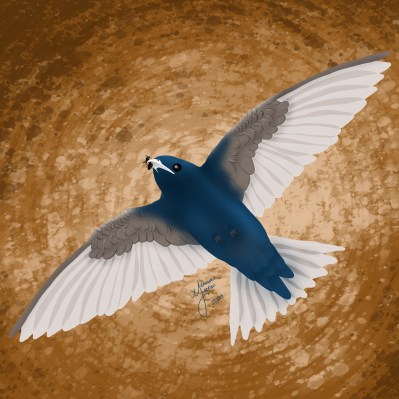
Purple Martin (Progne subis)

This insectivorous bird migrates from Central South America and into the United States. They spend their breeding season (summer), in the eastern US, returning down south for the winter. They are unique, in that during migration, a scout will be sent out as soon as the weather warms up enough. These scouts fly alone, looking for adequate breeding and nesting sites. Once the scout moves in, the rest of the colony shows up later.ย 

Ideally, this migratory bird enjoys making nests in dead trees, also called snags, however this type of habitat is becoming harder to come by as unsustainable development continues. By keeping dead trees as snags, as well as putting up Martin Houses, we can help increase viable habitat for these vibrant migratory birds.ย 

Painted Bunting (Passerina ciris)

Climate change has been pushing bird migrations all over the place and birds have had to adapt as quickly as possible. Migration is triggered by a lack of food, so if the weather is warm enough where the bird is and can provide adequate food resources over a long period of time, the bird doesnโ€™t need to migrate, or may need to migrate even farther to find food that is in bloom or that has emerged.

We may notice that we start seeing less and less of certain species as they adapt. We may also start seeing new bird species migrating in, too! For example, the American Goldfinch has started reducing their migration distances. This means they are less common in southeastern Pennsylvania since they donโ€™t need to travel as far south to find food. While this can be sad, we may start seeing new species that need to travel farther north, such as the Painted Bunting, as they search for their food too! Seeing these birds regularly may take years, as adapting to climate change takes time, but it could be a neat little perk.

This migratory bird eats seeds, so having feeders up and incorporating native sedges, pines, grasses, and dock into the garden may attract them if they ever show up this far north!

Spoon-billed Sandpiper (Calidris pygmaea)

These migratory birds spend their breeding time in the tundra of Russia and May and June. Once a suitable site has been found, and the eggs hatch, the females leave the nest and start their migration south along the Pacific Coast of Russia into China and Bangladesh, utilizing the intertidal Yellow Sea as food sources and rest during their long migration. The male teaches the young fledglings to fly, then starts his migration south down the same route. A week or so later, the chicks gain confidence and strength, and start the same migration too!ย 

Unfortunately, due to habitat loss in their stopover regions in the Yellow Sea, their population is in decline and has been listed as critically endangered. Here in North America, there is only one native spoonbill, the Roseate Spoonbill, who also relies on disappearing habitat. Instead of relying on the tundra and intertidal areas along the Yellow Sea, the Roseate Spoonbill relies on brackish marine marshes and Mangroves along southeastern United States. You can learn more about the importance of mangrove conservation, and how to positively impact our US mangroves HERE.

Evening Grosbeak (Coccothraustes vespertinus)

Similarly to many other migratory birds, these birds have to adapt to the warming climate. They typically rely on cones of native conifers in Canada and the US Pacific Northwest, such as pines, spruces, firs, and others. If the weather is too warm up north, they may have something called an Irruption.

Irruptions occur when food is scarce, so birds have a sudden boom in population density farther south. Evening Grosbeak irruptions occur naturally, however with the warming northern weather, have started occurring every two or three years. During these years, we may see them as far south as southern Pennsylvania! During non-irruption years, they may migrate only as far south as southern New York, or the very northernmost points of Pennsylvania near the Great Lakes region. This is provided the conifers in these regions are producing adequate food resources.ย 

Support Bird Conservation through Stickers!

A portion of all The Art of Ecology merch proceeds benefits wildlife conservation and habitat preservation efforts! By supporting The Art of Ecology, you can also make a difference in the health of these incredible birds! Become a patreon subscriber for monthly environmental education, sticker merch mailed directly to you, nature art video tutorials, and more.