Patterns: WILD ART 2021

As part of the Wild Art 2021 July Challenge, put on by Zoe Keller, I illustrated two pieces focusing on the theme, “Patterns”. Each month, I am going to focus on two pieces – one highlighting flora, the other highlighting fauna. This month, I focus on a specific recurring pattern of the natural world. Can you guess the pattern?

Fibonacci Spirals

In the year 1202, Leonardo Pisano Bigollo, a mathematician and trader, wrote a series of math books. In one, he included a word problem where you had to find the number of rabbits that would reproduce in a given time, in an enclosed space under certain conditions. The answer to this problem is found in what is known today as the Fibonacci Sequence.

This sequence is one of proportional and exponential growth. The sequence is as follows (and if you notice, every number after equals the sum of the two numbers prior in the sequence…) 1, 1, 2, 3, 5, 8, 13, 21, 34, etc…. Once you find the pattern, you can continue the sequence forever!

The Fibonacci Spiral, is a visual graph of this sequence. At the center of the spiral is a 1 unit box next to a 1 unit box. Those boxes are next to a box that’s 2 units large. All of those are next to a box who is 3 units large. Around and around this goes in a spiral, growing larger in exactly the same proportions.

Fibonacci in Plants

This ratio and spiral can be seen all over the world, in art (people are aesthetically drawn to things that have the Fibonacci Spiral), math (in word problems like the one posed in 1202), anatomy (our closed fist makes a Fibonacci Spiral), and even in the natural world! Some of the best examples of this spiral seen in nature is in Sunflower seed heads, Succulents, and the Chambered Nautilus.

In the botanical world, there is a whole field of study (Phyllotaxy) devoted to recognizing and understanding patterns. In Phyllotaxy, scientists recognize the arrangement of leaves on stems and the recurring patterns found. In many plants, even in trees with how branches connect to the trunk and leaves connect to the branches, a Fibonacci spiral can be found. In other plants, such as succulents, pinecones, and fern fiddleheads, more spiral patterns can be seen.

In the animal world, we can still find the Fibonacci Spiral! The Chambered Nautilus, when looking at a cross section of it’s shell, is filled with sections that help control buoyancy, called camerae. As the Nautiulus outgrows the shell space, it adds a new section onto the spiral. These sections are the exact proportion as the Fibonacci Sequence. If the marine animal could grow forever, the spiraled shell would become larger and larger exponentially! All new camerae would be the size of the two previous sections.

Fibonacci in Animals

While the Chambered Nautilus is a perfect example of the Fibonacci Spiral, we can find other examples on our own bodies! Close your fist and make sure that your thumb curls around the bottom of your pointer finger. You can start at where the tip of your pointer finger nail touches your palm and draw a spiral around until you get to your thumbnail. This is a Fibonacci Spiral!

But…. why does this recurring pattern happen so often in the natural world? As plants and animals grow, spiral shapes allow for maximum growth, while staying compact and secure. There is no wasted space in a spiral. In the natural world, the proper allocation of energy and resources is vital. Wasted space that would require extra energy to build or to move around with can hurt the chances of survival. In plants, it can increase the amount of plant matter available to do photosynthesis, while keeping the overall size (and therefore reducing energy waste) to a minimum.

Everywhere you look, the natural world provides endless hours of fascination! Where can you find the Fibonacci spiral during your outdoor adventures? Let me know in the comments or feel free to share on social media (Facebook/Instagram/Email).

More to Learn & Explore!

Stay tuned next month to learn more about how animals use various structures in nature (whether plant OR animal based!) as their protection and nesting sites with the “Home” theme!

Click below for more scientific illustrations, illustration workshops, or some new home décor!

Supporting The Art of Ecology through the online shop or by becoming a Patron at any tier on Patreon can help keep educational content coming!

Kenyan Endangered Species and Their Challenges

Happy “Wild About Wildlife” Month! Throughout July, we celebrate the amazing wildlife species found on this incredible planet (although hopefully you’re thinking about them and making decisions that positively impact them throughout the whole year). Anyway, right now, let’s highlight some of my favorite animals: African Savannah species!

In the spring of 2021, I had the opportunity to re-visit my (so far) favorite country – Kenya! This time around, my primary focus was on photography (as that’s what I was brought out to do) and had the amazing privilege to photograph the landscape, wildlife, and culture of Kenya.

As I photographed animal after animal and learned more about Kenyan Ecology and conservation efforts, I wondered how long it would take for many of the species I photographed to no longer exist. There were large tracts of land that I had been to before years ago that now had lots of roads cutting through. Construction was happening in what felt like every direction. The human population is increasing rapidly and this definitely impacts wildlife habitat.

As habitat is fragmented by roads, or reduced as agriculture demands increase, wildlife is forced into smaller and smaller ranges. Many animals require large ranges in order to thrive and successfully pass their genes along to the next generation. When the ranges dwindle, so does the animals ability to have the space it needs to survive. As human-caused Climate Change continues at an exponential rate, suitable agriculture space also decreases and the need to expand crop ranges increases. Desertification continues and the search for water is on the minds of not just animals, but people as well.

Fortunately, the overall Kenyan population seems to be very pro-conservation, even understanding the ecological role or cultural importance of animals that have common human-wildlife conflicts. Conservation biologists, Wildlife Managers, Park Rangers, Veterinarians, and other scientists are working alongside policy makers and the general public to ensure that these amazing species are protected.

So, what species are getting a lot of conservation attention?

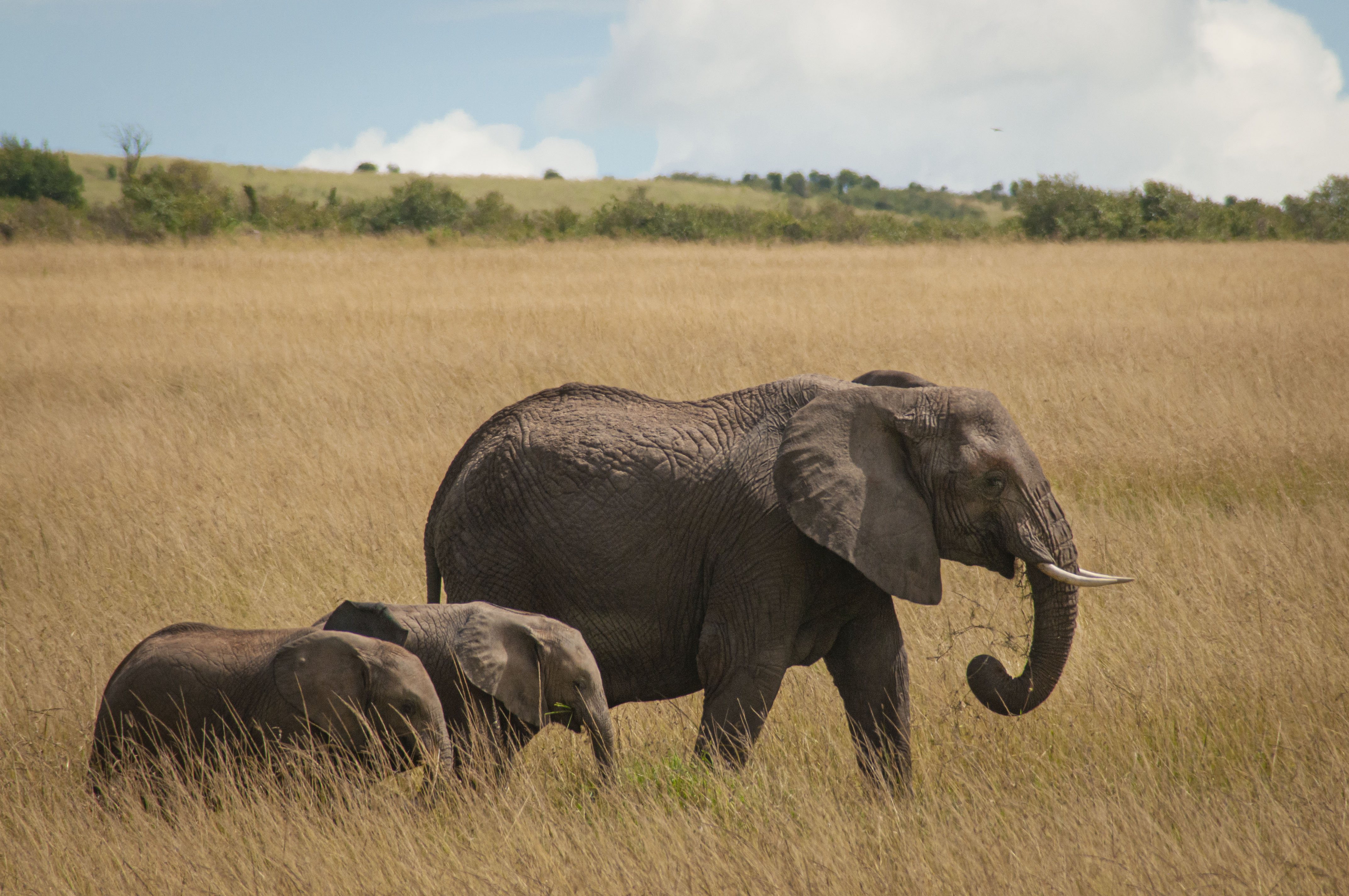
While not all of the animals seen above are technically listed as “Endangered”, they are all “Vulnerable”. The Giraffe, Grey Crowned Crane and African Elephant are listed by the International Union for Conservation of Nature (IUCN) as endangered. The Giraffe, Cheetah, Lion, and Hippopotamus are listed as Vulnerable.

Vulnerable simply means that the species population is declining in such a way that without conservation efforts, the animal will go extinct, however, with conservation practices put into place, the animal population will recover nicely. Endangered means that the animal has surpassed the Vulnerable status and without clear and serious laws put into place and enforced the animal will surely become extinct. Even with many conservation programs put into place, the amount of work it will take to bolster the population is extreme, but not impossible.

All around the world, all living things are connected. What actions we take, regardless of how geographically far away from Kenya we are, impact Kenyan wildlife and their habitats. By being good stewards of the environment where we live, we can positively impact these endangered and vulnerable animals we love. As we mitigate climate change where we can, we can positively impact the climate of places all around the globe, such as Kenya!

Anne Marie Bonneau said it well, “We don’t need a handful of people doing zero-waste perfectly. We need millions of people doing it imperfectly.” Every action we take, no matter how small it may seem to us, can make a huge impact when multiplied by millions, or billions of people. Conserve the animals you love. Protect their habitats, and make the world a brighter, greener place!

Did you know that a portion of all proceeds here on The Art of Ecology are donated back to wildlife conservation, habitat preservation, and environmental education efforts? While you shop, you not only support this artist and ecologist, but you also support the planet you live on.

Enjoy this Virtual Presentation about the Flora & Fauna of Kenya where you can discover more about conservation and the amazing life of the Kenyan landscape through my photography!

Supporting The Art of Ecology through the online shop or by becoming a Patron at any tier on Patreon can help keep educational content coming!

Leave The Weeds – Love the Pollinators!

Did you know that this week is Pollinator Week? This is a week (although it’s a Pollinator Month as well!) where Pollinator Protections are passed, local municipalities put out Pollinator Proclamations, and Pollinator-Themed activities and events happen. This is a fantastic time to learn more about local pollinators and about their importance, BUT…. pollinators need to be cared for and protected year-round!

While there are many ways to help out pollinators, from planting natives, to creating a garden, to reducing pesticide use, a great one to focus on this year is to GO WILD!!! No, I don’t mean to go crazy (well, go crazy for pollinators!) but to keep the wild in your backyard and community. Have you ever driven along and seen so many manicured, immaculate lawns? While these might look well-maintained, these lawns are actually a bane to biodiversity and require so much work to keep up with! By keeping lawns wild, you can support pollinator biodiversity, put in less effort throughout the year in yard-work, and save some money too!

What does it take to “Wild” your lawn? Not much, really! In fact, once you stop mowing all the time and re-seeding for grass, you might notice nature taking over without too much interference on your part. Dandelions, Clover, Chickweed, and Violets will start moving in. Yes, you may originally think of them as weeds, but let’s define weed… A weed is a plant that is in the wrong place, yet these flowers are vital to a healthy ecosystem! The lawn is the PERFECT place for these flowers.

A lawn full of weeds is a lawn full of healthy soil! Weeds like these use their roots to pull up nutrients from deeper in the soil to the surface to be used by other plants. Give them some time, and weeds can severely reduce your need for synthetic fertilizers, if not get rid of the need completely! Once these weeds finish their lives, they die off. This sounds sad, but hey – free organic matter for the soil! Bugs and other small decomposers, along with the fungi that will move in to your newly biodiverse lawn, will help break the weeds down into usable nutrients for other plants to use.

A lawn full of weeds is a lawn full of delicious, colorful food! Did you know that you can eat many of these weeds? Dandelion greens are AMAZING sautéed with some zucchini, peppers, onion, mushroom, and herbs for any panini. Violets are such a sweet addition to any drink or dessert. Dandelion flower tops can be lightly fried to make savory fritters as a French Fry alternative. Clover florets can be enjoyed in lemonade and other drinks.

A lawn full of weeds is a lawn full of LIFE! On top of all the other benefits that these weeds have, these flowers also will increase the biodiversity and therefore overall health of your yard. Every animal, big or small, plays a role in the health of your ecosystem, so encouraging them to come and move in will be a boon to not just your yard, but community as a whole! These weeds provide nectar sources for pollinators like bumblebees, honeybees, moths, ants, beetles and more! Larger pollinators that might not visit the small weedy flowers still need them at some point in their lives! Many of these weeds are great host plants that the butterflies lay eggs around to be able to provide the hatched caterpillars with immediate chewable food sources. In fact, fritillary butterflies use violets as their host plants! Fritillaries then grow up to be a valuable pollinator in the garden.

So this year, a great action to take for pollinators you love is to focus on “Wild-ing” your yard. Leave the weeds and enjoy the biodiversity that they support!

Looking to support pollinators in other ways? Learn more about them on the blogs below and check out my art! A portion of all proceeds supports pollinator habitat preservation.

Supporting The Art of Ecology through the online shop or by becoming a Patron at any tier on Patreon can help keep educational content coming!

WATER: WILD ART 2021

As part of the Wild Art 2021 June Challenge, put on by Zoe Keller, I illustrated two pieces focusing on the theme, “Water”. Each month, I am going to focus on two pieces – one highlighting flora, the other highlighting fauna. These creatures rely heavily on aquatic ecosystems, yet their aquatic habitats also rely on them. This interconnection between plants, animals, and their habitats are amazing.

Everything on this planet is connected. Each habitat plays a vital role in the health of the planet, and each living thing inside of it contributes to it’s health. Aquatic habitats provide a great foundation to the rest of the ecosystem since all living things need at least some water to survive.

There are many plants that act as water purifiers, helping to sequester pollutants and excess carbon inside of their roots and stems. Water lilies are one such plant, and are particularly good at this. In fact, Water lilies can handle absorbing heavy metals and other pollutants through their roots. This cleans the water and prevents algae blooms, which can cause an oxygen imbalance in the water and kill fish or other creatures living there.

One animal that lives in the water and relies on unpolluted habitat is the Axolotl. This salamander-like amphibian lives naturally in spring-fed lakes in Mexico. Originally, their native habitat spanned more than just two lakes, however, due to drainage projects, urbanization& land development, their wetland environments diminished, pushing them into only these lakes and making them an endangered species.

While their habitats may be a bit swampy and murky, that doesn’t mean that the water isn’t “clean”, or polluted. Sediment and detritus can be kicked up in swamp habitats, but if pollutants were to enter the water source, these creatures that so heavily rely on their feathery gills to breathe may find it more and more difficult to do so.

With plants helping to filter the water, axolotls can live with one less stressor in their lives and hopefully continue to breed and keep their population numbers up.

In order to keep aquatic habitats healthy and happy, to keep creatures like the cute and charismatic Axolotl alive and thriving, support your wetland environments, plant natives, and reduce single-use plastics or harsh pesticides that can run off into streams. Click below for more information about how to support your local wetland habitats!

Stay tuned next month to learn more about how both plants and animals have intricate, geometrical patterns, and what they might mean with the “Patterns” theme!

Click below for more scientific illustrations, illustration workshops, or some new home décor!

Supporting The Art of Ecology through the online shop or by becoming a Patron at any tier on Patreon can help keep educational content coming!

WONDER: WILD ART 2021

As part of the Wild Art 2021 May Challenge, put on by Zoe Keller, I illustrated two pieces focusing on the theme, “Wonder”. Each month, I am going to focus on two pieces – one highlighting flora, the other highlighting fauna. There is so much about the natural world that I wonder about, marvel at, and find fascinating, but one thing that gets me every time (especially since I am obsessed with all things color!) is that very few things that appear as blue to our eyes actually are blue! From red pigments that present themselves differently due to pH changes, to thin layers of cells to bounce light differently, blue is a deceiving color, and therefore rarely seen (as compared to the other colors) in nature.

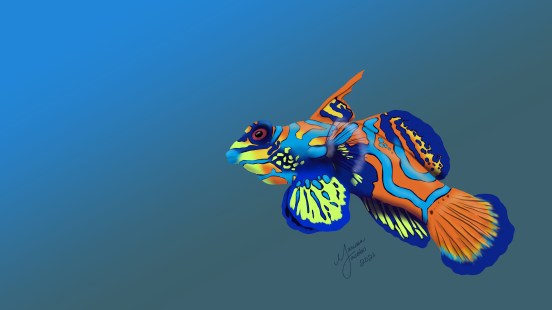
Let’s start with this vibrant fish, colored in what I have dubbed, “The Color of Epilepsy”.

Incredibly enough, this fish, known by many names such as Mandarin Dragonet, Psychedelic Mandarinfish, and Mandarin Goby, has such a succinct scientific name, that really shows just how amazing people think this fish is! They are the Synchiropus splendidus. Splendid indeed! Many people are absolutely intrigued with the coloration and swimming style of this animal. It beats its fins rather rapidly as it goes along, reminding some people of an underwater hummingbird! Similarly to the hummingbird, this fish is also incredibly colorful.

For many years, it was believed that if an animal presented itself as blue, like a Blue Jay, it was deceiving, and really the color was from an iridescence. A flat layer of cells coating the surface causes light to bounce very straight and directly, instead of scattering in every which way along the edges of rounded cells. The light waves of the straight reflected light is shorter, therefore appearing blue (click here to learn more about blue in the natural world and here for why we see the sky in certain colors!). In 1995, a study was done with the Mandarin Goby, and lo and behold! A true blue organelle in the cells was discovered! Chromatophores, a specialized cell that contains colored pigments, in animals are often Melanophores (brownish colors), Leucophores (whitish colors), and Xanthophores (yellowish colors). In this fish, though, a different chromatophore was seen, dubbed a cyanophore! This is novel, even to this day!

Again, most “blue” things in nature aren’t actually blue! Remember that Blue Jay mentioned earlier? Most things that don’t use the red-based pigment, Delphinidin, to look blue, actually use iridescence to appear blue.

This Peacock Selaginella is no exception to that rule. One way to test to see if something is pigment colored or “light” colors, is to submerge the plant in water. If the plant continues to appear blue, then it’s colored by pigments, often the Delphinidin (what makes Delphiniums look so blue). If it immediately looses the blue color when submerged, you know that it is using iridescence to look blue and with the water overtop, the light now scatters differently, making the plant look a different color. These iridescent blue plants often grow in shady environments, where normal photosynthesis using chlorophyll pigments can be difficult.

Whenever I see blue in nature, I am always blown away by how plants and animals have adapted over time and have such incredible methods and reasons for displaying whatever color they are!

Stay tuned next month to learn more about how both plants and animals have survived and adapted to aquatic habitats with the “Waters” theme!

Click below for more scientific illustrations, illustration workshops, or some new home décor!

Supporting The Art of Ecology through the online shop or by becoming a Patron at any tier on Patreon can help keep educational content coming!
Memory: WILD ART 2021

As part of the Wild Art 2021 April Challenge, put on by Zoe Keller, I illustrated two pieces focusing on the theme, “Memory”. While some artists focused on nocturnal animals and their unique adaptations, others focused on marine species that live in the depths! Each month, I am going to focus on two pieces – one highlighting flora, the other highlighting fauna.

When poking fun at someone’s ability to NOT remember things, we often say “They have the memory of a goldfish!”, but not all animals have a short memory! In fact, some animals such control over their memories that they are able to wipe out unneeded memories in order to make space in their brain for more valuable memories. For example, the Chickadee has gained the ability to select which memories are important and fully engrain them in their head. When a chickadee migrates, they need to remember not just how far to go, but to remember specific locations of food and ideal habitat. In the fall, chickadees need to start recalling the best migration paths, where they have stored food, and other important information. During this time, their brain expands, allowing for more neural connections to be built. Then, in the spring to early summer, when migration is done and food is more plentiful, the brain shrinks and the neural connections that were built specifically to recall food and habitat is wiped, allowing the chickadees to create new space once fall comes again. Amazing!

It’s not only birds and animals though, that have displayed an intriguing sense of memory! It’s in plants too! For example, the Sensitive Plant (Mimosa pudica), has shown recollection. Scientists have studied this plant in controlled environments. Another name for the Sensitive Plant is “Touch-Me-Not”. This is an appropriate name, since when the plant is touched or disturbed, they protect themselves by folding up their leaves. During the experiment led by Dr. Monica Gagliano, scientists splashed the plant with water. At the start, the Sensitive plant closed it’s leaves up quickly, not liking the disturbance. Over time however, the plant learned that the water did not harm the plant, so it stopped closing it’s leaves to the stimulus. This proves that plants have the ability to learn and recognize repeated patterns, analyze threat levels, and then modify their behavior based on external stimuli! Even for several weeks after the environmental conditions of the studied plant changed, it still was able to recognize the water splash and didn’t close up.

Stay tuned next month to learn more about how both plants and animals fascinate me with the “Wonder” theme!

Click below for more scientific illustrations, illustration workshops, or some new home décor!

Supporting The Art of Ecology through the online shop or by becoming a Patron at any tier on Patreon can help keep educational content coming!

Spring Cleaning is for the birds

Every winter, I sit inside with my hot cocoa, watching Netflix, working on my art, or playing games. Each winter, I sit inside SURROUNDED by all of the clutter and dust. Each spring, I get so tired of it that I HAVE to do something about it! I create bags and boxes to take to thrift stores. I dust every inch, I bleach and sanitize my shower curtain, I scrub down the walls and baseboards. BUT….. I DON’T clean my windows, and there’s a reason for that!

Well, I clean the window frames. But I don’t clean the glass panels themselves! Did you know that roughly one out of ten birds in North America will die due to window strikes? Why does this happen?

First of all, birds haven’t been trained to perceive glass in the same way that humans have. How many times though, have we, educated human-beings, bumped into doors or walls because they were glass and we were moving to fast or not paying attention enough to notice? For us, we usually shake off the embarrassing encounter and hope no one noticed, but for birds, it’s often a one-time experience that they don’t get to learn from.

Birds see the habitat on the other side of the glass and fly at full speed (they have no reason not to fly as normal to get to the trees on the other side!) – colliding with the solid surface. The result is a broken neck, spine, or wings, and some internal bleeding. These collisions are usually fatal.

Birds may also see their own reflection and get territorial, thinking it’s another bird and not themselves. Cardinals are notorious for this each spring. While these birds may not collide with the windows, they may attack the reflection. This consumes a lot of unnecessary energy and the bird may injure themselves during the stressful encounter.

Fortunately, there are ways to prevent window strikes!

  • Hang strips of mylar (the shiny stuff that makes up helium balloons) or CDs that flutter and shine in the wind. This deters many birds who become confused or annoyed by it.
  • Put screens over all of the windows. Can your window open? Add a screen and enjoy the breeze while also protecting birds!
  • Stick things on the windows. Sometimes you can create a frosted window appearance with window tapes. This frosted window reduces glare and reflections. The birds also won’t be able to see through it to the other side! Window clings are a great idea as well to help break up reflections and prevent the birds from thinking that they can fly through.
  • Reduce the spring cleaning! Yes, my windows have dog nose prints all over if they’re low enough. Yes, there are random dust spots and smudges. BUT – these all help the birds realize that something is there and it’s not just open space! The more we make our windows squeaky clean, the more likely it is for birds to think that nothing but air is there and they can fly through.

So doing a complete overhaul of your home and getting rid of excess clutter is great – but remember, keep bird populations in mind when you go to Windex that window! (And maybe thank them…. it’s one less chore!)

Love birds and need more of them in your life? Smatter them around you with photos, stickers, and more! Check out the birding goodness in my shop.

Check out my time lapse illustration of these birds! Then, snag your sticker set of them in my shop!

Supporting The Art of Ecology through the online shop or by becoming a Patron at any tier on Patreon can help keep educational content coming!

Adapt: Wild Art 2021 – March

As part of the Wild Art 2021 March Challenge, put on by Zoe Keller, I illustrated two pieces focusing on the theme, “Adapt”. While some artists focused on nocturnal animals and their unique adaptations, others focused on marine species that live in the depths! Each month, I am going to focus on two pieces – one highlighting flora, the other highlighting fauna.

If you’re wondering about plants that have developed special adaptations – the orchids are amazing examples! Orchid flowers are often highly adapted to their specific pollinators, and what pollinates one orchid, may not pollinate another due to the unique structure of the flower itself. One example of a unique floral adaptation is the Coryanthes macrantha, the Bucket Orchid. This flower looks like a strange, alien pitcher. The front of the pitcher fills with liquid. When bees come to pollinate the flower, they fall into the liquid. The only way for them to get out is to travel through a small tube in the back of the flower. As the bee crawls through, the orchid deposits a small pollen sac on the bee’s back, which the bee then takes to the next orchid it visits!

In the Phalaenopsis orchid (illustrated here), orchid bees are the primary pollinator. These bees have adapted a very long tongue (as compared to other bees), which makes it easy to collect the nectar hidden deep within this orchid. The Phalaenopsis orchid also has a lip (the magenta portion of the flower here) that acts as a landing pad to allow the bee to rest before it flies on to the next orchid!

Not all adaptations are designed to be “attractive” or helpful for other species. In fact, some can be deceptive and prevent certain interactions! Mimicry is an adaptation where one animal (or plant!) looks like another in order to protect themselves from predation. Pipevine Swallowtails are toxic to many predators, due to their diets. As caterpillars and adults, they thrive on a plant called Pipevine (hence the butterfly’s name), which contains a toxin called aristolochic acid. When a predator eats the caterpillar or the adult, they are poisoned in turn. Red Spotted Purples, a completely edible butterfly, has similar spotting and coloration to the Pipevine Swallowtail in order disguise themselves! They don’t want to be eaten by predators, so they look like the other to to trick predators into thinking that they are actually toxic.

What adaptation would you have if you could? Would you look like something else to hide or blend in? Would you be especially attractive? Would you have a specialized body part that helps perform some sort of unique function (like opposable thumbs or a prehensile tail)?

Stay tuned next month to learn more about how both plants and animals are able to store information and remember the past with the “Memory” theme!

Click below for more scientific illustrations, illustration workshops, or some new home décor!

Supporting The Art of Ecology through the online shop or by becoming a Patron at any tier on Patreon can help keep educational content coming!

Start Planning Your Garden NOW!

My garden is a certified Wildlife Sanctuary and Pollinator Space. But… there are ALWAYS plenty of ways to add to and improve upon any space!

It may be a little chilly out still, but it’s finally the time of year to start planning out your garden! As the winter fades into spring, we can think about seed starting, and drawing up plans to ready your home/garden for new plants. How do we start the planning process though? Ultimately, think about what your garden goal for the rest of the year will be.

Perhaps your goal is to add more winter color. Perhaps you wish to certify your garden as wildlife habitat. Or, perhaps your goal is to attract hummingbirds! Personally, this year, my goal is to ensure there are blooms all growing-season long (during July-early September, the color fades more than I’d like it to).

How can your garden create new habitat? Remember, everything in nature is connected and you want your garden space to be a benefit to the ecosystem, not something that could potentially hurt it!

Another goal to think about is: How can you be more sustainable this year? While it’s not always necessarily plant-related, sustainability is still important to think about while you plan your garden! Can you get a rain barrel now and install it to be ready for the heat of the summer? Can you reduce your chemical fertilizer & pesticide treatment? Can you build a composting area to get it started this spring? Can you include more companion plants in the garden to attract beneficial insects that can act as predators of pest insects? Can you add more native plants? By knowing what your goal is, you can create a successful plan to get you started this spring and help you along throughout the year.

Whatever your goal is, there are many ways to start the plan! You can draw out maps, take a plant inventory, create a “to-plant” list, or a planting schedule!

As plants pop up this spring, take a look at the space you have available and think about what is lacking (natives, host plants, late summer color, late fall resources, water source, etc…). Then, create an inventory. Write down what you have, or photograph the garden through all seasons so you can remember not just what you have, but WHERE you have it, regardless the time of year!

Creating a map of your garden and viewing the photographs throughout the year will help you see where you have some empty spaces as well as what’s in the surrounding area. There are many great garden mapping tools, however this is a great free starting tool!

Keep in mind as you plan your future garden out, there are many seeds that like to be started indoors, 4-8 weeks prior to the last frost date. As you come up with your plan, check and see if you can start seeds indoors in late February-March! Not only is this a rewarding way to obtain plants, but it also saves money, and allows you to start your gardening experience earlier in the year! Not all seeds want to be started inside, some plants, like Nasturtiums, have delicate roots that don’t like being moved and transplanted. Those will be seeds that you want to start outside once the ground has warmed up. You want to be sure that your little seedlings (or seeds!) are ready for the ground when the time comes in spring – summer.

Are you looking to add more native plants to your garden space? Regardless of garden plot size, natives are a great addition and many can even live in pots year after year! Learn more about plants native to your specific area here.

Supporting The Art of Ecology through the online shop or by becoming a Patron at any tier on Patreon can help keep educational content coming!

Intertwine: Wild Art 2021

As part of the Wild Art 2021 February Challenge, put on by Zoe Keller, I illustrated two pieces focusing on the theme, “Intertwine”. It’s always exciting to see how other artists interpret the challenge and create art. Some artists focused on the twisty nature of snakes, and others focused on octopus arms. Each month, I am going to try to focus on two pieces (at the very least) – one highlighting flora, the other highlighting fauna.

The first is the plant – the Clematis (Clematis sp.). Did you know that in order to get as close to the sun as possible, the Clematis Flower (also called the Queen of Vines) intertwines itself around trees or other understory shrubs! The native clematis (Clematis virginiana or occidentalis here in Pennsylvania) can often be found wrapping itself around shrubs and attract many pollinators. The shrubs provide support and a ladder of sorts for the flower to climb. The Clematis does not choke off it’s support though, like other, potentially invasive vines do.

Similarly to the Clematis, some animals need to intertwine themselves around others, or snuggle in order to survive! From mice, bats, and other small mammals who need to snuggle in the winter for warmth, to snakes who go below ground and intertwine themselves around their families for warmth, there are so many!

The Emperor Penguin survives in harsh, cold environments that can dip to -4 degrees Fahrenheit (-20C). In order to avoid freezing, the many penguins gather in tight groups to snuggle! These groups conserve energy and protect each other from chilly winds. What’s absolutely amazing is that the penguins know how to handle these huge group huddles! The ones on the outside are constantly buffeted by winds, so they move inwards, while the ones on the inside actually get too hot (the inner circle can get up to a balmy 37 degrees Fahrenheit, or 2.8C)! and move to the outer edge. This rotation continues for as long as it needs to until they need food or environmental conditions improve.

Stay tuned next month to learn more about the specialized adaptations of orchids and butterflies in the “Adapt” theme! Click below for more scientific illustrations, illustration workshops, or some new home décor!

Supporting The Art of Ecology through the online shop or by becoming a Patron at any tier on Patreon can help keep educational content coming!