Challenge Yourself to a #PlasticFreeJuly (or whenever – really!)

We all have heard of (hopefully!) the #SkipTheStraw campaign and about several bans on plastic grocery bags, but there is more to reducing plastic waste than just straws, bags, and bottles!

So, why should we reduce plastic use? After all, plastic is SUPER convenient! Have you heard of the Great Pacific Garbage patch? This floating island of plastic debris is now twice the size of Texas and is comprised of pieces of trash that may have started its journey on land and due to water runoff and currents, wound up floating in the ocean. From there, animals can confuse it as food and choke on it, or eat it and feel as if their tummies are full, despite the fact that they are getting no nutrition from the plastic, and eventually starve. It is estimated that by 2050, the amount of plastic in the ocean will exceed that of the fish in it!

There are currently a total of 5 gyres (garbage patches that form from ocean currents) in the worlds oceans. This number is expected to rise.

Many of us know about plastic’s impact on the ocean, but do you know how much fossil fuel it takes to produce plastics? This fossil fuel pollutes our air and groundwater through accidental leaks.

Yes, plastic can be convenient and helpful in the moment, but remember that most plastic types are forever! They take millions of years to degrade and this process takes even longer when buried underground in a landfill. 

By reducing our plastic consumption, we can slow some of the damage caused by single-use plastics. Ask yourself if what you have can be reused, and recycle when possible (did you know that only around 12% percent of what we put in the recycling bin ever gets recycled?! But that’s a story for another day…)

Oceans make up most of the water on the planet - but unfortunately, as salt water, we can't efficiently use it.

Finally, the best way to slow the damage that plastics cause is to simply refuse it! As consumers, we have a lot of power to show companies and businesses what we value. This #PlasticFreeJuly, take a look at what you use and what you can do without – you may be surprised! Help to create the demand for eco-friendly products.

Here are some suggestions for reducing and removing plastics that you may not have thought of immediately (all links are for more info, not to support any one brand over another.):

  1. Toiletries – From shampoo bottles, to your toothbrush,  to those poofy scrubber loofas, we use a lot of plastic in the bathroom! Try out a shampoo bar (kinda like a bar of soap, but it’s for your hair!), bamboo toothbrush, and use a reusable washcloth for your body soap. There’s even eco-friendly deodorant and shaving equipment!
  2. Clothing & Clothing Stores –  A lot of our clothing, especially synthetic fibers, have plastics in them! By looking for eco-friendly clothing (wool, cotton, bamboo, and other all natural materials), you can reduce your plastic consumption. At the check-out line, refuse the hanger! Let the store reuse it for future garments and use metal or wooden ones at home.
  3. Eating Local – Farm stands, butcher shops, and delis are great for providing you food without all of that crazy plastic! You can take your own bags or containers and fill ‘em on up! Not only are you reducing plastic waste, but you are also reducing the fuels it takes to transport and preserve foods that travel a long distance.
  4. Food Packaging – We produce a lot of plastic waste with our favorite foods! Our coffee comes in k-cups (find reusable k-cups here!), we store our leftovers in plastic wrap, baggies, or plastic containers (but we can use beeswax wraps or glass containers instead!). Search for a local bulk food store – they allow you to bring your own reusable container to fill up.
  5. Garbage cans – It may seem strange at first, but did you know that you can get reusable garbage bags? Get a couple of them and wash them in between uses. You’ll be surprised at how much money you can save by not having to get plastic garbage bags! Compost food waste and recycle more to use less garbage bags overall.
  6. Gardening Equipment – As a nature lover and gardener, I buy a LOT of plants. Plants are great, but you know what isn’t? Those black, green, or reddish plastic pots. Ask your garden center if they recycle or reuse the nursery pots, repurpose them for next year’s seed-starting, or look for compostable gardening pots that can go right in the ground!
  7. Convenient Eating – Plastic forks, knives, spoons and cups are great for parties and picnics when you want easy clean-up, but come at the cost of the planet’s health. Instead, try biodegradable or even edible utensils if you don’t want the hassle of washing reusable dishes.
  8. Stylish Accessories – Did you know that there are some really classy looking watches and sunglasses made out of wood?! 
  9. Writing Tools – I don’t use, or really even see, wooden pencils anymore. I like the mechanical pencils and pens, but those are often made out of plastic! Fortunately, you can get pens and mechanical pencils made out of recycled water bottles, 
  10. The Laundry Room – My laundry basket, which is definitely used over and over and over again, is plastic, much to my chagrin, but you can get eco-friendly ones made out of up-cycled fishing rope, fabric, or even wood! My favorite laundry detergent doesn’t come in a plastic container, but a thick cardboard that I can just recycle once finished. By line drying my clothes, I am reducing the energy I use, but I have clothespins that have plastic on the tips that act as a slip-resistant material. Wooden ones are definitely the way to go.

Think you can do it or want to challenge yourself to remove plastic from your life this July? It doesn’t even have to be the month of July! Reducing plastic consumption in our lives is great, no matter how small or simple you start. Take the challenge and commit yourself to reducing plastic from your life! Also, check out my store to see some eco-friendly products perfect for the nature-lover in your life!

Let me know in the comments below how you are going #PlasticFree and encourage others on their journey to less waste.

Using soap bars is a great way to reduce plastic waste.

Supporting The Art of Ecology through the online shop or by becoming a Patron at any tier on Patreon can help keep educational content coming!

Sand Swept and Wind Blown Plant Adaptations

The succulent, leathery leaves of this plant help it to retain moisture in their hot, windswept environment.

It’s summertime and one of my absolute favorite things is going to the beach and getting a big whiff of salty air in the green salt marshes! I love the look of a white beach with green plants and a blue sky and ocean! It’s the best. 

But how do those plants in a sandy, salty, windy beach even survive? As a girl who grew up in the mountains, it seems amazing that plants can grow without rich, dark, organic soil and consistent access to fresh water. 

On a beach, there are different sections, or layers of life. There is the first dune section, or embryo dune, that is closest to the ocean. These are very small sand dunes that form on washed up kelp or other organic material. Occasionally, plants will be able to grow and thrive on these dunes and typically they have very long and strong roots to be able to dig deep into the sandy soil. These plants are also able to survive even if their leaves become buried as sand washes over. This is different from inland forest trees that we may think of. If part of a tree trunk gets buried, this causes rot as the mulch or soil retains moisture and encourages bacterial growth. 

This tall plant has the ability to be partially buried! As long as a portion of the leaves are above ground to undergo photosynthesis, the plant can survive!

Beach plants, like the sea grass shown here, tend to produce many seeds in order to increase their chances of success and these seeds have the amazing ability to float! As the ocean waves pull seeds away and push them back onto the beach, the seeds won’t sink and instead, will end up back on the beach where they can eventually germinate.  Tall grasses are important at catching and holding sand as their many stems keep sand in place.

The next layer, or section, of sandy beach is called the Foredune. These sandy dunes get whipped around and changed all the time as the wind blows the dry sand all over the place. The plants that live here tend to be more succulent than those in the embryo dunes and have hairs that increase surface area of the leaves which helps them to retain moisture. Do you ever notice that beach plants tend to be light, bright green, as opposed to the dark green of forest plants? Dark colors absorb more sunlight (which is why you get hotter when you wear a black shirt in the summer) and light colors reflect sunlight. The light green and greyish color of beach plants prevents them from frying in the intense sunlight.

This cactus stays low to the ground and spreads out to prevent the wind from blowing it over. The spines also help to catch sand. The thick cuticles help retain whatever fresh water it can soak up!

As you move farther back from the ocean, your plant life becomes more diverse. These dunes, called Backdunes, are stable dunes due to the amount of plant life holding them in place.As plants become more diverse and create habitat, animals can move in! Foxes can create little dens, birds and turtles find denser plants to make nests in, and smaller animals find shade from the hot sun. 

Right now, the biggest threat to a healthy beach ecosystem is: Beach Grooming (large trucks or vehicles drive along the beach to make it safe for people and to remove trash), which flattens the sand and prevents plants from germinating, Coastal Development, and Climate Change. As sea levels rise, the embryo dunes get pushed farther back, yet there isn’t enough room for all of the dune layers in between the ocean and the developed land. As these beach ecosystems disappear, the threat of flooding increases since there aren’t plants to hold and build the sand up to create a barrier between the ocean and the people. Not only are humans impacted by this, but important marine and coastal animals are as well since their homes are disappearing!

During your beach trips this summer, protect these animals and their habitats by staying off of the dunes. You don’t want to squish germinating plants or disturb wildlife that have made their home there! Another way is to pick up any trash. Plastic, as we know, can get ingested by wildlife, but it can also pile up – creating the need for large machinery to drive up and down the beach to groom it!

Of course, visiting a beach is a great way to get a new appreciation and deeper love for this ecosystem and by respecting the habitat that you have entered, you can protect it and the wonderful natural world that we are a part of!

Make the ocean a part of your home with wall art by visiting the shop.

Supporting The Art of Ecology through the online shop or by becoming a Patron at any tier on Patreon can help keep educational content coming!

Pollination – Amazing Plant & Animal Relationships

Last month, I had a wonderful opportunity to learn more about pollinators, like the honeybee, at the nationally recognized botanical garden – Longwood Gardens!

This professional development opportunity allowed me to not only learn about these amazing plant & animal relationships, but to witness first hand active pollination in the outdoor gardens and photograph some of these interactions up-close!

Here are the top 10 things that I got super excited about that I hope you find fascinating too – all to get you psyched for National Pollinator Week!

COLOR & POLLINATORS

1. As gardeners, we know that certain colors attract certain pollinators – for example, Red attracts Hummingbirds, but during this lecture, I was able to visualize that attraction! While humans see in full color, bees see with a yellow tint, therefore being attracted to bright yellows. Hummingbirds have a very red heavy vision and beetles see in Black and white, therefore being attracted to simple white flowers.

2. Red means “STOP!” to bees. Since bees aren’t attracted to this color, many plants will use that to their advantage. Some flowers, like the Lantana, will actually turn red once pollinated to show bees “Hey, this one’s already been done. Go to a different one!”

3. Hummingbirds are not only attracted to red flowers, but they are also attracted to red stamens! The flower itself may be white, but as long as something is red to show up in their field of vision, they’ll visit!

4. Pollen grains themselves may be different colors. All pollen from one plant species will remain a constant color, but did you know that there is black pollen (tulips) or turquoise pollen (Siberian Squill or the PA Native Wild Geranium)?!

CO-EVOLUTION & ADAPTATIONS

5. Again, gardeners who like having butterflies around, know that butterflies like flat-topped flowers because butterflies like landing with unfolded wings. Little did I know that this was so that they can be prepared at a moment’s notice to take off to escape a hungry predator! If they were to land in a cupped flower and try to escape quickly, their wings could get caught up and a split second of flustering around could cost them their life.

6. Alfalfa leaves are “spring-loaded” and when the heavy weight of a bee lands on them, the leaves snap back and wind up smacking them in the face. Surprisingly enough, the bees don’t like that. This is where the Alfalfa Leaf-Cutter Bee swoops in to the rescue! They eat away at the leaves, getting a yummy meal and allowing other bees to visit the flowers without fear of getting smacked.

7. Dandelions are amazing cold-weather plants for pollinators! Honey bees do not hibernate like other bees (other bees die off completely and the queen goes into hibernation to restart their colony each spring) and therefore start to venture out of the hive in search of food as soon as it’s warm enough to fly – which tends to be very early spring. Of course, this means that there are very few flowers that are producing nectar this early in the season! Dandelions have adapted to the cold temperatures and are one of the few flowers that can produce nectar despite the cold, so Honey bees rely on dandelions for a few days/weeks in late winter/early spring. Don’t mow them down, or weed them out – keep them to provide an integral nectar supply in the early months.

POLLUTION & CURRENT ISSUES

8. Each bee hive needs around 60lbs. of honey in order to survive the winter. Without flowers during ALL seasons (late winter all the way through late fall) honey bees may not get all of the food that they need to keep the entire hive alive until the flowers start blooming again. Due to habitat destruction (development of meadows or over-exploitation of agriculture fields), honey bee populations are in decline without their strong food source!

9. On average, each pollen grain has 6 different pesticide traces. Once the pollen gets into the hive, the wax that they use to seal up their honey with absorbs the pesticides. This means that the honey that they (and WE!) eat, is clean – YAY! – but it’s comparable to having a human live in a house where the walls are filled with Asbestos. Those humans may have a super healthy diet and be exercising, but there’s definitely some side effects to living in that environment.

10. Due to Climate Change, bees and other pollinators are struggling to emerge from the hive or from hibernation at the same time that flowers are becoming available. In some areas, unseasonably warm weather gives bees a cue to emerge, yet flowers haven’t fully bloomed and started producing food yet. In other instances, colder than usual temperatures persist well into late spring and bees won’t have enough food to last for that long.

While I hate to end on a sad note, this should stress the importance of native flower and all-season-blooming gardens! No matter the size of your space, provide some blooms for pollinators and help them make it through the next season.

Enjoy these images for examples of great pollinator plants!

Prints available in my shop

Supporting The Art of Ecology through the online shop or by becoming a Patron at any tier on Patreon can help keep educational content coming!

Creating a Safe Haven for Feathered Friends

So far, we’ve discussed creating a backyard habitat, attracting butterflies and other pollinators, and creating a haven for snakes and beneficial predators, but we haven’t talked about how to get birds to your garden! Aside from the obvious of sticking up a feeder, there are some other great ways to attract your feathered friends!

By 2050, it is estimated that 2/3 of wildlife species will be extinct. 1/3 of all birds are estimated to disappear. Creating a safe haven for them now will provide critical habitats for these species and caring for birds impacts the rest of the food web – helping to ensure healthy and safe ecosystems. Make sure that you have some important elements, like Food, Water, Protection, and Nesting Sites in your yard or garden. If you have these ingredients, it’s a sure recipe to getting birds to visit and even make a home – helping keep their populations stable!

Food: Birds like to eat a variety of things, not just seeds! Some birds, like Chickadees, Bluebirds, and Woodpeckers absolutely LOVE insects. Insects provide birds with a valuable source of protein, calcium, and other minerals. The easiest way to make sure that there are insects around is by getting suet with meal worms in it. The absolute best way to get them though, is by planting flowers, trees, and shrubs that insects like beetles, worms, caterpillars, and other creepy crawlers like to eat and find shelter in.

Other birds, like Orioles, Flickers, Finches, Waxwings, and Tanagers love to munch on yummy fruit! Fruits are jam packed with delicious vitamins and sugars. The easiest way to provide them with fruit, is by getting a suet with fruits in it. You can also create garlands of dried fruits like cranberries, raisins, cherries, orange slices, and others. You can also set out watermelon rinds, orange and grapefruit slices, and apple slices. These fruits will also attract butterflies that come to suck up the juices from these yummy treats!

The best way to get birds fruits is simply by growing them yourself! Cherry, Mullberry, Dogwood, Holly, Serviceberry, and Crabapple Trees are perfect for birds! These plants will not only provide birds with wonderful food sources, but will also provide them with shelter. Plants like Raspberry, Blackberry, Elderberry, and Blueberry bushes will have nice late season foods for the birds and also provide thicket areas for creating nests and providing shelter.

Are you looking to attract a certain kind of bird to your yard more than others? Knowing the right combination of trees, plants, and nesting sites will ensure that those birds take full advantage of your backyard haven! Those trees and shrubs have different ripening times and different birds will be in your area at different times of the year. Make sure that your food source matches up with the time of year that birds are settling down near you. For example, my favorite local bird is the American Goldfinch – by planting Sunflowers, I know that I will have excellent seed sources available for them in the summer months when they hang around me the most.

Nesting habitat is so important for birds to be able to safely raise their young! Don’t feel like you have enough shrubby, dense thickets or old trees? Add a nest box to your yard!

By planting trees, creating thickets, and having dense shrubby areas, you are also providing nesting habitat and shelter for birds! Did you know that bird feeders are some of the least safe spaces for songbirds? Hawks and other predatory birds recognize patterns and will sit atop trees nearby, swooping down to catch birds sitting in the open at a feeder. Cats that are allowed outside use the feeder area as a perfect little hunting ground. While having feeders set up is a great thing to provide for the birds, you always want to make sure that you are providing a safe place for birds to retreat to after they’ve gotten their snack!

Looking for plants for your home and not quite sure what to use? By inputting your zip code in the National Audubon Society’s Native Plant Finder, you can figure out which plants are native to your specific area and what birds those plants will attract! It will also tell you what other animals it might benefit and what pollinates them.

Not everyone has a wonderful creek or pond in their backyard, so bird baths are something to consider adding to your landscape. Just keep in mind that bird baths are another place that Hawks can watch over. While the baths are a great addition to the yard (and you can even acquire heaters for them so that birds can enjoy water even in the freezing winter months!), you always want to make sure that if you only have a bird bath as a water source, that you also provide nearby shelter.

Wish you had more birds in your home? Check out my shop and snag yourself some great bird prints, photo gifts and more! Remember, a portion of all proceeds benefits wildlife conservation efforts, so your purchase goes far and makes a contribution to the health of the planet.

This wintering chickadee enjoys a seed from a feeder. During the summer though, their diets are comprised of 90% insect life which gives them great protein!

Supporting The Art of Ecology through the online shop or by becoming a Patron at any tier on Patreon can help keep educational content coming!

TreeHugger – Yup, That’s Me and Here’s why!


Happy Arbor Day everyone! (sort of – it’s the last Friday in April – but let’s celebrate anyway!)

There are so many reasons to love trees beyond “they look nice”. Even hugging trees has it’s benefits (click here for more information on getting immersed in forests). Here are my top reasons for getting excited about trees:

  1. Provide Oxygen – You know, the stuff we breath! We inhale oxygen (O2), and exhale Carbon Dioxide (CO2). Trees go through this complicated process called photosynthesis, which is where they take in sunlight, water (H2O), and CO2 in order to create their food source of Glucose (C6H12O6). As they create glucose, they also create some leftover bits – those leftover bits just happen to be excess Oxygen molecules! How cool is it that trees take in what our bodies consider to be waste, and transform it into something that our bodies need?!
  2. Store Up Carbon Dioxide – Trees have the amazing ability to store up, or sequester, CO2! This is great news because as we increase our CO2 production, Climate Change speeds up. As more plants like trees store that CO2, Climate Change can be slowed! Read more about how trees sequester carbon dioxide in urban environments.
  3. Prevent Land From Flowing Away! – The strong roots of trees act as fingers that reach out and grab soil which hold it in place during times of heavy rain! The #1 water pollutant in Pennsylvania is NOT chemicals – it’s sediment! Sediment gets washed (or eroded) into streams in areas that lack strong root systems, and settles to the bottom. This sediment gets caught in small invertebrates gills and can choke them up! Without those important critters, the food chain would get all messed up.
  4. Provide Animal Habitat – Animals like birds, mammals, and reptiles all around the world rely on trees as their homes. Not only do trees provide nesting habitat, but they also provide shelter and protection for these animals. As deforestation continues (mainly due to improper agriculture practices which goes back to causing erosion…) many animal species have become critically endangered.
  5. Provide Food for Animals – Flowers, Bark, Nuts, Seeds, Sap, and Leaves are all important parts of various animal diets. Without trees, those animals would lack their food source and decline rapidly. Several trees are host species for butterfly larvae as well! Without the Tulip Poplar, butterflies like the Eastern Tiger Swallowtail, would not be able to survive since they use the tree as a larval host plant. Browsing herbivores need the hearty bark and small twigs to grind their teeth down too!
  6. Provide Food for Humans – Let’s not just think of the cute orangutan or baby fawns! Let’s think of our own health too! Many parts of trees are edible and provide us with some amazing foods. Who likes pomegranates (super-food!), apples, oranges, bananas, pistachios, maple syrup, or loose leaf tea? I know that I do!
  7. Creating Shelter from the Weather – Humans use trees too to act as natural wind barriers and natural air-conditioning! Trees provide shade and when planted strategically, they can reduce your energy consumption on things like cooling (and heating in the winter due to the wind reduction and insulation they provide) by roughly 30% or more!
  8. Increase Property Value – By planting the right tree in the right place, you can increase your property value. By having healthy, well-maintained trees, you can increase your property value by thousands of dollars! Who doesn’t want that extra money in their pocket someday!
  9. Make You Feel Safer – Ever go into an urban neighborhood and find how much you like the neighborhoods that have more street trees? Do you feel more relaxed in rural settings that have beautiful trees? That’s because trees are associated with safety. being surrounded by green makes people feel more at ease. In fact, areas that have more trees have noticed a decrease in crime rates!
  10. Last but not least: Outlive Us – Trees are magnificent. Trees are ancient and remarkable. Trees give us something to watch and observe for decades. The oldest tree in the world is older than the Egyptian Pyramids and has stood the test of time. It’s aged at roughly 5,000 years old and lives in California. It is currently being preserved and protected by the National Forest Service. Trees provide us with a history and have a story to tell throughout the ages.

Trees are great. Feel like you need more of them in your life? Want to be immersed in their leafy canopies? Check out my shop and snag enough photo prints to make your home feel like heaven! You can also share your love of trees with the world with my illustrated linework OR full color Arboreal Temporary Tattoos! Click here to snag a set today.

Supporting The Art of Ecology through the online shop or by becoming a Patron at any tier on Patreon can help keep educational content coming!

Malacology – A funny word for a funny group of animals.

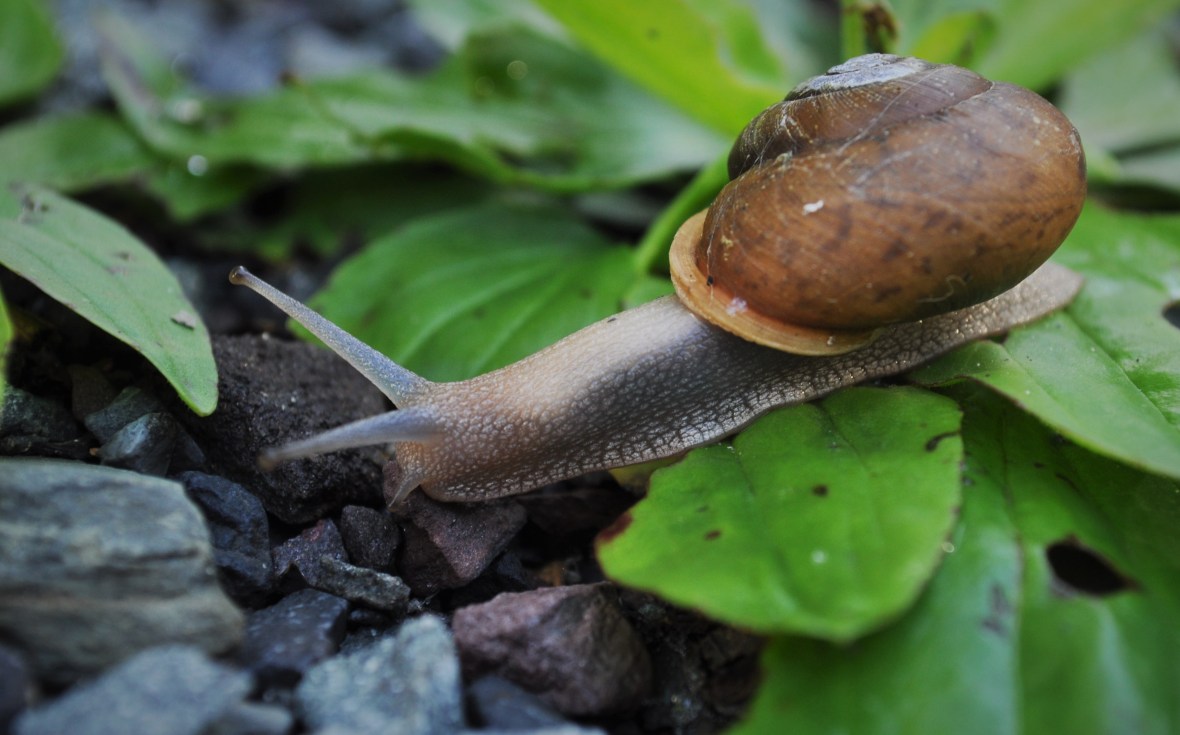
While we may first think of these tiny creatures as garden pests, snails are very important members of the ecosystem and should be valued!


Malacology, or the study of snails, has shown us how snails play a role in efficient decomposition and providing vital nutrients for animals that eat them.

Snails eat leaves – yes, they do like leaves in your garden – but their favorite food is rotting vegetation and fungi. Sometimes they will also ingest soil in order to eat some of the microorganisms that live in it! By eating these rotting substances, they are participating in nutrient cycling! If those dying leaves, rotting trees, or other decomposing organic matter were to sit around on the forest (or garden!) floor without being further broken down by living decomposers like snails and the fungi they love, we would be BEYOND buried in rotten matter! Gross.

As the snails consume soil and decomposing matter rich in nutrients, they themselves become nutrient rich! Their shells require a lot of calcium in order to stay strong and durable. Did you know that a snail with a good, rich diet, will be able to mend their shells if broken? For example, if a bird picks one up to eat and drops it accidentally, the snail may wind up with a cracked shell, either from the bird’s strong beak or from being dropped. The snail will secrete a strong sticky mucus that covers the crack in the shell and then hardens. This mucus is similar to the slime that they secrete as they crawl around, but this stuff is slightly different and can mend the shell. Snails have even been known to mend a stepped on shell!

The snails will munch away and acquire calcium mainly found in the soil as bedrock breaks down and in leaf litter from tree species that act as calcium pumps – trees that soak up calcium in the soil more efficiently. Aspens, Sugar Maples, and some Dogwoods are examples of these types of trees. You may notice more snails in areas that have calcium rich stone beneath the soil and those types of trees. As the snails make their shells stronger through their calcium intake, they are also making themselves more appetizing to predators!

Many animals such as insect larvae, salamanders, turtles, mice, squirrels, fox, and birds are known to eat snails. Not only can they gain excellent and valuable protein from the fleshy part, but they are also obtaining calcium that helps them create a stronger skeletal system! Imagine instead of having children drink more milk to make their bones grow strong, we had them all eating snail shells…. Hmm…

One of my favorite books, “The Sound of a Wild Snail Eating,” by Elizabeth Bailey, goes into great detail about snail anatomy, morphology, ecological value, and even familial relationships of snails! If you’re still on the fence of “Do I like snails or….meh?”, I highly recommend this easy and page-turning read.

Snails have an amazing role in the ecosystem, but maybe not in your garden! There are some easy, non-lethal methods for deterring snails while still ensuring that they continue to provide value for the rest of the ecosystem.

So yes, maybe you do find them as a pest in your garden, but please don’t try to kill them! This removes another decomposer from your landscape and removes one more food source for animals that you may love! Instead, try adding diatomaceous earth or crushed egg shell to your soil. Soft snail bodies can’t crawl over the sharp edges and will be deterred. Instead of dying, they just go elsewhere – still maintaining their value! Another way to reduce your snail population while maintaining their ecological value is to set up nesting boxes, feeders, and habitat for animals that predate upon snails. By creating a well-rounded wildlife habitat, you are encouraging nature to keep itself in balance! Another method is by planting mint. Snails don’t really like the smell and if you plant mint sporadically throughout your garden, not only will you be able to harvest this yummy herb, but you’ll be deterring the snails!

Have you now decided that you love snails? I do! Bring them into your home without the mess of slime trails by adding some snail art to your walls. Click here for some snail awesome-ness!

How cute?!?!?!

Supporting The Art of Ecology through the online shop or by becoming a Patron at any tier on Patreon can help keep educational content coming!

Everyone can be a scientist – Here’s how!

Not everyone who likes science, or finds it fascinating, is a scientist – and there’s nothing wrong with that! Science makes up the world around us, from the animals, to the microorganisms, and how they all interact with their environment, to how our own human lives work!

I have a science degree and loved my science work in microbiology, botany, comparative anatomy, small animal science, marine biology, and other science fields. Now I find myself using the knowledge that I gained in my jobs, but I miss doing science!

Fortunately, scientific contribution is at all of our fingertips! Citizen science, the collection and collection of data in relation to the natural world by members of the general public in collaboration with research scientists, is a great way for all of us to feel like we can do science! Scientists typically do not have the funding, manpower, or time to collect all of the data necessary to study their topic at the level required. For example, studying climate change requires scientists to be all over the world at the same time, looking at the same thing (birds, sea levels, temperature, etc…). This is near impossible, but by turning citizens into extensions of themselves, scientists can gather data from all over the globe!

For some projects, citizen scientists need to undergo a complex training so that they know how to properly collect data in order to make it as helpful and accurate as possible. For other projects, all you need is a cheerful enthusiasm and a basic training (typically reading the instructions on their web page)!

I have included here some of my favorite Citizen Science projects that I participate in or use to teach students about the natural world. These are great for anyone to participate in, but there is almost no limit to what projects are out there!

Photographing bees is a fun way to participate in science!

Bumblebee Watch – This project aims to track and conserve America’s bumblebee population. Due to the bumblebee’s large distribution, citizens armed with cameras (like your phone!) can take photos and document the range of all bumblebee species, including those that might be endangered or threatened! Once scientists are able to see and ID these species, they can better map certain species ranges and conserve these important pollinators. What you’ll need to participate:

  • An account with Bumble Bee Watch
  • Camera
  • Ability to visit places frequented by bees (your backyard garden, park, natural area, etc…)
Many trees that the TreeSnap study targets can be found while taking a nature walk! Take your camera/phone with you and explore the great wide world!

TreeSnap – This project aims at identifying invasive diseases and pests that target some particular tree species like Ash, American Chestnut, Hemlock, White Oak, American Elm, and others. Simply by photographing these tree species, you can help lead scientists to discover how individual tree species have managed to survive in order to use that knowledge to protect all trees from these invasive diseases/pests! What you’ll need to participate:

  • An account with TreeSnap
  • Camera
  • Knowledge of Tree ID (can be obtained from field guides!)
  • Ability to visit natural places that may be home to select tree species (forests, parks, naturalized areas, etc…)
No matter how common the birds are, or even if you see the same ones every day, submitting bird lists is great! This helps scientists understand bird movement, migration, and how they are impacted by climate change better.

eBird – This is the largest biodiversity citizen science project, with over 100 million bird sightings contributed each year! By collecting bird counts and lists from all over the globe throughout the entire year, scientists are able to monitor individual species population, observe population histories, create species maps, and understand migrations and movements! You can submit simple lists, with or without photos! (if a specific bird sighting turns up as “rare” in your area, you will be asked to submit an image so that scientists can confirm the sighting) What you’ll need to participate:

  • An account with eBird
  • Knowledge of bird ID (field guides work!)
  • Camera (optional at most times)
Dragonflies lay their eggs in the water to grow big and strong! In fact, a dragonfly spends most of it’s life in the water, only emerging for a short while as an adult.

Creek Critters – This project not only walks citizen scientists through the ID of stream macroinvertebrates (like crayfish or dragonfly nymphs), but it also allows real-world scientists to create a comprehensive stream health report! What you’ll need to participate:

  • Creek Critters App
This is a perfect example of science in our every-day lives! I found this adorable tree frog in the parking lot of a grocery store, so I quickly moved him to a nearby tree to avoid getting squished by a car. I snapped a photo with my camera to use to help my ID him and to submit for the survey!

PARS – The PA Amphibian and Reptile Survey is designed to help scientists collect data about populations of amphibians and reptiles (collectively known as Herps) in order to understand ranges, population health, and movement. Citizen Scientists go out and search for these critters by flipping over logs, looking under stream rocks, and simply observing the world during hikes and nature walks! If you see one of these species, record it! This project is ideal for participants who don’t have a smartphone to download apps with. What you’ll need to participate:

  • Email Access to email sightings with
  • Knowledge of Herpetology / Herp ID (field guides work!)
Many nature centers, like the Bucks County Audubon Society, host annual butterfly counts. Find a count near you to get started easily with this project!

North American Butterfly Count – While this project takes a little more work on the Citizen Scientist’s part, this is still a great and worthwhile project! By registering a count with the North American Butterfly Association, or by joining a pre-registered count (a lot of Nature Centers host these projects), the general public will be able to learn a little bit about these fascinating pollinators and go out into a set area to monitor for them! Once the project time has gone up, citizen scientists will submit their findings so that scientists can monitor movement, migration, population numbers and health of butterflies and skippers. What you’ll need to participate:

  • Access to Counting event (you may create and register a count, or join a pre-existing count event)
  • An account with the North American Butterfly Association
  • Camera (optional at times!)
  • Knowledge of Butterfly ID (field guides work and training will be provided at count events!)

Hopefully now you will be inspired to join in on one of these great projects. The natural world is at your fingertips. Go forth and discover!

It’s always a great time exploring the natural world and it’s so easy to get excited about your discoveries! Here, after searching a local creek, I stumbled upon the cutest baby snapping turtle! What will you find?

For more images of the natural world, check out my shop!

Supporting The Art of Ecology through the online shop or by becoming a Patron at any tier on Patreon can help keep educational content coming!

Orchids – the Mischievous Flower

Flowers rely on pollinators like bees, beetles, birds, moths, butterflies, bats, and other creatures to spread pollen from one flower to the next in order to create seeds. Flowers have adapted their color, shape, or aroma to attract the type of pollinator that would best suit them – for example, hummingbirds like red tube flowers. Butterflies like bright, flat flowers – simple enough. However, when the orchid started adapting, it learned that tricking pollinators was the best and most efficient way to spread their pollen!

Orchid Trickery
Color is so important to many flower! This Oncidium orchid is no exception.

Orchid Trickery

Similarly to other flowers, the shape and color of orchid will attract certain types of pollinators, however, the orchids only mimic those other flowers. Orchids that are hummingbird pollinated often have bright red or pink tubes with tiny flecks of yellow (mimicking the pollen-bearing anthers of other flowers), however, orchids don’t offer nectar in return like those other flowers do. Many that are pollinated by butterfly and other bees will have markings that act as beacons, pointing clearly the direction the pollinator needs to go.

Orchids, like other flowers, know how to use their smell. Ones that are pollinated by nocturnal insects need to attract their pollinators not by sight, but by smell! These are a dingy white or green color but smell very fragrant and sweet. Orchids that are fly or flesh-beetle pollinated smell like rotting flesh and are often a brownish-red color to look like meat. Some other orchids will use sweet-smelling pheromones of female insects to lure in males. The males arrive, search for their love, and leave after not finding her. However, during their search, they have picked up the pollen and will fly away, following her scent elsewhere.

In terms of shape, some orchids are very manipulative! In slipper orchids, the slipper is filled with a sweet smelling liquid. Bees land on a small landing pad above the liquid to scrape the sweet-smelling stuff onto them to attract females. Unfortunately for the bees, the landing pad is very slippery and the bee often falls in! In order to escape from drowning, the bee is forced to climb through a small opening in the orchid’s lip, right below where the pollen sacs are stored. As the bee escapes, he unknowingly collects pollen sacs on his back. Fortunately for the orchid, the bee does not learn his lesson and he will go to the next sweet-smelling orchid to, again, rub the stuff on himself and falls in, this time transferring the pollen from one orchid to the next.

Imagine falling into those slipper pouches filled with liquid – for a tiny bee, the struggle is real and the orchids love it!

Sexual Trickery in Orchids

Other orchids have a shape that insects either love or hate! Some orchids have lips that are designed to look like female wasps. As male wasps get close, he sees that beautiful wasp and tries to mate with her. Unfortunately for him, it’s actually the lip of an orchid, so he goes off to try to mate with a different female. Fortunately for the orchid, that male wasp is now coated in pollen that was attached to the lip. Other orchids will look like the male wasp, not to encourage females to visit, but to look like a wasp that might be encroaching on another male’s territory. The male wasp will fight the intruder, scraping against the pollen during the interaction before he figures out that the orchid is not actually a wasp.

While this sort of trickery seems highly specific (that male wasp will only mate or fight others of his kind), scientists have discovered that this sexual trickery is the most efficient manner of spreading orchid pollen! Orchids that aren’t so selective and invite bees, butterflies, and birds to explore their pollen, often end up losing the pollen as the bee may venture off to explore a completely separate flower species before landing on the next same-species orchid. The ones that exploit a specific species of wasp looking to mate ensures that their pollen will only reach the next same-species orchid since the wasp will only be fooled by that species.

Explore the World of Orchid Beauty

Enjoy a compilation of some of my favorite orchid photos from the Cleveland Botanical Gardens during their “Orchid Mania” show in February 2019.

orchids the mischievous flower

The diversity of orchids never ceases to astound me! Bring these orchids home, without having high-maintenance houseplants, by finding these and other photo prints in my store!

Want to photography flowers like these? Join me for my upcoming photo walk and look for my other events!

Supporting The Art of Ecology through the online shop or by becoming a Patron at any tier on Patreon can help keep educational content coming!

An Edible Flower Garden and it’s Health Benefits

There are so many edible garden plants, other than your veggies! From pansy’s in the spring to sunflowers in the summer and chrysanthemums in the fall – each season has something wonderful to offer.

In this dreary February weather, I start looking forward to spring and summer along with all of the life it brings. The sun takes noticeably longer to set, the weather may be warmer, and already my tulips and hyacinth bulbs are putting out new little sprouts!

I am so excited for gardening season as many of the flowers and plants that I have not only feed valuable pollinators, but can also provide food for me, and not just in the traditional Tomato, Pepper, and Squash sense!

edible flower garden harvesting calendar
Want to know what you’ll be able to harvest seasonally? This calendar can help you out.

Here I have included a select few flowers (there are soooo many more!) that are edible and some of the potential medicinal properties that they have, along with some ways to prepare them. Maybe you’ll get inspired to include these in your salads this year! Each number corresponds with an image below.

Edible Garden & Community Plants

  1. Rose – One rule of thumb is: “If it smells good, it taste’s good!” The petals are great lightly sugars, muddled into drinks (great in fresh mojitos!), and in salads. Roses have been known to reduce anxiety as well!
  2. Sumac – Those fluffy looking red stalks that grow late spring-summer are fantastic when turned into tea! Simply harvest the stalk, rinse, and stick into a pitcher of water and allow to steep in the sun! The tea will taste slightly fruity and tangy; I find it similar to Rhubarb. Add some sugar if you want it sweeter. This plant has so many health benefits too, like being an antioxidant, anti-inflammatory, anti-microbial, and is also known to lower blood sugar!
  3. Day Lily – Those buds are like potatoes! You can roast them or boil them to get that starchy potato-like texture. The shoots can be eaten like asparagus and the petals make beautiful additions to salads! The whole flower can be sugared and used to decorate desserts. This flower can act as a detox and is even known to reduce jaundice and insomnia!
  4. Sunflower – Yummy protein filled seeds! Note that the wild cultivated and garden variety may have smaller seeds than you might buy at the store. The seeds are full of Vitamin B, phosphorus and other minerals.
  5. New England Aster – Both the root and the flowers of this plant are edible! The flowers can act as a decongestant (can relieve coughing from bronchitis – good for me to know!!!) and is known to calm both the mind and muscle spasms.
  6. Dame’s Rockets – Oh my goodness, these flowers and buds have a delightfully sweet and yet savory flavor! My favorite way to eat them is sugared and on top of ice cream. Similarly to the aster, this flower can relieve coughing. This is an invasive species in Eastern North America, so don’t plant this, but search for it throughout your community.
  7. Dead Nettle – The greens of this plant can be added to salads or smoothies as a “superfood” and are also great as an antiseptic and anti-microbial.
  8. Hibiscus – The flower can be eaten raw, but my favorite way to use it is to dry it and steep it for tea. If drank, it may have a sour flavor, but with a little sugar, may be sweeter and is great as iced tea. Not only is it yummy, but it is known to help reduce blood pressure and cholesterol!
  9. Queen Anne’s Lace – Leaves and roots (note – this is a wild carrot species!) are edible, but this plant is only recommended for people who can truly ID this plant, as a similar looking species, Poison Hemlock, is – as its name implies – poisonous! Queen Anne’s Lace has hairy stems while Poison Hemlock has hairless stems with purple spots.
  10. Chicory – The leaves and flowers can be eaten raw, but the root can only be eaten once boiled or roasted. In fact, roasted chicory can make for some great coffee! This coffee is high in a type of fiber that causes weight loss!
  11. Red Clover – Pick the flower and pull out the petal structures from the base. They are filled with sweet nectar that you can suck out! They are also great in salads and to decorate desserts. Not only is it sweet to eat but it’s sweet for your blood! It has the ability to purify the blood of toxins, including cancer-causing agents.
  12. Bee balm – The leaves of this plant are edible and can be used as salad greens. It is known to relieve indigestion and can even help relieve menstrual cramps! Good for us to know – right ladies?
  13. Cone Flowers – Leaves and flowers are edible and make for great tea when dried. This is definitely a super food as it does everything from acting as an antiseptic for wounds to fighting the flu and so many other illnesses!

Some of my other favorites include Dandelion, Chickweed, Pennycress, Plantain, Violets, Pansy, Lavender, Knapweed, Primrose, Marigolds, Honeysuckle, and Yarrow!

edible flower garden summary image

Supporting The Art of Ecology through the online shop or by becoming a Patron at any tier on Patreon can help keep educational content coming!

Keeping our Feathered Friends Happy – Especially in the Winter

Cardinals are a common sight at winter bird feeders. These are commonly ground feeders and can pick up what other birds have discarded.

Birds are amazing – and if you read my previous winter bird blog, you’ll know that birds can definitely take care of themselves, but that doesn’t mean that we shouldn’t feed them and give them a little help! After all, just because I can cook for myself and know how to grow a veggie garden and preserve the food for later, doesn’t mean that I don’t appreciate it when someone else provides food for me! Free food is great and making sure you set up a feeder or plant native plants will be helping birds in winter.

Bird Diets

Birds are the same. Some birds, like orioles, will migrate to warmer climates to follow their food source. Others, like Chickadees, will switch their diets from insects to seeds. Some birds, like Robins, will eat on fruits like Holly and Juniper berries – but again, if there’s free food, they’ll take advantage of it!

Different types of birds like different seeds. Woodpeckers and Nuthatches are very into suet blocks, while other birds are into sunflower seeds, and others yet are into fruits!

The How To’s of Bird Feeding

Putting out seed for birds is a great thing to do in the winter months, however, I recommend slowing down your feeding and eventually stopping for late spring/early summer. This gives adult birds a chance to teach their young where to go and how to forage for food. Once the temperatures fall again and food becomes harder to come by (typically around October), slowly start to put the seed back out.

Remember, birds can forage for food themselves, but will stick around and visit you if you provide the food to be helping birds in winter! A diverse range of foods will attract a diverse range of birds.

As the temperatures drop, seeds that are higher in calories will become more important. If you’re purchasing seed, check the back for something that looks like :

Ingredients: Grain Products, Sunflower, Calcium Carbonate, Vitamin A Supplement, Vitamin D3 Supplement

Guaranteed Analysis: Crude Protein (min)… 7.5% Crude Fat (min)… 5.5% Crude Fiber (max)… 7.0% Moisture (max)… 12.5%

Native Plants for Birds in Winter

On top of putting out seed, a great idea is to turn your yard into a winter bird paradise! Planting American Holly, Winterberry Holly, Eastern Red Cedars, Viburnums, Flowering Dogwood, Crabapples, Red-osier Dogwoods, Pine, Beautyberry, and Chokeberries are great ways to ensure that there is cold-weather food around (this list is specific to Southeastern PA. Click here for Natives in your area!).

helping birds in winter by planting sumac
Sumac trees are great ways to add color to your yard while feeding birds. They grow large, reddish-brown spikes of seeds in the spring/early summer that will stick around into the winter, and their orange fall foliage is absolutely stunning!

Support & Love Birds!

Want birds in your life, but don’t have the ability to put up feeders or just want some more diversity? Bring them inside by ordering a print or bird-themed stickers today! A portion of all proceeds goes back towards wildlife conservation efforts, so you’ll be helping birds in winter.

Supporting The Art of Ecology through the online shop or by becoming a Patron at any tier on Patreon can help keep educational content coming!