Herbalism is the practice of using plants as a tool to maintain overall physical and mental wellness.

How do Herbalism & Foraging Go Together?

The best plants to maintain our health with are wild ones! These plants have had to work hard to produce chemicals to deter insects, prevent over-browsing, and stay strong against fungi and disease. These chemicals are ones that not only boost plant immune systems, but our own immune systems too! It’s not just our immune systems that digested plant constituents can impact though, it can impact our digestive, nervous, endocrine, muscular, cardiovascular, connective systems and more! Plus, when you go outside to forage, you improve your mental capacity as you use your critical thinking and observation skills as well as physical health with exercise and sunlight.

Seasonal Herbalism & Foraging

The growing seasons aren’t the only times to forage! Right now, it’s winter – and this is a great time to forage, create teas and infusions or decoctions, create dry skin salves, etc… that help our winter health! I recently made my own winter lip balm with dried herbs from the garden. I also make a LOT of decoctions (what we think of as hot tea), which help keep me cozy and healthy when it’s cold.

Medicinal Plants & Their Actions

Actions are the specific benefits that a group of plants has. For example, plants may be antimicrobial (kill pathogens, fungi, and bacteria), or have other actions.

Alterative

… plants are those that maintain homeostasis. Homeostasis is when the entire body and it’s systems function as intended. When prepared properly, dandelion leaf and root, red clover, and stinging nettle can all maintain balance within the body and help us stay happy and healthy overall!

While these plants have many other functions (such as improving neurological function, providing minerals and vitamins), drinking teas or using tinctures of these plants can provide this main benefit.

Anti-Inflammatory

… plants reduce inflammation and pain caused by swollen joints or tissues. When prepared properly, Ginger root, goldenrod, chamomile, blackberry, and willow bark can relieve inflammation.

Willow bark even reduces pain! Modern day aspirin is derived from salicylic acid, which is a constituent of willow. In fact, willow’s scientific name gives you a clue to it’s properties: Salix sp.! Chewing on willow bark can be a quick pain reliever in survival situations or wilderness settings.

Antispasmodic

… plants are those that reduce muscle spasms, cramping, and muscle tightness. While these soothe back aches and other sore muscles, they also soothe digestive or menstrual pain! These aches are caused by muscle contractions along the intestines and uterus. Some of these plants act to destress the nervous system, which can be the root cause of the muscle tension.

When prepared properly (often as a salve or cream), plants such as Passionflower vine, stem, and flower, chamomile, and rosemary can all relax muscles and ease tension!

Aromatic

… plants, as the name suggests, include plants that have a strong aroma. Often, these plants are ones that are also culinary herbs! They are great in soups, syrups, drinks, entrees, and more. Being aromatic doesn’t just refer to their level of scent though, it also means that a plant has significant levels of volatile oils that benefit the body.

Whether the oils are used in foods, alcohols, or in diffusers, these plants can stimulate or relax various parts of the body. For example, hanging fresh lavender and catmint in your shower, where you can breathe in that warm steam, can calm the nerves and put you in an overall relaxed state.

Other aromatic plants include Thyme, Mint, and Rosemary, however I bet you can name several others too!

Carminative

… plants are those that work to improve all things digestion! From soothing indigestion, to reducing acid reflux, to reducing gas, to boosting a healthy appetite, these plants can do it all.

If you’re feeling a little nauseous, just had a big meal and could use a digestion aid, or are going out for a fancy dinner later and need an appetite boost, try to use Bee Balm, thyme, chamomile, mint, or ginger as teas or candies. Do you have ginger candies or mints in your car to suck on or chew when you get motion sickness? Now you know why these help!

Circulatory stimulants

… are plants that boost circulation of blood to the tissues of the body. These plants are ones that tend to be spicy or hot, which can get your blood moving quickly!
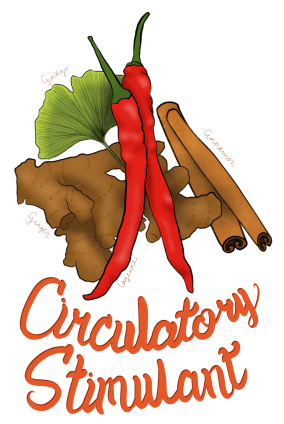
If you’re like me, and are a cold person whose feet are always like blocks of ice and you’d almost rather hold on to your hot coffee cup rather than drink it, you could use some of these plants in your diet! Drinking teas and using them in your cooking could really boost your blood flow and keep you warm.

Keep in mind though, they are very effective at moving blood around. If it takes a long time to stop bleeding when wounded, have heavy periods, or have thin blood already, these plants probably aren’t the best thing to increase in your diet.

Plants that boost blood flow can include ginger, cayenne pepper, cinnamon, and ginkgo leaves.

Expectorant

… are plants that help ease congestion by breaking up concentrated mucous, especially in the lungs and bronchial tubes. If you have an unproductive cough, bronchitis, or a cold that really has you down, try to incorporate expectorants in your daily life.

These plants can work great when made as a tea or even as a salve or cream that you rub on your chest and back. During a cold where your nose is constantly running, we can get chapped, raw skin around our nose after blowing it so often. By creating a cream that combines expectorant and skin-healing plants, we can relieve a lot of discomfort both from the raw skin and the excessive mucous, although keep in mind that expectorants are designed to move mucous, so don’t get freaked out if your nose runs a little more! The mucous is moving out, though.

Expectorants include thyme, violet leaves and flowers, and orange peels.

Hemostatic

… or styptic plants, are those that reduce blood flow. This may sound bad at first, until you realize that many of these are applied topically, and speed up coagulation. If you get a cut or a wound that bleeds, applying pastes, creams, or poultices of these plant can promote healing, clean the wound, and help the blood coagulate quickly!

Plants that can slow bleeding include Raspberry (and others in the Rubus genus) leaves, yarrow, and plantain. If you are out gardening or hiking and get cut, chew up any of these plants (if in a safe spot to forage), and apply the paste directly to the wound.

In ancient Greece, yarrow was used to stop warrior’s bleeding during battle and the myth goes that Achilles (the dude who couldn’t be hurt except if he was cut on his ankle) mom held him by the ankles as she dipped him in water that had yarrow in it! Medicinal plants have been used for a LOOOONG time.

Nervines

…are plants that promote sleep and reduce stress. Many of these plants also can be used as a mild sedative! If you’re having a hard time sleeping due to a restless mind, or stress, drinking teas or infusions that include these plants can be a real help. In fact, many of these can be made into little packets that can be stuffed in your pillow or used as a bedside diffuser to help you sleep!

Plants that make for great sleepy-time tea or de-stressing concoctions can include chamomile, Lemon Balm, cedar, and lavender. Keep in mind though, cedar is very effective, so when prepared properly, a little cedar oil can go a long way!

Vulnerary

…plants are those that promote general healing. They aren’t as specific as hemostatic plants that coagulate blood, they do help increase cellular regeneration after an injury, clean wounds, and aid the platelets in closing wounds. They also help reduce risk of illness and promote overall well-being after internal damage.

In some video games, Vulneraries are little potions that you drink in order to regain HP (health points) after taking any kind of damage. Perhaps these little potions are made with lavender, yarrow plantain, and calendula!

These plants can also be used in creams and lotions to speed healing from damage caused by dry, cracked skin.

Get Hands On Experience!

Excited to get outside, observing the natural world, and enjoying the physical and mental benefits that plants provide? If you’re local, participate in my basic seasonal foraging workshops, then register for advanced foraging and herbalism workshops to hone your skills! Regardless of where you live, you can learn more on social media. I post daily environmental education posts to Instagram and foraging videos to YouTube.

Marissa Jacobs (The Art of Ecology) does not diagnose, treat, or prescribe, and nothing said or done should be misconstrued as such. These tips are designed to educate and support general well-being.

Supporting The Art of Ecology through the online shop or by becoming a Patron at any tier on Patreon can help keep educational content coming!

garden foraged floral arrangement

Spring has sprung and it’s definitely a great time to be getting outside, exploring nature, and re-establishing our connection with the ecosystems around us after a long winter! One great way to do this is to explore the plant life around you, and bring home some foraged floral arrangements.

Benefits of Fresh Flowers Inside

Having fresh flowers and plants indoors can help not only brighten our days and make us smile when we see their beauty, but there are some other little benefits too! Seeing the color and beauty can reduce stress levels and boost productivity, making fresh arrangements perfect for the home office or kitchen.

As we get outside to do the foraging, our immune system, Vitamin D levels, and muscle tone increase. Just being outdoors in the natural world is shown to improve health overall and promote healing.

Chronic stress can lead to disorders such as depression, anxiety, and even digestive health issues! Any way that we can, during our busy lives, reduce the amount of stress and give ourselves little pick-me-ups, the more we can improve our mental and physical well-being.

Ethical Foraged Flowers

Just because we might want some extra color and beauty in the home doesn’t mean that we should be picking all of the wildflowers willy-nilly. In fact, we should be very contentious of our harvesting habits so that we can ensure proper survival and seed dispersion of native plants. A great rule of thumb is 1:3 rule. In an area, monitor the plant population and never pick more than 1/3 of the plant population. In fact, harvesting less is better, unless you’re harvesting an invasive plant, in which case have at it! The way I remember this is: “One for me, one for the bees, and one to make seeds!” By following this rule, we make sure that the flower can reproduce and continue passing it’s genetics on, making more plants for us to enjoy later, as well as providing food for pollinators, birds, small mammals, and others.

Learn more about foraging etiquette, and how to prevent seed dispersion and rampant growth of invasive plant species below!

Not ever arrangement only has flowers in it though. Some have tree branches too! As you look for beautiful tree branches, think about proper pruning techniques. Instead of ripping branches off, prune them at a 45 degree angle at the branch collar. This is a bit of swollen bark tissue that separates the twig from the branch it’s attached to. By pruning here, we can promote growth, and also signal to the tree where to callus over and heal. Keep in mind that this is a wound and improper pruning cuts can be a perfect spot for fungi, bacteria, or other pathogens to enter!

Prune the Golden Curly Willow along the dotted line to keep the tree healthy. Avoid cutting into the branch collar (the swollen part in the circle) and don’t leave a large stub!

Flowers & Trees that Make Beautiful Arrangements

As you’re out and about, searching for beauty to bring home, please also remember to ask permission to forage on anyone’s property other than your own! In fact, some locations do not allow foraging, so please respect that.

Otherwise, be on the lookout for beautiful plants through out the year! Below is a list of some of my favorite by season (plants marked with * can be invasive in PA):

  • Violets
  • Pussy Willow
  • Dead Nettle*
  • Henbit*
  • Forsythia branches*
  • Yellow Rocket*
  • Curly Willow Branches
  • Redbud Branches
  • Dame’s Rocket*
  • Chicory
  • Fleabane Asters
  • Multiflora Rose*
  • Viper’s Bugloss
  • Butter & Eggs*
  • Spotted Knapweed*
  • Bee Balm
  • Sunflowers
  • Tickseed
  • Black-eyed Susan
  • Daisies
  • Pine Boughs
  • Holly Boughs
  • Cedar Branches
  • Winterberry Boughs

While there are many more beautiful plants out there, not every flower is suited for an arrangement. For example, the milky sap of a dandelion can spoil the water and cause rapid wilting in your other flowers. Daylilies only bloom for one day, and will have to be replaced quickly. Play around with combinations and discover what you love!

Creating Foraged Floral Arrangements

garden foraged wildflower arrangement

By following these basic steps, you can create gorgeous arrangements!

  1. Find a jar, vase, or cup to hold the flowers and add water. You don’t want your blossoms to wait to get into water!
  2. Cut the stems at an angle and make sure that their height will be roughly 1 1/2 times the size of the jar used. (If you have a tall case, you don’t want short flowers!)
  3. Remove the lower leaves that would sit in the water. Any foliage that falls into the water can cause bacteria and algae growth, which severely shortens the lifespan of your arrangement
  4. Add flowers to the bouquet in a spiral manner. Try to have few large accent flowers that look good with many different flowers. Don’t overwhelm the bouquet with too many large flowers (have only 3 sunflowers mixed with daisies, Black-eyed Susan’s, and bee balms, with sprigs of wild grasses popping out, instead of a bouquet of ONLY sunflowers)
  5. Change the water out whenever it starts to get cloudy. Also, pick out blooms as they die to prevent rotting the other flowers that last longer naturally.

What will you create? Interested in learning more about ethically harvesting wildflowers and branches as well as a more in depth look at how to design your arrangement? The Art of Ecology hosts spring and summer floral arrangement workshops, perfect for any nature lover!

Supporting The Art of Ecology through the online shop or by becoming a Patron at any tier on Patreon can help keep educational content coming!

Did you know that March is National Craft Month? There are many crafty projects out there, but as stewards of the environment, there are fewer projects that are sustainable crafts. Instead of creating projects that you’ll just throw out after displaying for a short time, try to go for some projects that will not only get your creative juices flowing, but also make a positive impact on the planet!

This is part 2 of my previous “Eco-friendly” art projects. You can find more eco-friendly art projects, and even info about how to incorporate Zero-waste techniques and materials into your projects below!

Upcycled Cotton Balls:

Cotton rounds and cotton balls are not biodegradable, and they actually contain a good amount of pesticides and toxins. If you wear makeup or nail polish often, you may hate to use up so much cotton products to remove it. Fortunately, this craft has you creating your own rounds from upcycled fabrics.

  1. Find fabric you like or an old towel. Do you have a towel covered in hair dye stains, or one that holes in it? Use those! Some other fabrics to use for this are flannel, hemp, or fleece, as they will be softer on your face.
  2. Cut a circle in your fabric about 2” in diameter. However, if you would like to make it bigger or smaller, that’s fine.
  3. Repeat step 2. Use your first circle as a stencil for your second circle!
  4. Grab a needle and some thread of your choice and sew both of your circles together at the edges. All done! Changing your typical cotton rounds to these reusable fabric wipes will reduce your use of single-use products, and it will even help you save some money.
  5. To wash, simply put them in the laundry with your next batch (only do laundry in full-loads to conserve water).

Plant-Based Paints:

Painting is always fun, but sometimes the paints we use aren’t the best for the environment. While we try to keep paints on our canvases or paper and out of the natural world, we still wind up creating bits of waste as we wash our brushes and the paint runs into the drain. Commercially made paints are often comprised of a pigment and the suspension that adheres the pigment to the medium. Usually, these are synthetic instead of natural. By creating our own plant-based pigments, we can create more sustainable paints (provided we harvest our plant matter properly – read more HERE).

  1. Harvest petals, leaves, and other plant parts such as Spinach leaves, Cosmos flower petals, blackberries, and Poke berries, that produce color.
  2. Muddle, or smush up the plant matter in a small dish in a 1:1 ratio (water : plant matter). You may need to adjust to get a stronger color. If the color from the plant isn’t bleeding into the water, you may need to boil the water & plants to let the color come out.
  3. Strain out plant matter and put liquid (your paint base) into a clear, sealable jar or bottle. Old, washed out acrylic pain bottles work perfectly!
  4. Add Flour or gum arabic to thicken and strengthen the pigment to your desire. For thicker paints, add more flour or gum. For water color, only add the gum to make sure you have control of the spread of color on your paper.
  5. Store your paint jar/bottle out of direct light.

All-Natural Wreath:

Instead of purchasing a wreath made out of plastic vines and flowers, create your own natural one! While you do need a willow tree or vining plant to prune for this project, it is a great activity! If you use willow (I love using my Curly Willow for this), pruning can promote growth. If you use other vining plants, try to use Oriental Bittersweet or Japanese Honeysuckle vines as you remove the invasive species from your community (just don’t spread the seeds and remove the entire plant instead of just pruning these invasive species!) Prune off the long, thin young growth and twist them all together into a circle to form the wreath base. Then decorate with flowers, pine cones, or other materials!

  1. Cut long, thin growth of your desired plant. The longer the sections the better.
  2. Twist them all together into a circle to form the wreath base.
  3. Weave in your wreath accents! Conifer cones (from pines, spruces, Dawn Redwoods, firs, and others are great!), cedar boughs, dried flowers or grasses, or holly branches with berries can make great additions.
window clings for birds event

Window Clings for Birds:

Help prevent birds from running into your windows by creating window clings! The clings help to break up the reflection that the bird sees and will deter them from thinking they can fly through or that their reflection is a competing bird while being much prettier than random strands of tin-foil, mesh coverings, or window blinds.

  1. Create an outline of a design using black puffy paint on a sheet protector.
  2. Fill the design in with color. You can use toothpicks to blend the color and fill in any gaps. Don’t let the paint be too thick, or it will take a very long time to dry!
  3. Allow the design to thoroughly dry. When it’s fully dry, gently remove and peel off of the sheet protector and place on a window! If the design isn’t dry, the cling won’t properly peel off and will feel sticky. Let it continue to dry. This may take 8-24hrs. depending on how thick the paint is.

Get Creative with Workshops in a Box!

The Art of Ecology builds visual connections between people and the natural world we’re a part of by blending the arts and environmental sciences. While we always have so much fun during the programs designed to get your creative juices flowing while also teaching you about the marvelous ecosystems around us, you may not be local or not have a schedule that lines up with when the programs are scheduled. That doesn’t mean you have to miss out though! The Art of Ecology offers a handful of programs as “Workshops in a Box”. Each box contains the materials and instructions needed to create your project and is delivered straight to you! A portion of the proceeds is donated back to wildlife conservation & habitat preservation efforts.

Lucy McGinty - 2022 Intern (co-written with Marissa Jacobs)
Lucy McGinty – 2022 Intern (co-written with Marissa Jacobs)

Lucy is an environmental studies college student, and The Art of Ecology’s new intern! Her career goal is to become an environmental microbiologist—a person who studies the microorganisms in the environment and their relationship to pollution. She is so excited to [learn more about ecology] and ways we can do better.

During Invasive Species Awareness Week, we ask the question, “What does it mean to be an invasive species?”, and “What can we do about them?” Fortunately, both questions are relatively easy to answer.

Speedwell (Veronica persica) is a cute, very small, spring flower here in Pennsylvania, and an invasive one.

What is an Invasive Species?

First we need to define Native Species. These are plants and animals that are indigenous to a local area and have specially adapted and co-evolved alongside wildlife and other plants, and climate.

Invasive species are introduced plants and animals (whether by accident or on purpose) who have established themselves in the new area AND cause ecological harm. Many plants were introduced for specific agriculture purposes such as food sources, hedgerows, ornamental value, or even as erosion controllers. Over time, many of these species grew out of control and became invasive. Some have no natural herbivorous predators, diseases, or ways to manage seed dispersal. Others are aggressive girdlers, meaning that as they climb trees, they suffocate them. Today, invasive plants and animals are considered some of the leading threats to biodiversity, as well as to our own health.

Ecology in the Garden hummingbird moth in meadow photography in bucks county pennsylvania
Beautiful, but invasive, Dame’s Rocket flowers can be found in meadows, disturbed areas, and woodland edges.

Many animals are introduced as globalization continues. They find their way aboard cargo ships, planes, and other vehicles, then get deposited far, far away from home. These are animals with no natural predators or diseases to manage populations and they turn from wonderful animal in their home country to invasive pest.

Invasive Animals in Pennsylvania

Below are some invasive animals in Pennsylvania, however they may be found throughout a large geographical region.

Spotted Lantern Fly (Lycorma delicatula)These colorful jumping insects were originally native to China before making their way overseas on cargo ships. While many think they are beautiful, they can cause ecological harm by devastating fruit and ornamental tree populations. Yellow Jackets and invasive Praying Mantids have been seen eating Spotted Lantern Flies, which can help manage the population. Another way to manage them is to find the egg cases (which look like lines of mud) on trees in the winter and scrape them off into jars of alcohol.

Rusty Crayfish (Orconectes rusticus) – This crayfish was suspected of being used as live fishing bait, which then escaped into Pennsylvania waters. It’s a highly aggressive, large-growing crayfish, which outcompetes native, Eastern Crayfish. The Eastern Crayfish is digs holes and tunnels which provides homes for many native aquatic lifeforms that can’t dig on their own. As the Eastern is outcompeted, that tunnel habitat disappears. Rusty Crayfish also grow too quickly and too large for many standard crayfish predators to eat them, which means that their populations grows without check. By ensuring that any live bait is only used in areas where that bait is native to, or by using non-live bait, you can help ensure that fishing bait species don’t become invasive!

invasive species japanese beetle

Japanese Beetle (Popillia japonica)– In their native ranges in Japan, these beetles are talented pest managers, however in PA, that is not the case. These invasive insects were introduced in the early 1900’s and have since run rampant, causing devastation to the agriculture industry – both commercially and in homeowner’s gardens! To get rid of them, simply hand-pick the adults off of the plants and put in a bucket of soapy water. If the adult has a white dot on it’s back (near the head), you can leave that one be. The white dot is a parasitic fly egg. When the egg hatches, it will consume the beetle, so allowing those adult beetles to live will ensure that the parasitic fly population also survives and continues it’s job as a pest manager.

Invasive Plants in Pennsylvania

Below are some invasive plants in Pennsylvania, however they may be found all over North America.

These black berries distinguish this honeysuckle vine as a Japanese Honeysuckle, compared to the bright red of the also invasive Amur honeysuckle.

Japanese honeysuckle (Lonicera japonica) This invasive honeysuckle is native to Eastern Asia, and was introduced to North America in the 1806. It is a rapid-growing vine that can strangle vegetation, and will out compete native plants for sunlight. Infestations can be controlled by mowing twice a year or just removal of vines by hand. Some wonderful alternatives are the Coral honeysuckle (Lonicera sempervirens) and the Pink honeysuckle (Lonicera hispidula).

Garlic Mustard (Alliaria petiolata) Originally from Europe and parts of Asia, Garlic Mustard has prolifically spread in North America forest edges and shaded meadow areas. Their small flowers produce many seeds which are easily spread. The garlicky taste deters herbivores, so they don’t have a natural predator. As garlic mustard plants spread, herbivores turn to eating native plants, and as the number of native plants dwindle, so do those animal populations. Garlic mustard also prevents trees from forming beneficial connections with fungal mycorrhizae, which aids in nutrient sharing and communication between tree populations. Therefore, as garlic mustard populations increase, tree health decreases. Fortunately, these are easy to dig up by hand before they go to flower and spread seeds. Being able to make pesto and delicious foraged foods with their leaves is an added bonus!

Porcelain Berry (Ampelopsis brevipedunculata) – These are multicolored berries that bloom in the late fall, and are highly invasive. Originally from Northern China and Japan, porcelain berries were introduced to North America as an ornamental plant in the 1800s. This plant grows rapidly and abundantly, and it can quickly kill native plants by blocking out sunlight access. Removing these plants by their roots before their berries ripen will reduce the future growth of the plant!

So What do We Do About Invasive Species?

Getting rid of invasive animals is a lot harder than getting rid of plants, however with many of the insect species, we can easily scrape away egg cases and quickly smoosh or drown them when we find them. Killing insects may be difficult to do, since people tend respect animal life in a different way than plant life. Fortunately, insects such as the invasive Japanese beetle don’t seem to like garlic and other alliums, so planting garlic around your garden may deter them. This doesn’t mean that the beetle is eradicated, but that they have ventured off to eat and breed in another location. Be mindful as you encounter these species and keep in mind that in their own homes, they are wonderful, but here they cause catastrophic damage to our ecosystems.

Cutting back, preventing seed-dispersal, burning, and digging up invasive plants can help to slow and mitigate their spread. Once the plants have been removed, many make delicious drinks, desserts, and side dishes! Some invasive species that are also edible include Garlic Mustard (seen here as a pesto), Wineberry, Autumn Olive, Japanese honeysuckle flowers, and Dame’s Rocket flowers.

Explore Ecosystems with The Art of Ecology

Are you interested in learning more about creating and sustaining healthy ecosystems, both for plants and wildlife? Check out my upcoming in-person & virtual events! Visit my shop to find some conservation-themed merch. A portion of the proceeds supports habitat conservation efforts and invasive removals.

Lucy McGinty - 2022 Intern (co-written with Marissa Jacobs)
Lucy McGinty – 2022 Intern (co-written with Marissa Jacobs)

Lucy is an environmental studies college student, and The Art of Ecology’s new intern! Her career goal is to become an environmental microbiologist—a person who studies the microorganisms in the environment and their relationship to pollution. She is so excited to [learn more about ecology] and ways we can do better.

Art Challenge: Feathered Friends for “Feathruary”!

This past month I’ve been creating art as part of the #Feathruary2022 by @MischievousRedFox on Instagram. Illustrating birds is not only fun, and a great way for me to study local birds & learn more about their identifying characteristics, but it is also a good way to educate about the importance of birds in our ecosystem. Each piece in this series is a mix of photography and illustration, with the habitat photographed, and the illustrated bird overlaid. In all of the Feathruary Art Challenge prompts, I chose to feature local, Southeastern PA bird species.

My Favorites from the Feathruary Art Challenge

White Breasted Nuthatch

These birds are easily identifiable with their white chests, grey backs, and unique habit of perching upside down. Their beaks are relatively long for a bird of their size, and are slightly upturned. This helps them as they peck at suet feeders and dig into furrows in tree bark.

This particular individual is a classy lady, with her grey head. The distinguished gentlemen birds have a darker, almost black top of the head.

White-breasted Nuthatches (Sitta carolinensis) help maintain insect populations and act as seed dispersers in their primary habitat of deciduous forests.

While the White-breasted Nuthatch is commonly found in Pennsylvania, there are other species. Other North American nuthatches include the Red-breasted Nuthatch (also found in PA), and the Pygmy Nuthatch.

American Goldfinch

The American Goldfinch (Spinus tristis) is a vibrant yellow color with black caps and wing tips. The males are more vibrant than the females, although in the winter, will lose his vibrant breeding plumage and look more similar to the females. This yellow color is obtained from their food, so the more vibrant the coloration, the more likely he is to be able to provide for the female and future chicks.

Goldfinches are some of my favorite birds, yet climate change is creating a disconnect between food resource bloom time and migration time, making them increasingly uncommon in PA. They rely on Black-Eyed Susan’s, coneflowers, and thistles as food resources and trees overlooking meadow areas as nesting habitat. As temperature increases, the bloom of flowers that they use as food no longer overlaps with their migration time. This, combined with human impacts has caused the American Goldfinch to move their range farther north, meaning seeing them in PA is more of a treat.

Sharp-shinned Hawk

Similar to the Cooper’s Hawk, the Sharp-Shinned (Accipiter striatus) can be identified by it’s small size (smaller than a crow), small head: large eye size ratio, and horizontal banding across the tail and wing feathers.

While their favorite habitat is dense forests, they also love to hang around feeders since songbirds make up roughly 90% of their diet. They are talented mid-air hunters and are known to catch insects and other birds in flight. Despite being a strong predator themselves, they are also prey to larger raptors such as goshawks.

This particular Sharp-shinned individual illustrated here is a juvenile, just turning into an adult. When out birding, birds within the same species may look different due to a variety of factors, age being one of them. As birds mature, their feather coloration often changes with time. This is common in raptors and birds of prey. Other changes may occur seasonally, like with the goldfinch.

Mallard Duck

There are so many duck species found locally, however the Mallard (Anas platyrhynchos) is one of the most easily recognizable! The male’s iridescent green head, and bright yellow bill (females have a dark-colored bill) make them easy to spot.

One of the reasons that they are so widely knows is that they can thrive in any wetland environment, real or man-made, making them common urban ducks. They can be seen swimming along with the current in forest streams, dabbling around in city water basins, and anywhere else with water!

Other ducks in this area include Mergansers, Wood Ducks, Longtails, Canvasbacks, Ruddy ducks, and more.

Eastern Towhee

These sneaky birds have a dark back with some long stripes of white along their wing, not to be confused with the Spotted Towhee who has many more spots along their wings. Their chests are a whitish-tan, fading into a rusty-red color.

Even if the Eastern Towhee (Pipilo erythrophthalmus) is common in your area, they can be hard to spot! They love to hop in thickets and understory growth, searching for food such as seeds and insects. Building brush piles, adding thicket plant cover, and setting up feeders can attract them to your yard.

Exploring Wildlife Through Art

Do you love illustration and want to learn how to draw scientifically too? Do you love all things wildlife and want to share that passion with everyone you see? Check out my calendar of events for upcoming illustration classes (both in-person and virtual). Visit my shop to snag some bird stickers, magnets, and more! A portion of the proceeds helps to support wildlife conservation efforts.

Supporting The Art of Ecology through the online shop or by becoming a Patron at any tier on Patreon can help keep educational content coming!
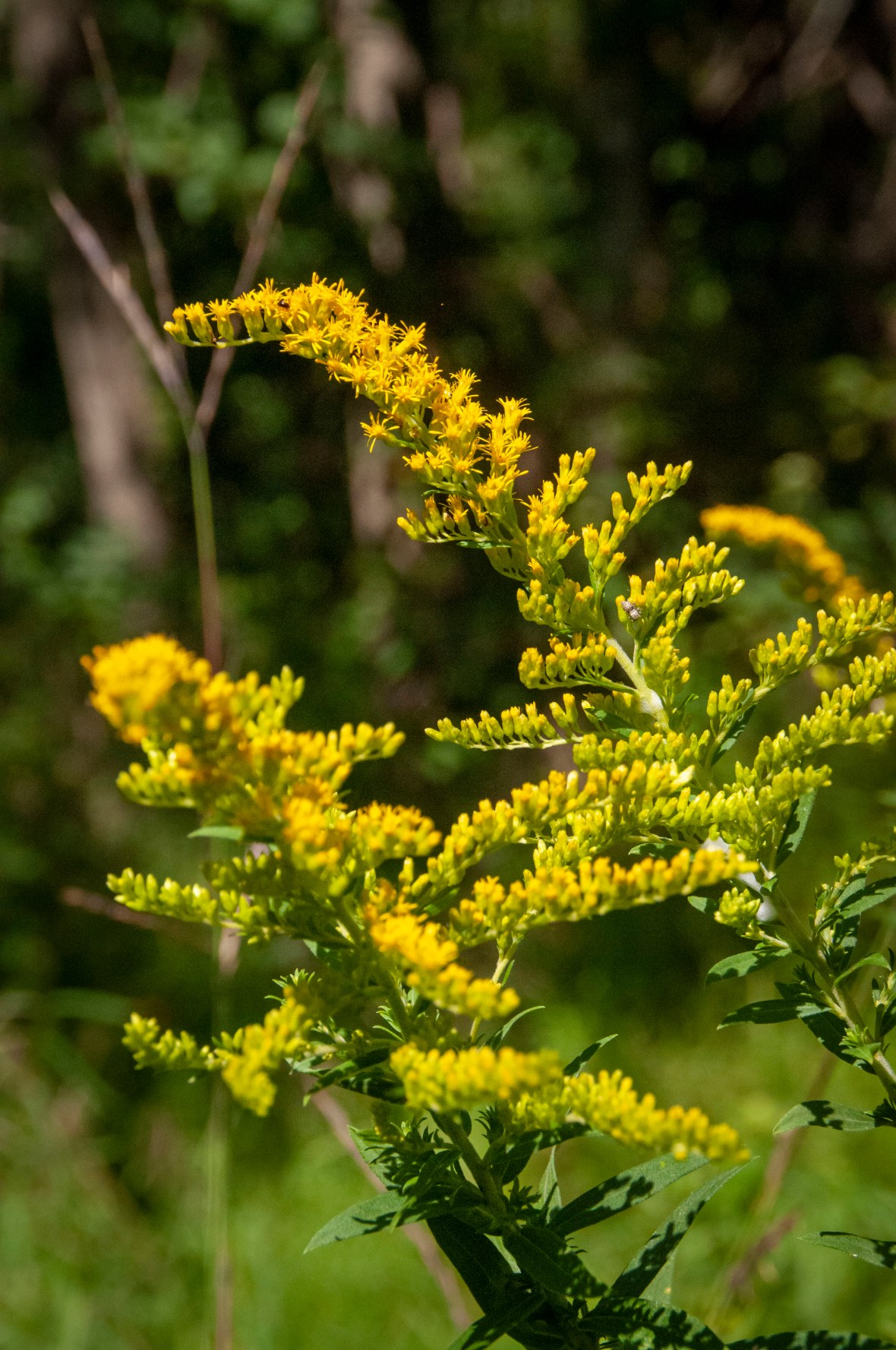
Birds and their population numbers are important for indicating overall health of ecosystems, making them bioindicator species. Have you participated in a bird count in your backyard, as part of a community science project, or as part of an event at an educational center?

The Great Backyard Bird Count is an important way for scientists to gather information about bird species and bird migration, and it is a great way for absolutely anyone to get involved in the scientific community.

Why is Birding Data Important to Scientists?

Overall, scientists can examine what bird migration tells us about our changing climate. The migratory patterns of birds are important bioindicators of climate change, and we are beginning to see the dire effects this indicator has.

Birds are heavily affected by changes in temperature, moisture, and extreme weather conditions, so it is no surprise that they are sensitive to climate change. One of the most prominent ways that the changing climate has affected migration is the loss or alteration of their habitat. Many conserved areas for birds can no longer sustain many species, therefore forcing birds to relocate to unprotected areas.


Additionally, according to a Climate Risk Report by the World Wildlife Fund (WWF), the doubling of CO2 in the Arctic could cause the loss of nearly half of the breeding grounds of 10 million geese and 15 million wading birds by 2080-2099. There are even species of birds that are abandoning their migration altogether because of the extreme temperatures, like cranes in Germany that halted their migration to Spain and Portugal in the winter. This is particularly concerning because birds are then forced to combat the winter weather that they would normally travel away from.

Another issue is that the changing climate is disrupting and confusing biological clocks for migratory bird species. Birds are starting to arrive early or late to their destinations. This may not seem like a huge issue, however birds can miss out on valuable food resources! Many that rely on the spring insect emergence, or need certain plants to be in bloom, can miss out. Ornithologists all around the world are collecting data on the arising migratory trends to help mitigate problems.

Marissa of The Art of Ecology shares her submitted bird count checklist.

Submitting Bird Count Data

Counts such as the Great Backyard Bird Count or the Christmas Bird Count are some of the best ways to help ornithologists collect data on birds. It gives them the ability to see trends in migration on a large scale, and it’s a great way to help the scientific community and our diverse bird population.

Another method of contributing to the scientific community throughout the year is to use the iNaturalist app. This free app is not only a way to help you identify living creatures that you see, but each observation that you submit and include geo tags, images, and species data contributes to a data collection database. Scientists from all over the world can view the species populations, population movement, geographical data, and more by using observations submitted by you!

As The Great Backyard Bird Count comes to an end, consider continuing to monitor your local birds. You can still plug in your data through birdcount.org and on eBird! Did you get to count this year? Share some of your bird count highlights in the comments section below. Thank you to everybody who participated in this year’s bird count for contributing to the scientific community at large.

Lucy McGinty - 2022 Intern
Lucy McGinty – 2022 Intern

I am an environmental studies college student, and The Art of Ecology’s new intern! My career goal is to become an environmental microbiologist—a person who studies the microorganisms in the environment and their relationship to pollution! I am so excited to [learn more about ecology] and ways we can do better.

February 11th marks this celebratory day of Women & Girls in Science! Despite being naturally science-minded (typically getting better marks in biology & medical related studies than men), women still don’t venture as much into the science fields. Women comprise only 28% of STEM (science, technology, engineering, and math) industries!

Today we celebrate women & girls who pursue the science fields passionately, but everyday we encourage women and girls to engage with their natural scientific curiosity!

The Art of Ecology brings scientific education to people regardless of gender identity. As an educator, I am always amazed and excited by the number of women that explore the fields of environmental and biological sciences through my programs! Over 75% of my programs are attended by women, and while teaching children, I have heard young girls say things like, “Wow! If this is what scientists do, then I want to do it too!” It is my goal to empower students, regardless of age, to let their scientific curiosity shine.

The Women & Girls Behind The Art of Ecology

Marissa Jacobs: Founder, Lead Educator, and Artist
What Inspired You to Pursue Science?
me restraining lungfish in kenya
Marissa is taught how to restrain a Lung Fish in a village on Lake Victoria, Kenya

Growing up in the rural Pocono Mountains, there wasn’t much to do except to play outside! I’d search for toads and salamanders in the ephemeral creeks. I spent time foraging for wild-edibles, pretending that I was a lost Medieval adventurer (I read a lot of Redwall, Lord of the Rings, and other fantasy books) who survived in the wilderness. The more I learned about the scientific world, the more I could see God’s hand at work in His intricately connected creation (which as a Christian, I think is pretty neat!). In elementary through high school, I participated in the PA Envirothon, an eco-industry based competition, and the science fairs. In high school, I studied Chemistry, Biology, and Marine Biology so that I could further my dream of being a veterinary surgeon.

What did you study in college/university?

Originally, I attended Delaware Valley College (now University) for Pre-Veterinary Medicine, to be an exotic wildlife veterinarian in Kenya to work with giraffes, or on a coast working with marine species. Life had other plants and I had to re-evaluate my career path. My personality and goals were better suited for environmental education and teaching as many people as possible about wildlife conservation. I wound up with a B.S. in Wildlife Management & Conservation with a focus in Digital Art & Education. I am finishing a Herbalism certificate and am starting a Masters Degree in Environmental Education.

Do you have any advice for future scientists?

Don’t feel boxed in to one topic or facet of the scientific world! There are so many ways to blend your passions and strengths with science. I thought I wanted to help protect the animals that I love, and I still do! Now I blend my passion for art and love of conservation to protect animals in a different way than a veterinarian does.

Do you love fashion design and physics? Look into how fashion designers impact astronaut safety as they create sturdy space suits!

Do you love textiles and chemistry? Explore how various components of animal or plant fibers of textiles interact with plant phytochemicals in botanical dyes!

Do you love social activism and environmental science? Discover what it takes to pursue a path of social justice and how it correlates with climate change!

Don’t feel like you have to choose between science and something else. You can mix & match!

Lucy McGinty: 2022 Winter-Spring Ecology Education Intern
What Inspired You to Pursue Science?

Ever since I was a young girl, biology has been my favorite subject. I was homeschooled, so I was able to focus more on the things that interested me. This allowed me to do a lot of science experiments with my mom growing up.

What did you study in college/university?

I am an environmental studies student, and once I transfer to another college I
will major in microbiology with a minor in environmental science. It amazes me that there is such an abundance of life all around us that we can’t see. Each time I get to look through a microscope, I get so excited and can feel my curiosity for microorganisms growing!

The whole world of science is so incredibly fascinating to me. If I had more time and money, I would love to take classes in all of the different science subjects—especially physics and astronomy.

The number of accomplishments female scientists have made is another reason why I am so drawn to working in STEM; Rachel Carson discovering the dangers of DDT, Marie Curie being the first woman to win a Nobel prize for doing extensive research on radiation, and Jane Goodall being the best primate scientist in the world is why I feel so hopeful for my future career in biology.

Do You Have Advice for Future Scientists?

If you are interested in getting more involved in science, the Philadelphia Education Fund has a wonderful STEM outreach guide for the Philadelphia area with numerous resources.

Supporting The Art of Ecology through the online shop or by becoming a Patron at any tier on Patreon can help keep educational content coming!

Female Cardinal Great Backyard Bird Count

Do you love all things birds, nature, and want to contribute to scientific studies easily? Join in on the 25th annual Great Backyard Bird Count, hosted by Cornell Ornithology. This global event includes roughly 100 million bird sightings each year and wildlife biologists, climate change scientists, and others use that data to create scientific models, create conservation strategies, and understand population movements.

This event takes place closely after Valentine’s Day (February 14th), each year. This helps provide data for bird movement right before they get ready to migrate in the spring!

Can Anyone Participate?

Yes! While many community science projects require training for their volunteers to go through, this is a simple count for the whole family!

  1. Pick your count location. Backyards, nature centers, at your favorite park; these are all great spots as long as you can stay there for 15+ minutes.
  2. Count the various bird species you see from that spot. This can be done at any point over the Great Backyard Bird Count timeframe.
    1. If you can identify birds by ear, be sure to count those too! Count them all, provided that you can properly identify and document them.
  3. Upload your count documentation to eBird. You will need to create an account, then include data such as location, date/time, how many people you birded with (if any), the time you spent birding, and the species seen. eBird includes an easy to use birding checklist so you can simply check off the birds seen!
    1. Keep in mind, if you submit a “rare bird” sighting, you may be required to also upload an image so the sighting can be verified. It’s fun to take pictures anyway, and upload them to iNaturalist as part of a data collection & collaboration effort.

Where Can I Count?

While you can count anywhere, search to see if any local nature centers or environmental organization are leading bird walks and counts. If so, then you would be participating in a group count.

Group counts are recorded differently, so consult with the count organizer about how they will be collecting sightings and documenting. You can learn more about group counts HERE.

Can’t participate, but still want to support bird conservation and habitat protection? Snag some The Art of Ecology swag and a portion of the proceeds will benefit wildlife conservation efforts!

Supporting The Art of Ecology through the online shop or by becoming a Patron at any tier on Patreon can help keep educational content coming!

Air plants have become quite trendy to have around the home or office, and they definitely live up to the hype!

These incredible plants are easily-maintained, have stunning blooms (unlike many other common houseplants), and are great for the both the beginner house-plant enthusiast and master botanist & plant expert!

Air Plant Hanger Workshop Event

What are Air Plants?

These plants require very little moisture and live in trees, using their roots to anchor themselves to bark. While there are many epiphytic plants (non-parasitic plants that use other plants as their substrate/support rather than soil), most people think of the Tillandsia genus as an air plant. Other epiphytes include orchids, pothos, philodendrons, and Spanish moss. Occasionally, Tillandsias also are lithophytes, meaning that they grow on rocks and other non-organic surfaces too!

Tillandsia sp. Native Habitat & Ecology

Tillandsias grow in many habitats of South & Central America, and Southeastern United States. They love tropical swampy, forest, desert, or mountainous environments.

When they mature and are ready to pass it’s genes off to the next generation, the plant produces a large, vibrant flower. This flower attracts pollinators such as hummingbirds, moths, and bats. The flower may last for a few days in order to maximize it’s ability to get pollinated. If the flower is successfully pollinated, the air plant produces seeds.

The poofy, light-weight seeds (think fluffy like Dandelion, milkweed, or clematis seeds) of the plant are caught in the air and float around until they land and germinate on trees, wires, rocks, or other stable surface. Some desert species can even grow on top of the shifting sands!

After the seeds are dispersed, the host (or mother) produces a pup, or baby plant that is genetically identical to the mother. This pup allows for the plant to once again try to produce a flower, get pollinated, and spread seeds.

Air plants trichomes

If the roots are for support, how do they get water?

Tillandsia have a unique part of their anatomy that many other plants don’t have: Trichomes.

Trichomes are small hair-like structures that any air moisture sticks to. While a rain can quickly drench the air plants, and any other plants, these trichomes also can absorb dew, fog, or general excess humidity. A dry plant is a white, or grey-ish green plant, and when the trichomes get wet, they appear translucent, making the plants look much greener!

My bathroom isn’t their native range. How do I care for house plant air plants?

As mentioned earlier, air plants make amazing house plants! You don’t need an expensive pot, soil, or a flat windowsill. In fact, these plants like to cling to other objects, so if you have other houseplants, you can set the air plant gently on top of sturdy species.

They like bright light however, many are used to being covered by tree canopies, so indirect light is best.

There are two ways to water your air plant:

  • Give it a room-temperature bath every week or so. Allow the plant to soak in water for a half hour, then shake excess water off thoroughly and allow to “drain” upside down before returning to it’s spot. Water in the foliage causes rot.
  • Misting daily also can provide the necessary water requirement, and is a great way to add a water-soluble fertilizer when needed! They do like baths best, though.
Air plants pups

After a while (it can be months or even years), your air plant may bloom! This is always exciting, but be on the lookout for pup growth. Once they are at least 1/3 the size of the mother, you can gently remove the pup if desired.

Keep in mind that different species and individuals may look slightly different. In the image here, the mother plant (Tillandsia ionatha) has a pup attached to her on the left. A genetically different Tillandsia ionatha was much smaller when it had a pup, so the removed pup (on the far right) is smaller.

Try playing around with these amazing plants! If one produces pups, gift to a friend and spread your passion for plants.

Interested in Adding Tillandsia sp. to Your Collection?

Supporting The Art of Ecology through the online shop or by becoming a Patron at any tier on Patreon can help keep educational content coming!

sustainable seed starters for seed swap

Are you missing gardening and getting your hands in the lovely soil? Fortunately, just in time to stave off the winter blues, is Seed Swap Day! Get your soil, little pots, and seeds ready to trade with a friend (or a stranger!) on the last Saturday in January each year.

Why Participate in a Seed Swap

Have you ever gone seed shopping and just couldn’t find that one weird variety of morning glory that your neighbor has growing up a trellis? (I live in a blue barn and my upstairs neighbor has these GORGEOUS deep blue morning glories traveling up and they reach his window in the summer… They look stunning against the blue wood!) Are you just getting started in the gardening world and want to discover what other people in your area have success growing?

Seed swaps are the perfect way to get some unique seeds that are able to thrive in your community. You’ll be able to round out your garden and also help someone find the plant that they were looking for with your seed trade! They’re great ways to contribute to the gardening community and share your passion for gardening with others.

Where to Get Seeds to Swap

sunflower garden seed saving

In order to participate in many seed swaps, you need to have some seeds to trade! The easiest way to get seeds is to simply go to a nursery or garden center and purchase a little bag of seeds. The rarer or weirder the seeds, the more fun the trades are! However, if you want to step up your seed swap game, try seed collection from your garden!

To collect seeds from your own plants, you’ll need to pay attention to when your flowers go to seed. This will be at varying times depending on the plant.

How to Collect Seeds from Your Garden

If you have flowers such as Marigolds, Cosmos, or Zinnias, it’ll be very easy to tell when the plant has only the dried seeds left. The petals will fall off, leaving the seeds exposed. You can collect the seeds and remove any debris. Then, lay them on a paper towel in a dark spot to fully dry before putting them in a labeled seed pouch to store for next planting season.

If you’re looking for fruiting plant seeds you’ll want to wait until the fruit has been produced, and has been on the vine or branch for a while (you won’t want to eat this anymore). You may also need to ferment the seeds in order to remove the slimy outer seed coat. Typically, when an animal eats the fruit, they ingest the seeds, them poop them out later. That seed coat is digested in the body and then is deposited elsewhere in convenient little fertilizer piles, but we’re not going to do that with our seeds…

Instead, slice a tomato (try with an heirloom tomato!), stick the pulpy mush in a pint mason jar half filled with water, and shake it. Seal and set aside for a few days, until the mushy pulp rises to the top and the seeds sink. When you open it, the water may smell from the fermentation, but that’s okay! Compost the mush, and set the seeds on a paper towel in a dark spot to fully dry. Seeds need to dry before storing since if they mold, your seed is no longer viable. Storing seeds in dark spots prevent the seed from germinating too quickly.

milkweed seed dispersion by wind for seed swap

Get Seed Swapping!

Interested in getting involved in a seed swap? A simple google search “seed swap events near me” may reveal some! In the case where you don’t find any near you, you can always participate in online seed exchanges.

In fact, Seed Savers Exchange is a group of gardeners who focuses on sharing seeds in order to maintain plant biodiversity. You can find all sorts of plants, including potato tubers, tree cuttings, garlic bulbs, and more – not just seeds!

Are you local to the Bucks County region of Southeastern Pennsylvania? View my calendar of events to see if there are any seed swap or gardening events coming up with The Art of Ecology. I’d love to meet you, help you grow your garden, and explore what I can add to mine!

seed packets available for seed swap

Supporting The Art of Ecology through the online shop or by becoming a Patron at any tier on Patreon can help keep educational content coming!