Winter is here and it makes me miss the vibrant colors of spring, summer, and fall. I personally LOVE yellow. I love Sunflowers, Coreopsis, Daisies, Goldfinches, and Blue-Ringed Octopus. I’m not super picky though. I just love color! I love Butterfly Weed, Zinnia, Hibiscus, Purple Beautyberry, Cuttlefish, Common Sea Dragons, Giraffes… the list can go on forever, but all of them have something in common – none are blue.

Why does it seem like there is No Blue in Nature?

bluits small
These little bluets even have the word “blue” in their name, yet look closer. Are they blue or actually purple?

What about Blue Jays or certain tree frogs? They’re intensely blue. In the plant world, Bluets, Big Leaf Hydrangea, or Grape Hyacinth flowers are blue.

Or are they?

Short answer – it’s all a scam. The brain has been tricked into seeing blue – there are hardly any true blue pigments in the natural world.

Long answer – Animals and plants typically ingest pigments, or colors, from their food. Many birds, such as Cardinals, Robins, and Goldfinches eat foods that allow their body to process the pigments and have more vibrant plumage. For example, baby flamingos start out grey. Through their life, flamingos eat shrimp and algae that have a pigment called “Carotenoids” which allow them to turn a brilliant pink as they mature. This specific pigment is also in tree leaves and when Chlorophyll disappears, they get to show off.

grape hyacinth small
These Grape Hyacinths (Muscari sp.) look very blue against the pink in the background, yet they still aren’t a “true blue” flower!

Examining the Blue Color

We may see animals that look blue, such as Blue Jays, Blue Morpho Butterflies, or Poison Dart Frogs, but are they really blue? No. They are a dingy brown-gray color but have structures on them such as keratin and chitin on bird wings, prisms of butterfly scales, and iridophores on frog skin all shine and reflect colors that the brain interprets as blue. There are always exceptions to the rules, though, and some rare fish and fungi have developed a true blue pigment!

Other animals and plants have developed a color mixer that takes different pigments and minerals and blends them to give the appearance of blue. For example, when blending a type of Anthocyanin and Iron, tulips can seem blue. There are three types of anthocyanins – 1) Pelargonidin (orange-pinkish) 2) Cyanidin (reddish-purple) and 3) Delphinidin (violet-blue). This Delphinidin pigment when combined with the right minerals (which can raise or lower soil pH) will present itself as a blue color in flowers such as Delphiniums, Bluebells, Hydrangeas (think back to the soil pH impacting if they’re pink or blue), and Morning Glories.

Next time they bloom, look at all of those plants you thought were blue and study them! Many are actually varying shades of purple! Pick up that Blue Jay feather you found on the ground and hold it up to the sun. Suddenly it’ll look brown because you’re not looking at the reflective part!

Nature is amazing and it reminds us that not everything is as it first appears. Things in nature require a second, closer look and once you take the time to look deeper, you’ll find out how complicated, intricate, and beautiful the world really is!

Fascinated by plant and animal colors like I am? Add any of these photos to your collection!

Check out these links for more information about the color blue and how plants and animals have been able to trick us!

Animals and their Pigmentation

The Biochemistry of Anythocyanins and their Hydroxyl groups

Iridophores in Poison Dart Frogs

Blue Flowers

Supporting The Art of Ecology through the online shop or by becoming a Patron at any tier on Patreon can help keep educational content coming!

Did you know that a group of Flamingos is called a Flamboyance? These amazing birds are under threat of climate change, but fortunately, are being protected.

What is a Flamboyance?

Did you know that a group of Flamingos is called a Flamboyance? These amazing birds are under threat of climate change, but fortunately, are being protected. Being Flamboyant means being colorful and vibrant. It only makes sense then that a group of Flamingos would go by this name (among other names like a “flock” or a “pat”).

Flamingos are vibrantly pink birds that live in tropic and subtropic regions that have saltwater. They love lagoons, estuaries, mud flats, and saltwater lakes. While the birds themselves don’t drink saltwater and therefore need to also live near freshwater, the food they rely so heavily on likes the salt. Flamingos eat crustaceans, mollusks, aquatic insects, and algae.

Flamingo Conservation

Unfortunately, while the birds themselves aren’t being threatened, their food source is. An increased amount of pollution and toxins entering precious water sources has been a detriment. The small aquatic animals and plants are dying, causing the Flamingos to spend more time and energy searching for food. Click here to learn more about how pollution has impacted several African populations.

Climate Change is also impacting the bird’s population as drought can dry up their water source and rising waters can prevent the flamingo from properly eating. They eat upside down, making it a little difficult if the water isn’t shallow enough. Extreme temperature changes can cause a lessened desire to mate, which also reduces the numbers.

Fortunately, despite all of this, the flamingo populations across the globe appear stable and the birds do well in captivity, giving zoos the proper time to study the magnificent birds.

Support these Birds!

Want to add any of these photos to your collection? This photo was on display at the D & R Greenway Land Trust as a framed and matted 11×14 (most popular size!) . Snag this Conservation minded decal to show your support for the wildlife you love!

Supporting The Art of Ecology through the online shop or by becoming a Patron at any tier on Patreon can help keep educational content coming!

All I wanted was a puppy… REALLY BADLY. I wanted a cute little fuzz friend to vent to and care for. But alas, no puppy for me. Instead, I came home from my parent’s house one day with a plant that my father propagated for me. Soon, that one plant turned into three plants, which quickly turned into eight and now – I have roughly 35 plant varieties in my 1 bedroom apartment, many of which I have multiples of!

Can't get plants inside your home? Visit a botanical garden to have a whole day of plants!
Can’t get plants inside your home? Visit a botanical garden to have a whole day of plants!

So what happened? Yes, I did eventually get a dog, but the plants helped increase my well-being and give me a rewarding feeling of helping something grow. Plants make people happy. It’s a fact that I wished I realized sooner.

Benefits of Indoor Plants

Need some reasons to start your own indoor botanical garden? Here are 10 to get you started on your road to plant obsession.

Colorful hibiscus plants definitely help to brighten up a cloudy day! Knowing plant temperature requirements (this is a tropical plant that doesn't like PA winters!) will help you care for it year-round!
Colorful hibiscus plants definitely help to brighten up a cloudy day! Knowing plant temperature requirements (this is a tropical plant that doesn’t like PA winters!) will help you care for it year-round!
  1. Plants increase productivity – Having plants around reduces stress and increase concentration by up to 15%. Put them in your work space!
  2. Plants increase vitality – Working with plants, even indoors, releases adrenaline, which increases energy and well-being!
  3. Plants provides us with something to nurture – Humans want to care for things. We want to help nurture a little being into maturity and watch it grow, that’s why many find parenting so rewarding! Not everyone can have or want children though, so what do those people care for? Many have pets, but plants are a great option. Watching a plant start as a sprout and continue to thrive, produce flowers, and seeds is exciting and can fulfill that need to care for others.
  4. Plants increase self-esteem – As plants grow, your self-esteem will too! This little green lifeform needs you and it definitely gives one’s confidence a boost when you see your plant thrive.
  5. Plants purify the air – Photosynthesis removes toxins from the air. Humans have added more pollutants to the air, so being around plants can help us literally breathe easier. A NASA study has shown that plants can remove up to 87% of toxins!
  6. Plants add Oxygen to the air – Not only do they remove toxins, but they also replenish our O2 . We breathe out CO2, the plants breathe that in and release O2 for us to use! It’s a beautiful cycle!
  7. Plants boost immunity and healing – Hospitals have increased the number of gardens and plants on their campuses because plants reduce anxiety that inhibit the healing process. Also, plants produce chemicals called “Phytoncide” that help to protect the plant from germs. Being around plants for even 30 minutes a day can improve our immune systems!
  8. Plants are natural humidifiers – Plants need water to survive, but they also release a small amount of water as a byproduct of photosynthesis. They don’t lose a lot, but it’s enough for us to notice, especially during the winter when the air is dry and stale.
  9. Plants improve our relationship with others – As you care for your plant and learn to recognize what it needs to be happy, you’ll notice that you start to learn more about people as well! Studies show that those who care for plants are more likely to be compassionate towards others.
  10. Plants are colorful decoration – If you find that your home needs some new color and life, add plants! The greenery of nature is soothing and having green in the winter is so refreshing! Vibrant pots and hangers are great ways to add color and personality to a room.
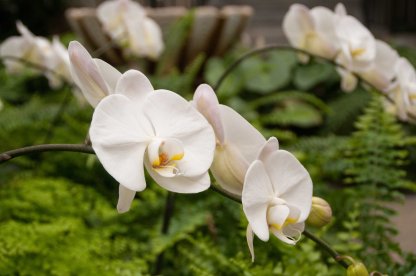
white orchids
Caring for plants definitely increases happiness, but make sure to start with an easy to care for plant! Orchids are beautiful, but may be difficult to grow.

Houseplants for Beginners

Now that you are convinced of the benefits of plants, click here to see a great list of houseplants for beginners! Remember – start out with easy-to-care for plants until you learn more about plant care. Nothing is worse than getting plants to make yourself feel happier, and then watching them slowly die.

Need more plants in your life, but don’t have the light or space for them to thrive? No worries – I’ve got plenty of plant prints, illustrations, and more to decorate with! No green thumb required! If you’re local and looking for ways to get more plants in your life, register for an upcoming plant themed workshop (like Terrarium Building, Staghorn Fern Mounting, Kokedama, and more!)

Supporting The Art of Ecology through the online shop or by becoming a Patron at any tier on Patreon can help keep educational content coming!

Traveling, especially to places that look and feel different than Pennsylvania where I have lived for all of my life, is so exciting! Fortunately for me, I had the chance to go out to New Mexico to do some photography this past summer! It was amazing to see the many plant & animal adaptations to a desert. For a climate that only gets around 9 inches of rain/year it’s amazing anything lives at all, but everything has their own adaptations to help them survive.

Adaptations in Plants

For example, many plants have thick, waxy layers, called cuticles, to prevent excess water loss. The spines of the cacti prevent other animals from getting too close and eating through (although animals always find a way!). Even buds look thick and rubbery!

This Cane Cholla is one of many cactus species in the Valley of Fires, a strip of igneous rock formations that runs through the desert.

While it may be uncommon to see groundwater, it’s really not that far underground! The roots of trees and plants go down deep to take advantage of this and in a location like White Sands National Monument, you can even dig your toes into the sand (actually, it’s gypsum that’s been deposited by runoff from the San Andreas and Sacramento Mountains) and feel how much cooler it gets!

The sign says "Gypsum from the San Andreas Mountains is being carried down and deposited in the Tularosa Basin, creating the White Sands."
The sign says “Gypsum from the San Andreas Mountains is being carried down and deposited in the Tularosa Basin, creating the White Sands.”

In White Sands, you can see a variety of scraggly looking plants such as Yucca. These can continue growing even when their trunk is completely covered! Trees and plants are great for soil retention. As wind blows the gypsum around, it collects at the base of the Yucca. The yucca will continue to grow, no matter how tall a dune builds up around it. As long as its leaves are exposed to the sunlight, it can undergo photosynthesis and grow. In fact, there are very small Yuccas that look as if they are only 1-2ft. tall, when really, they are 10+ ft. and are simply buried!

yucca plant & animal adaptations to a desert
Who knows how tall these Yucca plants actually are! Their trunks and roots go down deep.

Adaptations in Animals

It’s not just plants that need to survive though, animals do too! New Mexican animals have behavioral and morphological adaptations helping them survive the heat and dryness. Many are crepuscular (out at dawn and dusk) or nocturnal to avoid the heat and sun of the day. Those animals have a burrow or cave that they sleep in during the day to keep them cool. Diurnal animals, like the Jack Rabbit, rest in the shade before heading to their next hiding spot! Their big ears also help to release heat and keep them cool.

This female hummingbird has some incredible adaptations to help her survive in the wild. Here in Bosque Del Apache, her needs are met with the nectar from many flowers!

Hummingbirds can handle higher body temperatures, which is great in warm environments. They also take advantage of the beautiful plants around them and dart around in search of nectar. This keeps them fueled and in turn helps the plants survive by pollinating them. Lizards, like the Little Striped Whiptail, are very speedy (making them hard to photograph!) which keeps their feet from touching the hot ground for too long.

plant & animal adaptations to a desert, little whiptail
This Little Whiptail digs in the dirt in search of groundwater. It’s amazing how much cooler the gypsum gets even just one inch down!

In terms of water, many small mammals and reptiles rely heavily on metabolic moisture. When an animal eats seeds or insects, it retains most of the water that it’s food had. Therefore, it doesn’t need to drink nearly as often, if at all. In fact, when the reptiles excrete waste, it is a dry, powdery substance called uric acid. This prevents water loss. Rodents, have specialized kidneys that are able to remove water from the toxins in their urine and recycle it in their body.

Bringing New Mexico Home

While I really wanted a New Mexican Bird of Paradise for my garden and a Quail family, they would be unsuited to the PA environment. It’s amazing how animals and plants are so unique and fit so well into their habitat!

Explore the plant & animal adaptations to a desert through photography prints – bring the American Southwest into your home! Check out my shop today.

plant & animal adaptations to a desert photography
Some of my personal favorites from the trip I took in 2017 to Alamogordo, New Mexico! Highlights are from: the base of the San Andreas Mountain Range, Lincoln National Forest, White Sands National Monument, Bosque del Apache, and Fires National Park.

Supporting The Art of Ecology through the online shop or by becoming a Patron at any tier on Patreon can help keep educational content coming!

I’ll gladly go bungee jumping or skydiving. Not much scares me, yet for some strange reason, I gasp at small things. A door closed unexpectedly? Gasp. Did a leaf fall on my shoulder? Gasp. I’m startled for a fraction of a second and react. Who knew that this is a similar trait to shy, cute, forest-dwelling rodents?

Chipmunks & Vocalizations

Studies show that Chipmunks can have personality. They can be bold or they can be meek. How do we know? By observing vocalizations and recognizing patterns.

Scientists attached microphones to several chipmunks and recorded all sorts of valuable sounds! They were able to determine that chips, chucks, and trills are the main sounds that a chipmunk makes and that the chipmunk will use those noises in different patterns to relay messages. For instance, a quick, high-pitched chip says “BE AWARE,” if there is a predator close by, while the same chip followed by a rapid trill may say “DANGER! I’m being actively chased!” Lower pitched chucks are often used while protecting territory.

Just like us, chipmunks also use body language. They lay their ears back and fluff up to look large and aggressive. They may shrink and lower themselves to look submissive.

Personalities of Chipmunks

As scientists observed these vocalizations and postures, they realized something amazing. Individual chipmunks have personalities! Bold chipmunks only chipped if there was a real threat. They also took initiative during aggressive encounters and tried to look and sound as threatening as possible. Typically, if a chipmunk is close to its home, it will win territory disputes, but the bold chipmunks regularly won regardless of if the fight was on their home turf or not.

Shy chipmunks, on the other hand, are quick to surrender. In a fight, they make less vocalizations and try to get as small as possible. Yet, funnily enough, they chip “Danger!” much more often. These shy chipmunks have been known to chip at a gust of wind or a falling leaf (I can relate…). Unfortunately, the rest of the chipmunk population figures that this is the “Chipmunk who cried wolf” and ignores it, even if a threat is real.

While thinking that self-esteem or pride are the same across all animal species isn’t quite appropriate, it is interesting to see similarities between how human and other mammals brains work and can therefore gain a new appreciation for the little cuties!

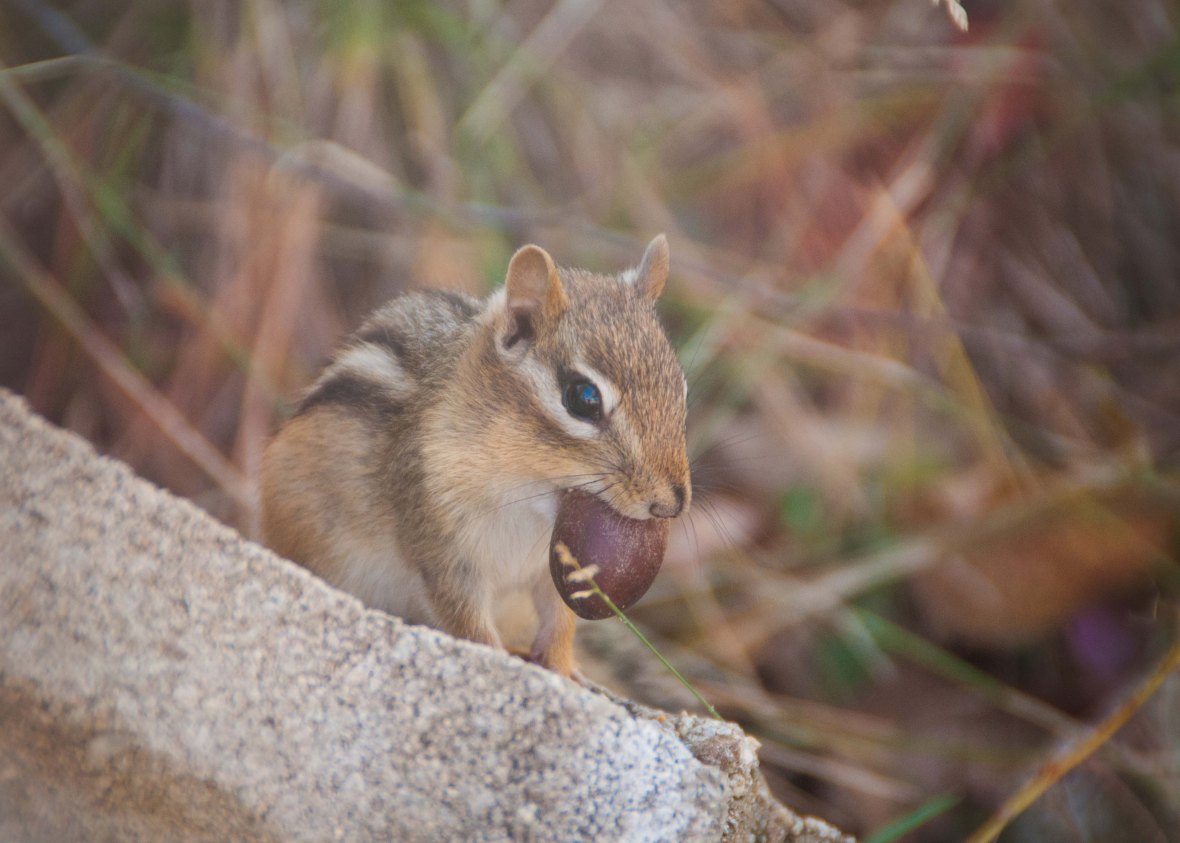
The chipmunk pictured here lives in Sabattus, Maine and was particularly fearless. This “bold” chipmunk knew that I was no predator.  It did not sound any warnings as I have found many other Pennsylvania chipmunks do. Next time you see (or hear) a chipmunk, try to figure out what it’s trying to communicate – if it’s in danger or if it’s just a shy chipmunk gasping unnecessarily.

Chipmunk Vocalizations – A National Geographic video

discover chipmunk vocalizations and how this impacts personality
Chipmunks are amazingly cute members of the rodent family, each with their own personality!

Supporting The Art of Ecology through the online shop or by becoming a Patron at any tier on Patreon can help keep educational content coming!