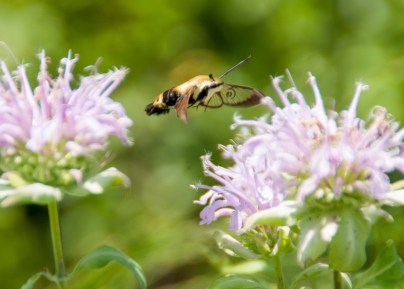
Coming off of National Pollinator Month in June, many of us are thinking about and understand the importance of butterflies, birds, and bees as pollinator species. Did you know that moths also play an important role in our ecosystems, but that not all of them are pollinators? While yes, some, such as the Hummingbird Clearwing Moth (learn more below!) are indeed pollinators, many moth species actually lack mouthparts and live as adults to only mate and lay eggs.

So other than pollinate, what is the point of moths?

Overall, moths are great food sources for many other larger animals such as birds, mammals, and even other insects! Having a diverse population of moths can also be a bioindicator of a healthy overall ecosystem. Their presence shows that their vital host plant populations are present, and indicate that other animals further up the food chain will be present as well since their moth snacks are around.

There are roughly 160,000 moth species found worldwide. 433 of them are native to Pennsylvania and the surrounding region. Learn more about some colorful moths found in PA below!

Fun facts about 5 PA Native Moths

Regal Moth (aka Royal Walnut Moth), Citheronia regalis

This orange and tan moth is quite a sight to behold on it’s walnut tree host plants! That is, if you are lucky enough to spot one! These are primarily nocturnal animals, but may be seen tucked away, sleeping during the day. These are one of the larger moths in Pennsylvania; it’s wingspan measures 3.5-5″. It’s caterpillar (larval stage), has a much larger body, measuring roughly 5-6″ long!

These creatures aren’t pollinators though, so having nectar plants around won’t attract them. Instead, be sure that their host plants of Walnuts, Hickories, and occasionally Sumacs and Sweetgums, are present!

Rosy Maple Moth, Dryocampa rubicunda

Would you believe that this cutie’s coloration is a form of camouflage? These moths have an uncanny similarity to the size and color of a maple samara (those helicopter seeds). This helps them hide from predators, since the moth visits Sugar and Red Maple trees frequently to lay their eggs.

Again, these adults have no usable mouth parts, so they aren’t important pollinators. Instead they are important food sources for many birds including Tufted Titmice, Blue Jays, chickadees, and to predatory & parasitic insects.

Hummingbird Clearwing Moth, Hemaris thysbe

This is my personal favorite insect! “Hummingbird moths” are named for their striking behavioral and morphological resemblance to hummingbirds. They are roughly the same size as the native Ruby-throated Hummingbird, and hover in similar fashions. They dart from flower to flower, many of which also attract hummingbirds, using their long proboscis to drink nectar.

As such, these are moths that also are wonderful little pollinators! While this sets them apart from the other moths on this list, they also are set apart from other moths in general since they are daytime pollinators. Most moths that also help to pollinate flowers are nocturnal.

Cecropia Moth (aka Robin Moth), Hyalophora cecropia

For the entire two weeks that these adult moths live, they flit around to mate and lay their eggs in great masses on birch and cherry trees.

As another member of the Silk Moth family, they do not have functioning mouthparts (the main reason that they can’t live for very long once becoming an adult!), so they are not pollinators. Yet they are still of great ecological importance! Their numerous caterpillars are a favorite snack of many birds and are very high in nutrients.

Luna Moth, Actias luna

This highly recognizable moth is classified as one of the most “beautiful” moths and it’s image has been used all over popular art, media, and more. In 1987, the US Postal service created a first-class stamp featuring this moth! It is found throughout much of North America, so many people continent-wide know it!

Despite sounding like a strictly nocturnal creature, based on it’s name, it can be seen during the day. The “Luna” portion of it’s name comes from the moon shaped spots on it’s wings.

Luna moth populations are negatively impacted, especially in urban areas due to light pollution. The adults spend too much time flitting around light sources. This wastes valuable energy (they don’t eat either!), and allows nocturnal predators to catch them with ease. They can’t get around to mating and laying eggs, so as light pollution increases, Luna Moth population decreases. You can help support their populations by turning off lights when not in use, especially at night.

White birch, walnuts, hickories, sumacs, sweetgums, and persimmon trees are their primary host plants. Planting these where native can also support moth populations!

moth sticker set

Do you have a love and fascination in moths? Get to know them a little more and keep them around through my Moths of PA Sticker set (set includes all 5 moths illustrated above, but without the backgrounds)! A portion of the proceeds benefits wildlife conservation efforts. Free shipping in the United States!

Supporting The Art of Ecology through the online shop or by becoming a Patron at any tier on Patreon can help keep educational content coming!

Summer is here, and many of us love nothing more than a big carton of deep blue-ish purple blueberries! Wherever we can get them from the grocery store, farmers markets, or local community agriculture programs is so exciting, but did you know that blueberries are native to the eastern United States? We can go out and forage for these sweet snacks starting in July through the early fall! BUT, blueberries are more than a tasty snack for us. They are important food and shelter for many wildlife species and play an important role in our ecosystem.

Blueberries & the Ecosystem

Highbush Blueberries (Vaccinium corymbosum) definitely provides excellent food sources for wildlife, just as it does for humans. While we may often think of an herbivore enjoying the ripened berries, many omnivores and opportunistic eaters love the fruits! Black bears, raccoons, red fox, coyotes, opossums, and porcupines love this snack, as do many birds.

Bluebirds, robins, Baltimore Orioles, Grey Catbirds, Eastern Towhees, and several other fruit eaters can be found flying from blueberry bush to bush in search of the fruits. Not only do blueberry shrubs provide valuable food resources, but they also will provide shelter for many of these birds as well. The blueberry’s shrubby, thicket-like growth allow small birds and mammals to take shelter from the elements (heat, wind, rain, etc…) and hide away from predators.

In the spring, when the bell-shaped flowers are drooping, they provide valuable nectar and pollen resources for numerous native bee species.

Benefits of Native Blueberries for Humans

blueberries - more than a tasty snack

If you’re looking to incorporate native plants into your garden, blueberries may be a great addition both for you AND for wildlife!

On top of the ecosystem benefits, blueberries are wonderful to forage for & harvest because they are rich in nutrients. These dark blue-ish purple berries are high in antioxidants, Vitamin B2 and C, help boost circulation, and can improve digestion due to their sugar and tannin content. The leaves, when dried and made into tea, have an antiseptic effect and can help rid the body of infection, especially in the kidneys and bladder.

Harvest the berries in July – early September (provided the wildlife hasn’t beaten you to them!) and the leaves in the fall once they have changed color to a vibrant red.

Foraged Blueberry Recipes

trails-to-tasting seasonal series
This particular gin infusion ALSO incorporated violet leaves and Johnny-Jump-Ups.
Blueberry Lemonade Cocktail
  • Mason jar or clean glass jar for infusing
  • Blueberries
  • Lemon peel
  • Gin
  • Water, Honey, and Lemon Juice

In your clean glass jar, fill it 1/2 way with blueberries and muddle. Fill the rest of the jar with lemon peel. Top off with gin. Seal and set aside for 3-5 days, until the gin is fully flavored. In a glass, make DIY Lemonade using water, honey, and lemon juice (all ingredients to taste). When ready, strain the muddled blueberries and lemon peel out of the gin and compost the marc (debris). Add your blueberry gin to the lemonade for a delicious summer cocktail!


Blueberry Tea Blend
  • 1/2 tbsp. dried blueberry leaf
  • 1 tsp. lemon zest
  • 1 tsp. blackberry leaf

Fill a tea steeper with the crushed, dried plant matter. Do not put the steeper in your mug yet. Boil water for the tea and fill your mug with the hot water. Wait 1-2 minutes, then add your tea steeper. Boiling water & high heat can degrade the nutritional and medicinal benefits of the plants. Steep for 5-7 minutes and enjoy! Use 8 tbsp. of dried plant matter for a pitcher of iced tea.


Blueberry Jam
  • Clean ball pint jars (6)
  • 1 packet of Jelly-making Pectin
  • 2 – 3 c. of foraged blueberries
  • Sugar (as called for in the instructions in the Pectin box)
  • Water (as called for in the instructions in the Pectin box)

Wash all berries and mush them up in a saucepan with water. Inside the pectin box, you will be able to find a table of ratios that will instruct you how much water to add to the saucepan based on the type and amount of berries that you foraged. Follow those ratios for both the water AND the sugar. Boil the berries and water quickly for 1 minute, then strain the fruit bits out if desired. Add sugar, and boil again while stirring until the sugar is dissolved. Quickly pour jam mixture into your clean ball jars and fully seal. Jam will be ready to store in the refrigerator or pantry once you hear the pressurized lid “pop”. (For reference, I had 2 and 1/2 c. berries which made 6 full pint jars of blueberry jam.)


Marissa Jacobs (The Art of Ecology) does not diagnose, treat, or prescribe, and nothing said or done should be misconstrued as such. These tips are designed to educate and support general well-being.

Supporting The Art of Ecology through the online shop or by becoming a Patron at any tier on Patreon can help keep educational content coming!

Attract Fruit-eating Birds to Your BackyardAttract Fruit-eating Birds to Your Backyard
Honeycreepers, native to Hawaii, have a diet of fruits, insects, and nectar.

They may seem ultra-exotic and tropical, however fruit-eating birds do live in North America along the East Coast. In fact, while kayaking along the Delaware River in Philadelphia the other week, I had the incredible opportunity to watch a Baltimore Oriole creating a nest! Not all fruit-eaters are mango or papaya-loving tropical birds. Some are in our own backyards!

White-throated Sparrow enjoying the fruits of a Staghorn Sumac

Fruit-Eating Birds Living in Pennsylvania

Many birds incorporate fruit into their diets. Here in PA, and in the surrounding region, we have birds that live here who will eat insects in the spring, then transition their diets to fruit and seeds in the summer season.

While this list isn’t a comprehensive one, it may give you a good idea of birds that you may see that will be searching for fruit and visiting your fruit-bearing wildlife habitat, gardens, and fruit-feeders!

Birds that Live Here Year-Round:

  • American Robin
  • Cedar Waxwing
  • Northern Cardinal
  • Chipping Sparrow
  • Song Sparrow
  • White-throated Sparrow
This Rose-Breasted Grosbeak is one of the birds found in this area that are being threatened by Climate Change.
Rose-Breasted Grosbeak

Birds that Migrate Through or Breed Here:

  • Baltimore Oriole
  • Philadelphia Vireo
  • Indigo Bunting
  • Rose-breasted Grosbeak
  • Black-and-White Warbler
  • Yellow Warbler

Native Plants that Attract Fruit-Eaters

There are a ton of wonderful trees and flowers that produce fruits, seeds, and nuts that feed birds. Attract fruit-eating birds to your backyard this summer by adding some of the plants on this list, or search the database for plants in your area! This list includes some common natives that you may be able to find at local nurseries and greenhouses to add to your yard and community.

  • Allegheny Serviceberry
  • American Plum
  • Black Cherry
  • Black Raspberry
  • Coralberry
  • Eastern Red Cedar
  • Flowering Dogwood
  • Hawthorn (Hog Apple)
  • Highbush Blueberry
  • Nannyberry Viburnum
  • Northern Spicebush
  • Persimmon
  • Staghorn Sumac
  • Trumpet Honeysuckle
  • Tupelo

If you don’t have space to add these trees, shrubs, and flowers, consider setting up special bird feeders! Setting out fruits such as citruses, watermelon, peaches, and blackberries can be a real treat for birds flying by! Many of these fruits can even be turned into a feeder itself.

Create a Citrus Fruit Feeder

  1. Choose a citrus (navel oranges or grapefruits do best since they are large and easy to work with) for your feeder and cut it in half.
  2. Scoop out (and eat!) the fruit, leaving the peel behind. This will create a bowl.
  3. Use skewers to poke 3 holes into the edge of the peel and tie yarn through the holes.
  4. Gather the strings and tie together to form a hanger.
  5. Pour in bird seed (black oil sunflower attracts the largest diversity of local birds), meal worms, or fill with suet. You can even combine suet with the citrus fruit that you scooped out for an extra tasty treat for the birds!
  6. Hang on a tree at least 15 feet from windows to prevent window strikes and watch the birds flock to their snacks!

Supporting The Art of Ecology through the online shop or by becoming a Patron at any tier on Patreon can help keep educational content coming!

Research by Lucy McGinty and Marissa Jacobs

02/28/22 – 05/10/22 

Abstract

Local Pennsylvania streams are becoming more polluted due to chemical runoff, littering, and sewage dumping. Because of this, diversity in streams is beginning to decline. Popular ways researchers determine the quality of the stream is by species counts and various chemical testing. Macroinvertebrates are important bioindicators for stream health, as many macroinvertebrates are more tolerant of pollution than others. Additionally, pH and dissolved oxygen tests are useful tools for measuring pollutant levels in streams. Both of these strategies are able to give researchers a better understanding of the extent of pollution in certain locations. Besides species counts and chemical testing, documenting temperature changes and erosion rates can give a good insight into changing macroinvertebrate counts. 

Objectives 

Lucy M. identifies macroinvertebrates caught at the stream.
  1. Use macroinvertebrates as bioindicators of pollution.
  2. Perform chemical testing on stream to determine stream health in more depth.
  3. Observe the physical characteristics of the stream and document the rate of bank soil erosion.

Hypothesis

The tests and observations performed on the Honey Hollow Creek will result in healthy stream measurements as the creek and areas surrounding it are protected and monitored by Bucks Audubon.

Materials: 

  • PH indicator strips
  • Dissolved oxygen titration
  • Small net
  • Magnifying glass
  • Measuring tape
  • Thermometer
  • Camera

Methods 

Figure 1.0

Once a week for nine weeks, we gathered stream information at the same location (lat. 40.37, lon. 75.01). We determined the level of erosion on our first day and then took weekly width measurements of the stream in order to document the erosion. We then used a thermometer for approximately 10 minutes to document temperature changes, pH strips for documenting pH changes, and a dissolved oxygen test kit for dissolved oxygen changes by using the Winkler method. Once chemical testing was complete, we spent 15 minutes counting macroinvertebrates by flipping over rocks, logs, and leaf litter and catching them with nets. 

Results

The creek showed significant signs of soil erosion where there were little to no root systems (Figure 1). From the data we collected, there were no significant signs of  further erosion.

Our pH strips indicated that the levels moved from 7-9, and our D.O. levels indicated that they moved from 8.5-10. pH and D.O. levels were both inside of a healthy range for the ecosystem to be sustained, as a healthy pH for a stream are between 5-9 and a healthy D.O. range is between 7-10. During our macroinvertebrate counts, we found large numbers of pollutant-intolerant species such as stoneflies, caddisflies, and mayflies. 

Conclusion

Because of the healthy pH and dissolved oxygen levels, the large counts of pollution-intolerant macroinvertebrates, and the number of frogs thriving in the creek, we can conclude that the Honey Hollow Stream at Bucks Audubon is a healthy aquatic habitat. However, it is important to note that the erosion along the bank could become an issue by smothering life in the water, and it may be beneficial to scatter native plants with deep root systems along the soil to reduce soil displacement.

Lucy McGinty - 2022 Intern
Lucy McGinty – 2022 Intern

Lucy is an environmental studies college student, and The Art of Ecology’s new intern! Her career goal is to become an environmental microbiologistโ€”a person who studies the microorganisms in the environment and their relationship to pollution. She is so excited to [learn more about ecology] and ways we can do better.

Students of a wide age range had the unique opportunity to discover and learn about the Bald Cypress population, as well as participate in restoring the local species!

Iesha has a deep passion to protect the environment and to create ways to effectively solve environmental issues. Her experience working and volunteering has given her a well-rounded skill set to create solutions and to have a positive impact on low income communities… She has helped protect the environment by using her experiences to spark others to converse about environmental issues and helping minority groups become aware that what happens in the environment has a huge impact on their life.ย 

North American Association For Environmental Education

On May 13th-15th, 2022, Environmental Educator, Iesha Baldwin implemented a Bald Cypress Environmental Education & Natural Habitat Restoration program in Georgia, partially funded by The Art of Ecology’s 2022 Conservation Mini-Grant.

The Bald Cypress Restoration Project

During this program, students from kindergarten all the way through seniors in high school learned about the Bald Cypress tree, it’s relationship to water, and how to restore habitat. These students of color were from low-income and low-literacy communities. They learned more about general restoration processes, which was especially important due to the rapid depletion of old growth cypress forests, the history of the Bald Cypress, how to protect current populations, as well as how to collect and analyze environmental samples. It was wonderful that they were able to spend their weekend outdoors exploring the natural world through science and service.

While this project was a 2 day event, Iesha has hopes to implement some long term environmental education and restoration. The goal is to grow this restoration project into a year long project, then into an ongoing program focusing on teaching students of color from low-income communities about becoming environmental stewards using the bald cypress species as a teaching tool.

Thank you Iesha for leading the next generation of environmental stewards during your Bald Cypress Restoration Project!

Interested in completing a fully or partially funded Wildlife Conservation or Habitat Restoration project of your own? Learn more about The Art of Ecology’s Mini-Grants!

Do you love apples, apple cider, apple pie, or other apple-y goodness? In a world without pollinators, this delicious Crabapple Cider Mimosa would not exist!

Could you imagine a world with no berries or melons? No pumpkins during the fall or chocolate to indulge in? Or what about a world with no coffee in the morning and no flowers to water? Unfortunately, this is most likely the path we are headed on due to the declining population of pollinators.

According to the US Forest Service, we simply could not live without pollinators. 80% of the crops we rely on would disappear without our pollinators. Understanding how pollination works, what animals partake in pollination, and what we can do to protect these beings can help the declining population rates.

hummingbird moth
Hummingbird moths are incredible little pollinators who love flowers like bee balm.

What is Pollination?

Pollination is one of the most important parts of plant reproduction, and it is mutually beneficial to the pollinator. In simple terms, pollinators transfer the pollen from the male part of the plant to the female part of the plant, making fertilization possible. The male part of the flower, the anther, produces pollen. The pollen is then moved by the pollinator from the anther to the stigma, which is the female part of the plant. Once this process is finished, the plant can begin its fertilization and reproduce. Pollinators benefit from this practice by feeding off of the nectar and pollen that the plant produces, which provide energy and protein for the animal. Bees buzz to shake pollen out of fruits that produce their pollen in tiny pores. This mutually beneficial relationship between pollinators and plants is one of the most important processes in the environment.

Who are Pollinators?

We typically think of honeybees when we think of pollinators, but multiple species participate in pollination. Some important pollinators include carpenter and bumblebees, flies, butterflies, moths, wasps, birds, beetles, and even some unusual ones like honey possums and lemurs.

Struggles of Pollinators

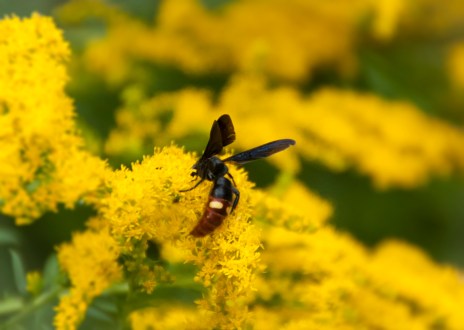
Unfortunately, many of these pollinators like wasps and beetles have rather negative stigmas against them that hold their population numbers back. Japanese beetles are invasive pests that can wreak havoc on your garden, but beetles like ladybugs, scarabs, and soldier beetles are incredibly important for pollination. Additionally, wasps get an incredibly bad reputation when in reality they have many benefits regarding pollination and pest control. Wasps are very important pollinators that are typically overlooked, and pollinate all 750 fig species! Wasps are crucial for natural pest control, and they help us reduce pesticide use . Without wasps, humans would have to use a lot more harmful chemicals to keep pest populations low. All of these pollinators are keeping our biosphere afloat, and the consequences of losing these animals are dire.

The population of our wonderful pollinators is declining at an alarming rate. This global trend can be attributed to several factors like pesticide usage, climate change, habitat destruction, and pollinator pathogens. A large portion of pesticides causes mortality and long-term complications in pollinators, climate change and habitat destruction are making the environment unusually unfit for our pollinators, and pollinator pathogens like varroa mites are killing off bee populations.

What Can We Do?

Fortunately, there are many things we can do to help our local pollinators and avoid a world without pollinators! Putting up a hummingbird nectar bird feeder will attract beautiful hummingbirds into your yard and keep their bellies full. Consider planting pollinator-attracting plants in your gardens like butterfly weeds, a mix of wildflowers, and coneflowers. Avoid toxic pesticides as much as possible and consider using natural pesticides you can make at home, as pesticides will kill the beneficial animals that visit your property. Above all, be kind to every local pollinator you come across, as they are vital to maintaining a beautiful world, and we do not want to have to imagine a world without them.

Lucy McGinty - 2022 Intern
Lucy McGinty – 2022 Intern

Lucy is an environmental studies college student, and The Art of Ecology’s new intern! Her career goal is to become an environmental microbiologistโ€”a person who studies the microorganisms in the environment and their relationship to pollution. She is so excited to [learn more about ecology] and ways we can do better.

Spring is here! The trees have beautiful green leaves again, animal babies such as goslings, fawns, and squirrels are about. Early pollinators such as Carpenter & Honey Bees are out in full force examining the early blooms. So what’s available for us foragers? Spring is a great time to take advantage of the colorful wildflowers and early greens for our spring recipes!

When we forage for and create spring recipes for our meals, snacks, and drinks directly from nature, we have such control of what goes into our bodies as well as start to understand and appreciate the ecosystems around us a little bit more.

What are you foraging for in Spring? Here in Southeastern PA, there are many goodies available, from the prickly foliage of Cleavers, the soft purple flowers of the Common Violet, to the buds and flowers of the popping Maple growth.

Are you new to foraging and want to learn how to get started and what foraging etiquette to abide by as you harvest?

Get inspired to forage with some of these wild-plant based snacks and spring recipes and you’ll never look at the natural world the same way again!


Spring Greens Pesto

garlic mustard pesto spring foraging workshop

  • 1 c. Cleavers, Dandelion Greens, Garlic Mustard, and Onion Grass
  • 1/4 c. cashews (optional)
  • 1/4 c. Parmesan cheese
  • Olive Oil

Harvest the greens and gently wash. Combine dry ingredients in a blender. As you blend, add oil tbsp. by tbsp. until it becomes a homogenous paste. Store in the fridge in a clean, sealable jar. Mix with pasta or over crackers! Use within 1 month.


Vegan Wildflower Cupcakes

  • Your favorite cupcake recipe
  • Purple Dead Nettle Flowers, Dame’s Rocket Petals, Dandelion Petals/Sepals, and Finely Chopped Violet leaves
  • Bananas to replace the eggs
  • Applesauce (or Coconut Oil) to replace the butter
  • Handful of Pansies, Lilacs, or or Dame’s Rocket Flowers as a garnish
  • 2-3 tbsp. sugar for topping

Preheat the oven to 350 degrees F. Add all dry ingredients into a bowl and mix. Add bananas and applesauce/oil. Stir thoroughly, then fill cupcake liners 1/2 way full with the batter. Bake as original recipe directed, or until golden and a toothpick inserted comes out clean. Top with frosting and garnish with flower petals.


trails-to-tasting seasonal series

Violet Gin Spring Tonic

  • 1/2 oz. Violet Flower Simple Syrup
  • 1 1/2 oz. Foraged Plant Infused Gin (I used a Violet flower & leaf, Pansy, Dandelion, and Lemon infused gin)
  • 1/4 oz. lemon juice
  • Seltzer/Tonic water
  • Ice Cubes
  • Lemon Peel & Honeysuckle Flower Garnish

Create simple syrup and infused alcohol ahead of time. When ready to make the cocktail, combine syrup, gin, and lemon juice in a shaker with 2-3 ice cubes and shake (Adjust lemon to sour/sweet taste). Strain into Collins glass and add 1-2 fresh ice cubes. Add garnishes and then top off with seltzer/tonic.


Sweet or Savory Fritters

  • 1 c. foraged dandelion tops (sweet) OR Purple Dead Nettle flowers (savory)
  • 1 c. flour
  • 1 egg
  • 1 c. milk (coconut milk is an acceptable dairy-free substitute)
  • Olive, coconut, or Sesame oil
  • Condiments to taste (powdered sugar, cinnamon, honey for the sweet or ketchup, oregano, basil for savory)

Harvest fresh dandelion flowers (keep the sepals on to use as a little dipping handle), and Purple Dead Nettle flowers and gently wash and set aside to dry.

Warm desired oil a skillet. Mix flour, egg, milk, and desired spices in a bowl. Dip flowers (hold the underside) in the batter. Place in the skillet and flip when crispy. When done, place on a paper towel to absorb extra oil.

Note – Dandelions naturally have a sweeter taste and taste great with honey, while Dead Nettles are a more savory mint plant. Mix and match other sturdy flowers and combine flavors!


Now that you’re more comfortable with foraging, learn more about creating specialty drinks with wild-edibles, regardless of the season with my “Trails-to-Tasting” Foraging Guide & Cocktail Eco-Recipe Book!

Discover more wonders of the natural world, tips for how to forage, and some eco-recipes and tutorials on my YouTube channel’s Wild-Edibles & Foraging playlist!

Supporting The Art of Ecology through the online shop or by becoming a Patron at any tier on Patreon can help keep educational content coming!

Did you know that May is National Be Kind to Animals Month? For the most part, especially if youโ€™re reading this blog, you probably already have a soft spot in your heart for the charismatic animals of the world – so this seems like โ€œpreaching to the choirโ€, right?

There are MANY animals in the world and many of them, even by animal-lovers, are disliked. So let’s focus on the creepy-crawlies, the watchers of the night, and the less charismatic creatures, and the roles that they have in our ecosystems as well as little ways that we might learn to appreciate these species a bit more! Once we understand these animals, and get to know them, we can learn to be kind to them in a new way.

Letโ€™s get started – Up first is the Aye-Aye.

This strictly nocturnal creature is considered to be a bad omen if you see one on the island of Madagascar, and those who see them often kill them to prevent others from seeing an omen of death. Unfortunately, the Aye-Aye tends to be curious and approaches human settlements, increasing their risk of running into someone who would kill them. While Aye-Ayes do look startling with their large eyes and bony fingers, they are important pest controllers as they spend much of their time inspecting trees for delicious insect grubs that could harm tree populations. Education efforts on Madagascar are raising awareness about the benefits of these creatures and reducing the superstitions surrounding them.

From there we move on to Sharks.

sharks of the atlantic ocean coloring page by marissa jacobs

Sharks are incredible and for the most part, are important apex predators that manage the marine food web below them. Not all sharks are predators though – some, such as the Whale Shark and Basking shark are actually filter feeders similarly to whales!

Predatory sharks have small holes on the underside of their chins called Ampullae of Lorenzini. These pores help them sense electromagnetic pulses in the water. Typically, if a healthy fish or seal is swimming gracefully, the electromagnetic pulses are small. A thrashing, or unhealthy fish or seal, creates more pulses, alerting the shark to prey that is weak or potentially injured. The sharks go after those animals first. When we splash around at a beach, we also create those stronger pulses, and the sharks become confused. Sharks donโ€™t like the taste of people, and find no nutritional value in humans. They tend to be calm giants of the sea and gracefully swim through the water.

One of the largest threats to these gentle giants is illegal shark finning. Often, shark finners will catch a shark in fishing nets and then cut off the dorsal, caudal, and pectoral fins, tossing the remaining live shark back into the ocean. Since sharks have gills, they need to keep swimming in order to push oxygen through their body system. They canโ€™t swim without their fins and die from suffocation before dying from their fin wounds. As the fish in the food web below them arenโ€™t predated upon in the same amount, their populations can increase, which also throw smaller fish, and then detritus or bottom feeder fish out of whack as well.

Now back to land with the Vampire Bat.

These are often connected to the legend of Dracula and other vampire legends. Vampires are no where near the murderous animals that myths portray them as.

Their primary diet is blood and often feed off of sleeping cattle. The Vampire bat makes a very tiny incision and then laps at the blood that slowly trickles. This doesn’t even wake the animal up. They might drink for roughly 30 minutes before filling up. The animal, usually large, will wake up as normal and continue on with their lives.

Unfortunately, Vampire bats can carry diseases, so if they were to cut a human, those diseases could be transmitted via blood so they do run a human-wildlife conflict risk. However, they are crucial seed-dispersers for the trees and plants that they sleep in! Without these bats dispersing seeds on their fuzzy bodies as they fly and land, the population of agave, and many other cacti and tropical plants of Mexico would decline rapidly.

spiderweb in rain

Next up, which is challenging for me personally, are Spiders.

One of the characteristics seen across many quote-on-quote scary species is “an Excess of Legs”, causing spiders to be up on the list as a highly feared animal. From teensy garden spiders and orb-weavers, to large tarantulas and bird-eaters, many donโ€™t like them, yet they all are so vital to managing populations of disease-carrying insects!

Without spiders in our world, disease would run way more rampant than it already does and animals higher up in the food chain, such as amphibians, birds, reptiles, fish, and small mammals would lose a nutritious food source. If you see a spider in a corner of the room, chances are itโ€™s keeping the insect population at  a minimum in your home!

Another bug-ish critter is the Millipede.

Falling under that โ€œway-too-many legsโ€ category is the millipede. These armor-plated decomposers can have anywhere from 30-400 legs! Each body segment has two pairs of legs and some species have over 75 body segments! In fact, there is a species of millipede that lives in the leaf litter in California that is so long that it has space for 750 legs! That seems excessive to me, but hey, I’m not a millipede.

They live in the leaf litter and will also help to decompose the dead leaves, cycling the nutrients back into the soil system to feed new plant growth that supports wildlife populations.

Okay – back into the ocean. One of the other roots of fear of animals is the unknown, so many fear the deep dark ocean, causing many bioluminescent deep-sea creatures to be on the scarier side.

Next up is the Angler Fish.

These, similarly to sharks, are predatory species, so they help to manage fish and crustacean populations. These fish use a bioluminescent orb attached to their heads to lure in prey and have large teeth. Definitely not ranking on the cute animals list. However, without the Angler fish population, the prey, such as crustaceans, would exponentially increase, causing great damage to coral reefs and other bottom habitats.

Since many crustaceans also eat detritus which is an important part of nutrient cycling, the nutrients found in the ocean available for other organisms, would be thrown out of balance and many species wouldnโ€™t be able to adapt quickly enough to survive.

Make your area (or garden) easy to maintain by creating a space that's self-sufficient and mimics nature instead of trying to battle against it!

Widely considered โ€œgrossโ€ are slugs & snails!

Not all of these animals need to be terrifying to be thought of as unlovable, yet slugs can be quite easily loved! With their squishy, slimy,  brownish bodies inching along forest floors or underneath rocks and logs, they may not look so exciting, yet they also play an important role in nutrient cycling and decomposition, similarly to the millipedes!

Snails and slugs also eat decaying leaf litter and fallen logs, allowing what once was live to return their nutrients to the soil systems that feed future generations of plants.

And finally – ticks!

This is also a challenging one for me. During every lesson I teach outside, I tell my students that we do NOT kill anything in nature. The spider, ant, beetle, isopod all have their roles to play, yet I do make mention that if found, we will kill ticks. Why do I single them out? First off, the deer tick, a common tick here in Southeastern Pennsylvania spreads Lyme’s Disease and I donโ€™t want my participants come to a fun, engaging program and leave with a potentially debilitating disease. No fun.

Even though more commonly found (due to their size rather than their population density) on our legs, clothes, or in our hair are Dog ticks, which donโ€™t carry Lyme. Ticks though, provide a huge food source for other creatures, such as ground nesting birds (like the Roughed Grouse which is PAโ€™s state bird), or mammals such as the opossum. In fact, having opossums around can reduce tick populations be up to 90%, so those are great animals to have in your community as well.

Be Kind to ALL Animals

While all of these animals are feared, may seem gross, or unlovable, they do have their ecological importance that once understood, can help us overcome fears. Maybe when you see that slug under a rock in the garden, or a spider on itโ€™s web in the forest, or even head over to the beach, but canโ€™t get in the water, weโ€™ll now be able to calmly nod to the creature and understand how beautiful they can be.

Supporting The Art of Ecology through the online shop or by becoming a Patron at any tier on Patreon can help keep educational content coming!

Hello all! Welcome to my 2022 Internship Reflection. My name is Lucy and I have been interning for The Art of Ecology for about 4 months now, and I will be continuing my internship until my culminating event, hosted by me using all the skills that I have learned during this internship! This event takes place on May 21st, 2022 at 10:30am at Peace Valley Nature Center and focuses on creating bee habitat for native bee species.

I am currently on my path to becoming an environmental microbiologist and I thought being an intern for environmental education would be a great start for me. The world of environmental science has really opened up for me during this internship and it has been filled with nonstop learning and growing.

What have you done during the internship & what’s your favorite part so far?

Throughout my internship, I have been assisting Marissa with workshop preparation, monthly press releases announcing public events, developing Patreon content, creating social media & blog posts, and am completing a self-directed environmental research project. I chose to do a stream macroinvertebrate assessment to understand stream pollution using those creatures as bioindicators of health. She has been assisting me with my projects along the way.

One of my favorite activities Iโ€™ve done so far in this internship is guest-starring on Marissaโ€™s For What Itโ€™s Earth podcast! We talked about microbes in the environment. The whole week leading up to the recording was so nerve- wracking, and I assumed that I was going to do terribly. Once we started talking about something I was passionate about, it became such a fun experience. I got to rant about things I am constantly geeking over!

What advice do you have for young adults looking to go into this industry?

If I could give any advice to students going into the environmental education industry, I would say to practice a lot with answering a variety of questions from students. As someone who is just a tad terrified of public speaking, itโ€™s been very important to work on getting over my fears of talking in front of a lot of people. Plus, knowing how to speak to and in front of people is important for any industry – not just environmental education!

Although I am not planning on entering the environmental education field, I could tell from my internship that it is an incredibly rewarding occupation. So far I have been loving interning and I canโ€™t wait to see how the rest of the internship goes!

Lucy McGinty - 2022 Intern
Lucy McGinty – 2022 Intern

Lucy is an environmental studies college student, and The Art of Ecology’s new intern! Her career goal is to become an environmental microbiologistโ€”a person who studies the microorganisms in the environment and their relationship to pollution. She is so excited to [learn more about ecology] and ways we can do better.

Protected: Conservation Mini-Grant Report

This content is password-protected. To view it, please enter the password below.