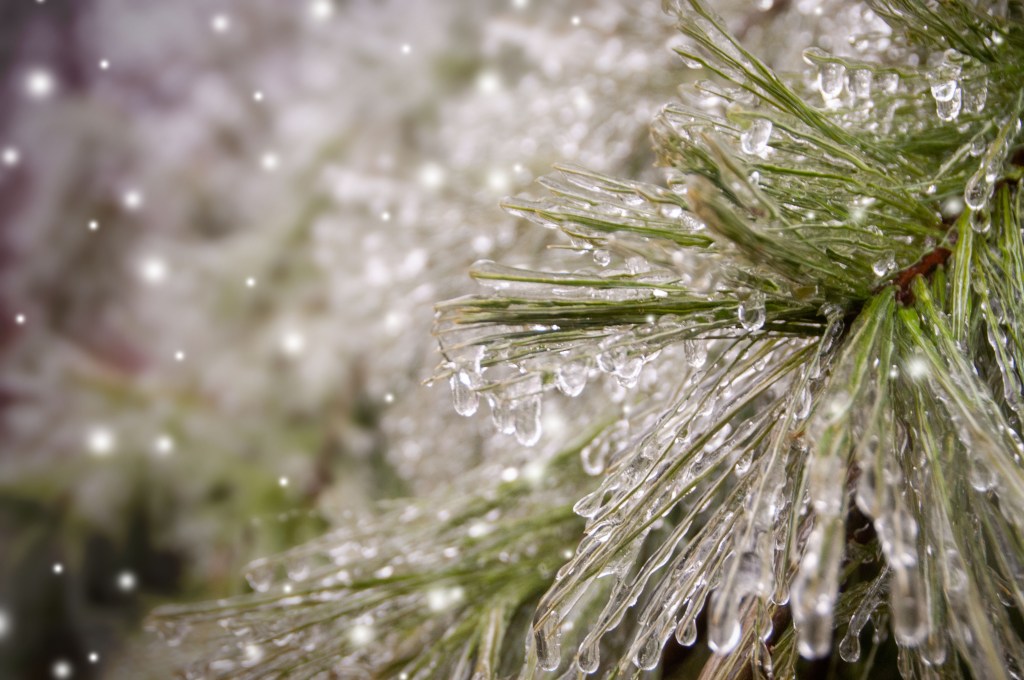
Combating The Winter Blahs

Uuugghhhhhh…. Many of us are feeling it right now… A mild depression, the itching desire to go out and do something, and see something GREEN! If you’re a gardener, you may even be beyond excited to get your hands in the dirt again!

We’ve got it bad…. Well, I do at any rate. I’ve got the winter blah’s and SPRING FEVER! No, you’re not actually sick. Spring fever is just a feeling that many get after what seems to be an endless winter, when our bodies are telling us that we’re ready for a change in season; for warm weather, more daylight hours, and to see growing, living things again!

Usually, I start feeling this way in late-January to early February. I go stir crazy, find myself complaining about the cold more than usual, and start willing my garden to grow. Fortunately, even if there’s going to be a few more weeks of winter, there’s plenty of things to do to make it feel more like spring and to get yourself ready for the warmer months!

Exploring a botanical garden can be a great cure for the winter blah’s and spring fever!
  1. Create your Garden Plans for the Year – Take a look at what you have in your garden, think about what you want (some new exciting plants, blooms for a season that you don’t have much color, host plants, etc…), and create a list of seeds that you can start indoors! Is it your goal to create a wildlife sanctuary in your backyard this year? Make sure that you know what it’s going to take an have a plan of action.
  2. Immerse Yourself In Growth- Visit a botanical garden or greenhouse! Not only are the greenhouses beautifully warm, they also allow you to be completely surrounded by vibrant, growing things for a day, improving your mood, self-esteem, and productivity!
  3. Turn Your Home/Office Into a Jungle – Invest in some new houseplants. Having the green in your house or office can really improve your overall mood! Click here to learn more about the benefits of having plants in the house.
  4. Spring Clean your Plants – Repotting, fertilizing, and pruning are all great end-of-winter activities to get your plants ready for spring! Pot some plants in the next pot size up to give them room to grow in the new year. Add some slow-release fertilizer for a spring growth boost! Prune off dead or dying foliage to freshen them up, and be sure to do some larger trimmings to try your hand at propagation!
  5. Propagate your Houseplants – Many plants will grow new roots in water if they have some nodes (where the stem meets the leaf) in the water. House plants like philodendrons, pothos, ivy, monstera, coleus, and even some ficus can work well being propagated in water – then you’ll have a whole bunch of new, baby plants to transplant and work with even though they weather outside may still be chilly!

Want to delve more deeply into the world of plants? Check out my calendar of events for upcoming plant programs, or visit my shop to snag a green, vibrant, and lush photo print or illustration!

Supporting The Art of Ecology through the online shop or by becoming a Patron at any tier on Patreon can help keep educational content coming!

Extremes: Wild Art 2021

For 2021, an artist that I admire (Zoe Keller) decided to host a year-long challenge where each participant creates art based around a monthly theme. Not only does participating in this challenge help motivate an artist to continually create and improve, but provides a place (using #WildArt2021) for artists to discover other incredible artists in the scientific/environmental field. Each months theme is left up to the artists interpretation – which leads to a huge variety of artwork!

This January, the theme was “Extremes”. While some focused on predators, others focused on stark animal coloration, and others focused on creatures with extremely amazing adaptations (like Tardigrades)! Each month, I am going to try to focus on two pieces – one highlighting flora, the other highlighting fauna.

I chose to learn more about the smallest vertebrate and the largest flower in the world to show two size extremes of the biological world.

Paedophryne amauensis is the world’s smallest vertebrate (which does not include insects or microscopic creatures). This frog was discovered in 2009 in Papau New Guinea living on the forest floor, protected by leaf litter. Aside from it’s extremely small size, it is also unique in the fact that it does not go through typical metamorphosis like other amphibians. These frogs hatch as mini-adults and hop around looking for tasty, small insects. This frog measures in at roughly 7 millimeters. That means that if lined up nose-to-tailbone, it would take 4,186 of these tiny frogs to match the length of a Blue Whale! Interested to learn more about their anatomy, some implications of their tiny size, and about their life, click here for a study on the discovery of the smallest vertebrate!

On the other side of the extreme, we move on to the largest single flower – the aptly named “Monster Flower” (Rafflesia arnoldii)! Similarly to the frog, this flower is unique in ways beyond it’s size. Unlike most flowers, the Rafflesia has no root system or even leaves. It also doesn’t photosynthesize like other chlorophyll-filled plants, it’s parasitic! For most of it’s life, it stays hidden inside of the roots and stems of woody plants, specifically in a vine in the grape family. Once it’s ready to bloom, buds burst from it’s host plant and a foul-smelling flower blooms. Plants that smell particularly badly attract flies as pollinators. The flies visit the flower, looking for rotting flesh, only to leave disappointed, although covered in pollen grains, which they then transport to the next flower!

To compare the two life forms, it would take roughly 143 Paedophryne amauensis frogs standing in a line to match the size of the Monster Flower.

Stay tuned next month to learn more about how plants and animals require support and in order to survive as I illustrate the theme: “Intertwine”.

Click below for more scientific illustrations, illustration workshops, or some new home dรฉcor!

Supporting The Art of Ecology through the online shop or by becoming a Patron at any tier on Patreon can help keep educational content coming!

2021 Color of the Year – Illuminating

Bright Sunshine, Butterfly wings, Bird Plumage, and flowers…. What do these all have in common? They can be “Illuminating”, the Pantone Color of the Year! This year, Pantone selected 2 colors to represent 2021, and the combination is beautiful!

PANTONE 17-5104 Ultimate Gray + PANTONE 13-0647 Illuminating, two independent colors that highlight how different elements come together to support one another, best express the mood for Pantone Color of the Year 2021. Practical and rock solid but at the same time warming and optimistic, the union of PANTONE 17-5104 Ultimate Gray + PANTONE 13-0647 Illuminating is one of strength and positivity. It is a story of color that encapsulates deeper feelings of thoughtfulness with the promise of something sunny and friendly…

Pantone.com/color-of-the-year-2021

What can be found in nature that embodies this color? American Goldfinches and Tiger Swallowtails really work for the 2021 year with their yellow and black/grey wings. Below, I went through my archives and selected my favorites, and will definitely be on the watch in 2021 for this vibrant and warm color combo.

Supporting The Art of Ecology through the online shop or by becoming a Patron at any tier on Patreon can help keep educational content coming!

Despite the utter insanity that 2020 was, The Art of Ecology saw some wonderful growth and I had some amazing opportunities! Overall, I adapted and figured out some unique ways to keep you all engaged. I (just over) DOUBLED my reach from 2019!

In the late spring, I started working on writing and illustrating a children’s book about Pollinator Morphology (scheduled to be published late winter 2021)! Check out some sneak-peeks on my Scientific Illustration page.

In the late summer, I hosted a Professional Development workshop for teachers at a low-income school district about Community Science and using it as a tool to increase geographical & environmental literacy. This was funded by a grant I received from National Geographic! Are you an educator that could benefit from including some hands-on observation, data collection, or even photography in your classroom? Watch the recording of the professional development event here.

Almost immediately after that, I went to Dubai to speak at an International Leadership Summit! My presentation was titled “Telling a Story through Photography” and helped the multinational summit participants take better photos that helped to tell their culture’s story. I was also the event photographer for the summit. While that trip heavily focused on portrait & event photography, I was able to spend some of my time in the city of Dubai and the desert taking nature photos. View that portfolio here!

In late fall, I found out that I received an award for my garden through the PA Horticultural Society! My small-scale/pseudo-urban garden is a certified Wildlife Habitat and Pollinator Garden. Interested in learning more about my garden, how to garden for wildlife, or garden with the natural world in mind? Click here!

And finally, much to my excitement, in November, I completed National Geographic’s “Using Photography to Tell Visual Stories” education cohort! This was another amazing step in my work and learning with National Geographic’s education team. I also continued my role as a mentor for the National Geographic Educator Certification program and am slated to continue into 2021 as well. Learn more about their program here.

I’m not done growing and improving The Art of Ecology, though! In 2021, my goal is to increase engagement and find new and innovative ways to connect people to the natural world through art! It is with YOUR help that I can continue to make my little dream a reality and help make the world a brighter, greener place! Stay tuned for more Virtual and In-Person workshops each month, programs like Trails-to-Tasting, and Environmental & Conservation Education Enrichment for home-schoolers. As always, a portion of the proceeds is donated back towards Wildlife Conservation and Habitat Preservation efforts.


Explore my top selling products of 2020 and make sure that you participate/get your own today!


Get Social with The Art of Ecology!

My 2020 Top Nine on Instagram. Wow, y’all really liked my foxes!
My 2020 Top Watched Video that spurred the creation of my Trails-to-Tasting video series!

Here’s to a 2021 filled with more growth, new opportunities, and innovative ways to connect you to the natural world!

Explore the World of Birds this Winter

Ruby Crowned Kinglet female pauses her feeding on goldenrod to pose for me.

For myself, I find that as the summer turns into fall and the fall gives way to winter, my photography switches from primarily pollinators and lush green plants to the textures of dying flower seed heads and birds! Birds hang around my garden, flit through the tree farm in my backyard, and of course the hawks then sit in the tall trees watching and waiting for their next meal.

There are so many opportunities in the winter months to explore the world of birds! From simply learning about birds with many virtual programs (winter is a great time to sit inside and snuggle up to a webinar with a cup of hot chocolate!), to participating in Citizen Science bird counts – there’s a lot to do!

As Climate Change continues to impact bird species with wetter springs, drier summers, and changes to flower bloom time and insect emergence, scientists are continuing to study trends in bird populations to better understand patterns. Many scientists depend on “citizen” scientists to aid in documenting bird populations. (Learn more about Citizen Science and various projects that you can be a part of HERE) One of these Citizen Science projects is coming up – the Christmas Bird Count – put on by the National Audubon Society. Between Monday, December 14th – January 5th, people can count the varying bird species they see and give that data to a Count Compiler. The Compiler will then be able to give the data of the birds within a certain radius to scientists at Audubon. That data can then be used to create scientific models, population predictions, and help them understand the movements of birds and the impact climate change has on them.

In February, you’ll be able to participate in another special Citizen Science Count – the Great Backyard Bird Count! Interested in learning more about birds and how to protect them from the threats facing them, but are a little intimidated by counting and identifying birds for a Citizen Science Project? Other organizations rely on people taking action to make the world a better, safer place for birds. For example, #BringBirdsBack focuses on providing 7 easy, at-home actions that anyone can take to make their communities more sustainable for birds. Roughly 3 Billion birds have disappeared since the 1970’s and the goal is to slow the decline in populations.

White-throated Sparrows are one of my favorite late-fall – winter birds here in PA. They are also on the list of birds in decline.

One of the ways that #BringBirdsBack suggests improving bird populations is one that I find VERY easy! Simply share your reasons for loving birds with others! As people learn more about birds and start loving on them, they are more likely to take actions to protect them. As a photographer, I know that a good photo of birds can elicit empathy for that creature, and that “empathy is the root of change” (as a National Geographic Explorer and Photographer said). Take photos of the birds at your feeder, the birds that hang out in your community, and the birds that you see during your travels and start sharing WHY you love birds!

My reasons for caring for birds:

  1. Not necessarily a scientific reason, but a reason nonetheless – Birbs are adorable. Have you ever seen one fluff it’s feathers and become a rotund ball of feathery floof?!
  2. Birds act as seed dispersers for the wildflowers I love and also act as pollinators. If you’re a gardener, birds can be your best friend!
  3. Birds help to manage insect populations. I’m not the biggest fan of creepy-crawly creatures (although as an Ecologist, I do know that they have their place in the world and will try to protect them as well!) so knowing that there is a creature out there that can gain nutrients and prevent insect populations from going out of control is an encouraging thought for me!
  4. Birds bring color to the world. From Indian Rollers in Dubai, to Goldfinches in my garden, birds can sport such bright and vibrant coloration! As a photographer and visual artist, any color is welcome and must be preserved!

What are your reasons for loving birds? Let me know in the comments!

Looking for ways to add more birds to your life? Check out my shop for fine art bird prints, bird illustrations, magnets, bird conservation themed stickers, and more!

Crested Cranes fly over Nairobi, Kenya.

Supporting The Art of Ecology through the online shop or by becoming a Patron at any tier on Patreon can help keep educational content coming!

Evergreens in the Winter Landscape

Redbellied woodpeckers love hammering away at trees in search of insects that bore into the wood.
Red-bellied Woodpecker hangs out on an Eastern Red Cedar scavenging for food.

As the vibrant fall foliage fades and the trees are left bare, a certain type of tree stands out amongst the gangly, naked maples and oaks – Evergreens! The greens and blues of their needles provide a welcome burst of color in a now grey and brown world.

Other than just providing a welcome splash of color in the landscape, Evergreens play a significant role in providing resources, such as food and shelter, to local wildlife species. From Flying Squirrels nesting the tops of the Eastern Red Cedar, to Cedar Waxwings relying on Juniper berries as food, to Grey Squirrels stripping the seeds out of pinecones – lots of animals need these trees to survive!

We often think of Conifers, or cone bearing trees, of being the only evergreens, however there are other plants that manage to keep their leaves year round (and…. did you know that Conifers don’t have to be evergreen? There are some deciduous ones as well!!!)! Are you looking to add some winter color to your landscape while also providing valuable habitat to birds, mammals, and other wildlife? Try adding:

  • Winterberry Holly (Ilex verticillata)
  • Rhododendrons & Azaleas (Rhododendron spp.)
  • Mountain Laurels (Kalmia latifolia)

Having more evergreen shrubs in the landscape can provide wildlife with some vital habitat. Thickets that once were covered in leaves no longer have that protection and wildlife become more vulnerable without places to hide from predators.

Did you know that Pine trees have long needles in bundles called “fascicles” while other trees like cedars have short, scale like needles that lay flat on the branch. Not all needles are the same!

Evergreens are not only great for wildlife, but they can also be a benefit to humans as well! Can you recall the wonderful aroma of cedar or fir? These scents come from oils and molecules in the evergreen tree. In those oils comes some great health benefits – like being packed with Vitamin C and Antioxidants, things that the body needs in order to boost the immune system. The oils of various conifers have also been known to relieve congested sinuses!

This delicious cocktail from my Trails-to-Tasting Fall-Winter 2020 series incorporates Eastern Red Cedar needles.

One great way to add more Evergreen to your diet is to drink a cup of warm evergreen tea! You can do this by choosing your favorite tasting conifer (pine with a smidge of honey is my personal favorite, although cedar, fir, and spruce are all edible) and chop the needles up. Chopping and damaging the needles allows the oils a way to escape into your water and be digested easier. Steep those greens in warm water. Keep in mind – boiling hot water can degrade the oils and break them down to a point where they are no longer as nutritious! They may still taste yummy, but if you’re going for the health benefits over taste, don’t boil the water, just make it warm enough to steep. When the needles sink to the bottom, they’re finished steeping and you can drink your cozy winter beverage.

Are you looking for some great winter Evergreen drink recipes? Head on over to my Trails-To-Tasting page for some boozy varieties (like Pine Needle Hot Toddies and Christmas Tree EggNog) that can be made without alcohol if you like! The 2020 winter season of this foraging series focuses on evergreens and plants that line the winter landscape while also providing some essential winter nutrients.

New to foraging and want to make sure that you do it properly, not just to identify edible plants for yourself, but in order to leave viable habitat for the wildlife you love? Click here for my Foraging Etiquette post.

Wish to bring some of the forest indoors? Check out my shop! It’s filled with nature’s goodness in photo and illustration form. A portion of all proceeds benefits plant conservation and habitat preservation efforts.

Spruce needles are short and the cones hang down instead of sitting upright on the branch like a Pine Cone would. Not all cones look or behave similarly on all conifers!

Supporting The Art of Ecology through the online shop or by becoming a Patron at any tier on Patreon can help keep educational content coming!

Plants, Wildlife, and Halloween!

Despite being a summer-lovinโ€™-gal who was born in the winter, one of my favorite times of the year is the end of October when the leaves are all ablaze in vibrant oranges, yellows, and redsโ€ฆ And when itโ€™s Halloween! Iโ€™m not into gore or horror – but thatโ€™s not all that Halloweenโ€™s about! There are some deep connections to nature and agriculture that I love.

Letโ€™s start off with a quick history of how the holiday came into beingโ€ฆ

To the Celts, thousands of years ago, this day marked not just the harvest season, but also a time when cold darkness enveloped the land as the days shortened and winter approached. It was believed that during this time, the mortal realm and realm of the dead became so close that ghosts could travel back to the land of the living. Druids tried to make prophecies and celebrated by burning bonfires and dressing in animal skins.

When the Romans conquered this territory, the Druidic ceremonies were blended with Roman festivals. Pomona, the Roman goddess of fruit and trees whose symbol was the apple, had her own festival during this time. As Christianity spread, the day celebrated dead saints and martyrs. As time has gone on, the holiday has morphed into the trick-or-treating, costume-party holiday that we now know.

Other than celebrating harvests (do you decorate with cornstalks or hay bales?) and loving apples (apple cider is a seasonal favorite), how else does nature come into play into Halloween? Letโ€™s look at some more historical roots.

I get really into pumpkin carving each year – always doing something fantasy/nerdy. This particular year I recreated the “Tree of Gondor” from The Lord of the Rings trilogy…. I can’t imagine carving this on something small like a turnip!

Literal roots. The Irish had a legend of Stingy Jack, who repeatedly tricked the devil and made the devil promise that he would never collect Jackโ€™s soul. Upon Jackโ€™s death, God would not allow Jack into heaven, but the devil wouldnโ€™t have him either. Jack wandered around with a burning coal to carry for all eternity. He put the coal into a carved out turnip to light his way, and became known as โ€œJack of the Lanternโ€. People carved out turnips and other root vegetables to scare away the spirit of Stingy Jack. When the pilgrims came to America, they discovered the Pumpkin, which is much better for carving than a tiny turnip!

Other than crops, fruits, and root vegetables, there are some other aspects of nature incorporated into Halloween. Do you give out little plastic spider rings, put up bat-shaped window clings, or set out fake crows for decoration?

These animals are known to be โ€œcreepyโ€, which makes sense in a way. Nocturnal, dark-loving bats are synonymous with drinking blood like vampires. Crows are opportunistic and donโ€™t mind picking at dead animals. Spiders have long been feared for their venom and tricky-trapping webs. Many of these animals were believed to be bad omens if you saw one.

Despite having creepy connotations, these animals are very important to the ecosystem! Bats are valuable night-time pollinators and play a vital role in pest-management and insect control. Crows, with their carrion eating, play the part of a decomposer and nutrient cycler. Spiders not only help with insect control but they also provide nutrients for larger animals like birds, reptiles, mammals, fish and more!

This Halloween, take a little bit of time to enjoy the plentiful harvests of autumn crops, snack on some apples, carve a face into a root, and celebrate the wonderful wildlife that make this holiday so special!

Ways to celebrate Halloween Naturally:

  1. Get corn stalks that still have kernels. Birds and small mammals will enjoy the food.
  2. Leave your pumpkins for wildlife. Many species may take a bite. 
  3. Set up a bat box to encourage them to make a home in your backyard.
  4. Donโ€™t throw your natural decorations out! Instead of tossing them in the trash when the gourds get squishy and the hay bales get moldy – toss them in a compost pile. You may even get a little pumpkin vine of your own growing!
  5. Also – remember to purchase Rainforest-Friendly Halloween candy, or candy made sustainably without Palm Oil.

Looking for some spooky season art or stickers? (PS, stickers make great, non-candy, trick-or-treat goodies!!!) Check out my shop for stickers and more! A portion of the proceeds benefits Wildlife Conservation and Habitat Preservation.

Supporting The Art of Ecology through the online shop or by becoming a Patron at any tier on Patreon can help keep educational content coming!

Look Up In the Sky! It’s a Plane, It’s Superman! No – It’s a BIRD!

Red-Tailed Hawk

Fall is fully upon us and so is the great migration! I had the opportunity to write an article about the Raptor Migration along the Delaware River/Atlantic Flyway and ways to identify raptors as they’re flying. Click here to view the published article (pg 87). Below is my blog-post style of the article:

“Keep an eye on the skies this fall! You might see a dark silhouette overhead, or catch a glimpse of a pale underside as a migrating raptor scouts for food as they traverse the Atlantic Flyway. Migration often starts in August or early September and throughout the fall, raptors, including Eagles, American Kestrels, Peregrine Falcons, Sharp-Shinned Hawks, and Red-Tailed Hawks, migrate until the weather turns cold. 

The Atlantic Flyway is a path on the east coast that birds take from nesting sites to their wintering location. Locally in Bucks County, we are part of this flyway, which is a vital watershed habitat for birds, providing protection and food. Due to climate change, the habitat is changing, and raptors have to adapt. Many raptors, such as Bald Eagles, come from the north to feed in ice-free rivers. As northern temperatures rise, they aren’t forced to fly as far south. We may notice a delay in migration as raptors adapt to the changes.

This male Kestrel sports “blue” wings and head. Both males and females have the black stripe down the eye.

As they pass over, we can use several features to identify them, even from far away. Try observing their silhouette shape. Falcons, including the Peregrine Falcon and Kestrel, are small raptors and have long wings that point down, like an M. Their long tail sticks out straight behind them. Accipiters are hawks, such as the Sharp-Shinned and Cooperโ€™s Hawk, with rounded wings and notched tails. Buteos, including the Red-Tailed Hawk, Red-Shouldered Hawk, and Eagles can be identified by their long, broad wings and rounded tails. These round-tailed birds tend to be on the larger side.

Another identifying trait is their belly feather coloration. Are you trying to distinguish between the Red-Tailed and Red-Shouldered hawk? Look for a dark band of feathers. These round-tailed hawks can be hard to tell apart until they take off and you can see their bellies! A rust colored belly is the Red-Shouldered Hawk, while a whitish belly with a dark band running across is the Red-Tailed Hawk. Are there black birds flying up high? If it is entirely black, it could be a Turkey Vulture whereas if it has a white head, black body, and white tail feathers, itโ€™s a Bald Eagle.

Hone your identification skills now on the National Audubon Societyโ€™s website with a raptor quiz! While birding, remember your field guide, camera, and binoculars to observe the amazing raptors that call the Atlantic Flyway home.”

Supporting The Art of Ecology through the online shop or by becoming a Patron at any tier on Patreon can help keep educational content coming!

Colors of Autumn – Celebrating Fall Foliage Week

Preserving plants and keeping our bodies of water clean are so important!

Last Sunday marked the start of a colorful time of year – the start of Fall Foliage Week! While Summer is definitely my favorite season climate-wise (put me in warm, dry heat ANY day and I’ll be a happy girl!!!), Autumn holds a special place in my heart since I love all things colorful!

What makes Fall colors so spectacular and why are certain locations known for their foliage displays?

Well, let’s start with HOW the color change happens. In the growing seasons, the trees acquire energy through a process called photosynthesis. Short story – Sunlight hits the green leaves and the chlorophyll (the green pigment) becomes excited. This excitement, when water and CO2 are added, helps create energy for the plant, which keeps the plant happy and healthy! Unfortunately, the vibrant and plentiful chlorophyll pigment requires a ton of energy to create and sustain, so as the days get shorter in the fall, light becomes more scarce and the production of energy does not outweigh how much energy it takes to sustain the chlorophyll. The tree reabsorbs the chlorophyll, saving it for the next growing season, and reveals the other pigments who were visually drowned out by the chlorophylls vibrant coloration and sheer quantity. And… Ta-Da! You’re left with the yellows, oranges, and reds of autumn!

Some years, the leaves seem dull or lack-luster. Other years, the colors are brilliant! What changes?

As the leaves start to change, clear skies and crisp nights help the leaves put on their best color display. While the exact science is rather long-winded and complex, the short answer is: The clear skies allow for the tree to still obtain sunlight and create the energy needed to maintain it’s current pigment line-up, and the crisp (but not freezing!) nights help to ensure that the energy doesn’t get the chance to “move” too far away from the leaf. If there is too much rain or wind during the summer, and excess leaf-drop occurs, the fall foliage may not be as vibrant, since the leaves are now working doubly hard just to keep up energy production and the drop in temperature and sunlight can more severely impact the tree. On the other hand, if there is not enough rain in the summer, photosynthesis will not be as efficient and energy production will be low, preventing the leaves from creating the quantity and quality of pigments needed for a beautiful fall landscape.

Certain areas, like hill and mountain regions that experience a “Rain Shadow”, may have beautiful coloration on one side of the mountain, and a less stunning view on the other side. Rain shadows are caused by clouds dumping their water on one side of the mountain before they cross onto the other side. Areas near bodies of water like lakes and rivers may be rather spectacular since trees would have a more reliable source of water to use.

This year, remember to get outside and experience the beauty of the autumn season and witness nature’s amazing ability to adapt and stay strong during transitions and changes!

Want a hands-on experience with leaf pigments and colors? Check out my “Leaf Pigment Chromatography” DIY experiment that you can do with your kids, students, or on your own to discover the amazing colors hidden within a leaf. You can also learn more about plant anatomy and the purpose of their pigments during one of my Botanical Illustration Workshops – click here to find out when the next one is!

Take a close look at the coffee filter paper. Can you see the lines of greens and yellows moving up?

Supporting The Art of Ecology through the online shop or by becoming a Patron at any tier on Patreon can help keep educational content coming!

Explore the Gallery: Scientific & Botanical Illustrations

Marissa Jacobs, of The Art of Ecology, is primarily known as a nature and ecological photographer, however she also leads Botanical Illustration Workshops, teaches Scientific Illustration, and is also a freelance illustrator for environmental education groups.

A portion of the proceeds from any illustration work sold benefits wildlife conservation and habitat preservation efforts. More information about the conservation efforts here.

Student Work Coming!

Have you participated in one of The Art of Ecology’s Botanical Illustration classes? Get your work featured here by sending a digital copy to Marissa at mjacobs@theartofecology.com!