Evergreens in the Winter Landscape

Redbellied woodpeckers love hammering away at trees in search of insects that bore into the wood.
Red-bellied Woodpecker hangs out on an Eastern Red Cedar scavenging for food.

As the vibrant fall foliage fades and the trees are left bare, a certain type of tree stands out amongst the gangly, naked maples and oaks – Evergreens! The greens and blues of their needles provide a welcome burst of color in a now grey and brown world.

Other than just providing a welcome splash of color in the landscape, Evergreens play a significant role in providing resources, such as food and shelter, to local wildlife species. From Flying Squirrels nesting the tops of the Eastern Red Cedar, to Cedar Waxwings relying on Juniper berries as food, to Grey Squirrels stripping the seeds out of pinecones – lots of animals need these trees to survive!

We often think of Conifers, or cone bearing trees, of being the only evergreens, however there are other plants that manage to keep their leaves year round (and…. did you know that Conifers don’t have to be evergreen? There are some deciduous ones as well!!!)! Are you looking to add some winter color to your landscape while also providing valuable habitat to birds, mammals, and other wildlife? Try adding:

  • Winterberry Holly (Ilex verticillata)
  • Rhododendrons & Azaleas (Rhododendron spp.)
  • Mountain Laurels (Kalmia latifolia)

Having more evergreen shrubs in the landscape can provide wildlife with some vital habitat. Thickets that once were covered in leaves no longer have that protection and wildlife become more vulnerable without places to hide from predators.
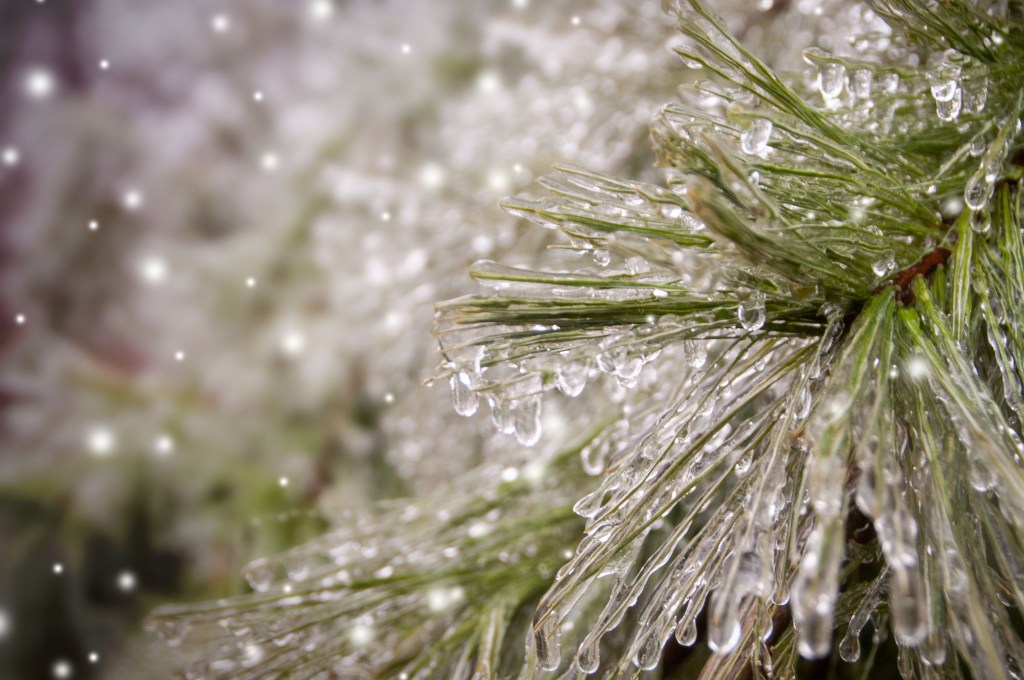
Did you know that Pine trees have long needles in bundles called “fascicles” while other trees like cedars have short, scale like needles that lay flat on the branch. Not all needles are the same!

Evergreens are not only great for wildlife, but they can also be a benefit to humans as well! Can you recall the wonderful aroma of cedar or fir? These scents come from oils and molecules in the evergreen tree. In those oils comes some great health benefits – like being packed with Vitamin C and Antioxidants, things that the body needs in order to boost the immune system. The oils of various conifers have also been known to relieve congested sinuses!

This delicious cocktail from my Trails-to-Tasting Fall-Winter 2020 series incorporates Eastern Red Cedar needles.

One great way to add more Evergreen to your diet is to drink a cup of warm evergreen tea! You can do this by choosing your favorite tasting conifer (pine with a smidge of honey is my personal favorite, although cedar, fir, and spruce are all edible) and chop the needles up. Chopping and damaging the needles allows the oils a way to escape into your water and be digested easier. Steep those greens in warm water. Keep in mind – boiling hot water can degrade the oils and break them down to a point where they are no longer as nutritious! They may still taste yummy, but if you’re going for the health benefits over taste, don’t boil the water, just make it warm enough to steep. When the needles sink to the bottom, they’re finished steeping and you can drink your cozy winter beverage.

Are you looking for some great winter Evergreen drink recipes? Head on over to my Trails-To-Tasting page for some boozy varieties (like Pine Needle Hot Toddies and Christmas Tree EggNog) that can be made without alcohol if you like! The 2020 winter season of this foraging series focuses on evergreens and plants that line the winter landscape while also providing some essential winter nutrients.

New to foraging and want to make sure that you do it properly, not just to identify edible plants for yourself, but in order to leave viable habitat for the wildlife you love? Click here for my Foraging Etiquette post.

Wish to bring some of the forest indoors? Check out my shop! It’s filled with nature’s goodness in photo and illustration form. A portion of all proceeds benefits plant conservation and habitat preservation efforts.

Spruce needles are short and the cones hang down instead of sitting upright on the branch like a Pine Cone would. Not all cones look or behave similarly on all conifers!

Supporting The Art of Ecology through the online shop or by becoming a Patron at any tier on Patreon can help keep educational content coming!

Plants, Wildlife, and Halloween!

Despite being a summer-lovin’-gal who was born in the winter, one of my favorite times of the year is the end of October when the leaves are all ablaze in vibrant oranges, yellows, and reds… And when it’s Halloween! I’m not into gore or horror – but that’s not all that Halloween’s about! There are some deep connections to nature and agriculture that I love.

Let’s start off with a quick history of how the holiday came into being…

To the Celts, thousands of years ago, this day marked not just the harvest season, but also a time when cold darkness enveloped the land as the days shortened and winter approached. It was believed that during this time, the mortal realm and realm of the dead became so close that ghosts could travel back to the land of the living. Druids tried to make prophecies and celebrated by burning bonfires and dressing in animal skins.

When the Romans conquered this territory, the Druidic ceremonies were blended with Roman festivals. Pomona, the Roman goddess of fruit and trees whose symbol was the apple, had her own festival during this time. As Christianity spread, the day celebrated dead saints and martyrs. As time has gone on, the holiday has morphed into the trick-or-treating, costume-party holiday that we now know.

Other than celebrating harvests (do you decorate with cornstalks or hay bales?) and loving apples (apple cider is a seasonal favorite), how else does nature come into play into Halloween? Let’s look at some more historical roots.

I get really into pumpkin carving each year – always doing something fantasy/nerdy. This particular year I recreated the “Tree of Gondor” from The Lord of the Rings trilogy…. I can’t imagine carving this on something small like a turnip!

Literal roots. The Irish had a legend of Stingy Jack, who repeatedly tricked the devil and made the devil promise that he would never collect Jack’s soul. Upon Jack’s death, God would not allow Jack into heaven, but the devil wouldn’t have him either. Jack wandered around with a burning coal to carry for all eternity. He put the coal into a carved out turnip to light his way, and became known as “Jack of the Lantern”. People carved out turnips and other root vegetables to scare away the spirit of Stingy Jack. When the pilgrims came to America, they discovered the Pumpkin, which is much better for carving than a tiny turnip!

Other than crops, fruits, and root vegetables, there are some other aspects of nature incorporated into Halloween. Do you give out little plastic spider rings, put up bat-shaped window clings, or set out fake crows for decoration?

These animals are known to be “creepy”, which makes sense in a way. Nocturnal, dark-loving bats are synonymous with drinking blood like vampires. Crows are opportunistic and don’t mind picking at dead animals. Spiders have long been feared for their venom and tricky-trapping webs. Many of these animals were believed to be bad omens if you saw one.

Despite having creepy connotations, these animals are very important to the ecosystem! Bats are valuable night-time pollinators and play a vital role in pest-management and insect control. Crows, with their carrion eating, play the part of a decomposer and nutrient cycler. Spiders not only help with insect control but they also provide nutrients for larger animals like birds, reptiles, mammals, fish and more!

This Halloween, take a little bit of time to enjoy the plentiful harvests of autumn crops, snack on some apples, carve a face into a root, and celebrate the wonderful wildlife that make this holiday so special!

Ways to celebrate Halloween Naturally:

  1. Get corn stalks that still have kernels. Birds and small mammals will enjoy the food.
  2. Leave your pumpkins for wildlife (without bleach or paint!). Many species may take a bite. 
  3. Set up a bat box to encourage them to make a home in your backyard.
  4. Don’t throw your natural decorations out! Instead of tossing them in the trash when the gourds get squishy and the hay bales get moldy – toss them in a compost pile. You may even get a little pumpkin vine of your own growing!
  5. Also – remember to purchase Rainforest-Friendly Halloween candy, or candy made sustainably without Palm Oil.

Looking for some spooky season art or stickers? (PS, stickers make great, non-candy, trick-or-treat goodies!!!) Check out my shop for stickers and more! A portion of the proceeds benefits Wildlife Conservation and Habitat Preservation.

Supporting The Art of Ecology through the online shop or by becoming a Patron at any tier on Patreon can help keep educational content coming!

Look Up In the Sky! It’s a Plane, It’s Superman! No – It’s a BIRD!

Red-Tailed Hawk

Fall is fully upon us and so is the great migration! I had the opportunity to write an article about the Raptor Migration along the Delaware River/Atlantic Flyway and ways to identify raptors as they’re flying. Click here to view the published article (pg 87). Below is my blog-post style of the article:

“Keep an eye on the skies this fall! You might see a dark silhouette overhead, or catch a glimpse of a pale underside as a migrating raptor scouts for food as they traverse the Atlantic Flyway. Migration often starts in August or early September and throughout the fall, raptors, including Eagles, American Kestrels, Peregrine Falcons, Sharp-Shinned Hawks, and Red-Tailed Hawks, migrate until the weather turns cold. 

The Atlantic Flyway is a path on the east coast that birds take from nesting sites to their wintering location. Locally in Bucks County, we are part of this flyway, which is a vital watershed habitat for birds, providing protection and food. Due to climate change, the habitat is changing, and raptors have to adapt. Many raptors, such as Bald Eagles, come from the north to feed in ice-free rivers. As northern temperatures rise, they aren’t forced to fly as far south. We may notice a delay in migration as raptors adapt to the changes.

This male Kestrel sports “blue” wings and head. Both males and females have the black stripe down the eye.

As they pass over, we can use several features to identify them, even from far away. Try observing their silhouette shape. Falcons, including the Peregrine Falcon and Kestrel, are small raptors and have long wings that point down, like an M. Their long tail sticks out straight behind them. Accipiters are hawks, such as the Sharp-Shinned and Cooper’s Hawk, with rounded wings and notched tails. Buteos, including the Red-Tailed Hawk, Red-Shouldered Hawk, and Eagles can be identified by their long, broad wings and rounded tails. These round-tailed birds tend to be on the larger side.

Another identifying trait is their belly feather coloration. Are you trying to distinguish between the Red-Tailed and Red-Shouldered hawk? Look for a dark band of feathers. These round-tailed hawks can be hard to tell apart until they take off and you can see their bellies! A rust colored belly is the Red-Shouldered Hawk, while a whitish belly with a dark band running across is the Red-Tailed Hawk. Are there black birds flying up high? If it is entirely black, it could be a Turkey Vulture whereas if it has a white head, black body, and white tail feathers, it’s a Bald Eagle.

Hone your identification skills now on the National Audubon Society’s website with a raptor quiz! While birding, remember your field guide, camera, and binoculars to observe the amazing raptors that call the Atlantic Flyway home.”

Supporting The Art of Ecology through the online shop or by becoming a Patron at any tier on Patreon can help keep educational content coming!

Colors of Autumn – Celebrating Fall Foliage Week

Preserving plants and keeping our bodies of water clean are so important!

Last Sunday marked the start of a colorful time of year – the start of Fall Foliage Week! While Summer is definitely my favorite season climate-wise (put me in warm, dry heat ANY day and I’ll be a happy girl!!!), Autumn holds a special place in my heart since I love all things colorful!

What makes Fall colors so spectacular and why are certain locations known for their foliage displays?

Well, let’s start with HOW the color change happens. In the growing seasons, the trees acquire energy through a process called photosynthesis. Short story – Sunlight hits the green leaves and the chlorophyll (the green pigment) becomes excited. This excitement, when water and CO2 are added, helps create energy for the plant, which keeps the plant happy and healthy! Unfortunately, the vibrant and plentiful chlorophyll pigment requires a ton of energy to create and sustain, so as the days get shorter in the fall, light becomes more scarce and the production of energy does not outweigh how much energy it takes to sustain the chlorophyll. The tree reabsorbs the chlorophyll, saving it for the next growing season, and reveals the other pigments who were visually drowned out by the chlorophylls vibrant coloration and sheer quantity. And… Ta-Da! You’re left with the yellows, oranges, and reds of autumn!

Some years, the leaves seem dull or lack-luster. Other years, the colors are brilliant! What changes?

As the leaves start to change, clear skies and crisp nights help the leaves put on their best color display. While the exact science is rather long-winded and complex, the short answer is: The clear skies allow for the tree to still obtain sunlight and create the energy needed to maintain it’s current pigment line-up, and the crisp (but not freezing!) nights help to ensure that the energy doesn’t get the chance to “move” too far away from the leaf. If there is too much rain or wind during the summer, and excess leaf-drop occurs, the fall foliage may not be as vibrant, since the leaves are now working doubly hard just to keep up energy production and the drop in temperature and sunlight can more severely impact the tree. On the other hand, if there is not enough rain in the summer, photosynthesis will not be as efficient and energy production will be low, preventing the leaves from creating the quantity and quality of pigments needed for a beautiful fall landscape.

Certain areas, like hill and mountain regions that experience a “Rain Shadow”, may have beautiful coloration on one side of the mountain, and a less stunning view on the other side. Rain shadows are caused by clouds dumping their water on one side of the mountain before they cross onto the other side. Areas near bodies of water like lakes and rivers may be rather spectacular since trees would have a more reliable source of water to use.

This year, remember to get outside and experience the beauty of the autumn season and witness nature’s amazing ability to adapt and stay strong during transitions and changes!

Want a hands-on experience with leaf pigments and colors? Check out my “Leaf Pigment Chromatography” DIY experiment that you can do with your kids, students, or on your own to discover the amazing colors hidden within a leaf. You can also learn more about plant anatomy and the purpose of their pigments during one of my Botanical Illustration Workshops – click here to find out when the next one is!

Take a close look at the coffee filter paper. Can you see the lines of greens and yellows moving up?

Supporting The Art of Ecology through the online shop or by becoming a Patron at any tier on Patreon can help keep educational content coming!

Explore the Gallery: Scientific & Botanical Illustrations

Marissa Jacobs, of The Art of Ecology, is primarily known as a nature and ecological photographer, however she also leads Botanical Illustration Workshops, teaches Scientific Illustration, and is also a freelance illustrator for environmental education groups.

A portion of the proceeds from any illustration work sold benefits wildlife conservation and habitat preservation efforts. More information about the conservation efforts here.

Student Work Coming!

Have you participated in one of The Art of Ecology’s Botanical Illustration classes? Get your work featured here by sending a digital copy to Marissa at mjacobs@theartofecology.com!

An Ecologist’s View of Dubai

Upon being asked to speak at a Global Leadership Summit in Dubai, UAE about photography and using it to tell a visual story, I immediately got excited. Of course I would want to do that! Not only would I be speaking at the conference, but I was also to be the event photographer. This gave me a wonderful opportunity to take so many photos in a new culture and climate!

While I was preparing for the trip and coming up with an event checklist, I also created my own, personal checklist – all revolving around the plants, animals, and habitats that the desert of Dubai offered. No where on that list included fishing birds, tree biodiversity, or water scenes. Clearly, I didn’t do my research beforehand!

Upon arrival, I was shocked by the number of trees. Many were planted as part of a date tree planting program, however there were many other tree species seen as well, such as the Frangipani, Acacia, Orange Geigers, Ficus, and Flame Trees. The flowers attracted numerous pollinators and seed disperses, such as bees and birds. Dates are extremely high in vitamins and minerals and they don’t loose their nutritional value even when dried, making it a great snack for both birds and humans alike! I was thrilled to recognize some plants that had similar leaf structure as an Milkweed, but loved to see this milkweed had larger pods, thicker and more succulent flowers and leaves, and had knobby stalks – all adaptations to their dry environment.

As I would leave the hotel to wander around and explore Dubai, I whipped my head back and forth, searching out for the trills of the Myna bird and the vibrant blue flashes of the Indian Roller as it flew past. My first day of exploration led me to what is called “The Creek”. I thought, “yeah, I guess it makes sense that in a desert you would be very excited about even a small trickle of water,” then I realized that no… The Creek is a river-like body of water that connects Dubai to the Persian Gulf. It is so large that in order to get from one area of Old City Dubai to another, taking a water taxi is the most practical thing to do. When I originally thought of being in a desert, I didn’t think that I would see a heron fishing in the water, but while walking along the shores of The Creek, I found a Pond Heron!

The last evening the group was able to get out into the dunes and I was excited to be able to really explore this new biome. I have visited the desert of the American Southwest (you can read about that here), but there were many shrubs and critters roaming around in the pale sands of New Mexico. Here, the sand was deep red (as it had just rained – rains brought in from the mountains in Oman – apparently we were very lucky to see that!) and plants were scarce and low growing. Here was the desert I was picturing!

We passed many wild camels and camel farms. It was a great opportunity to learn more about this large ungulates (horse-like animals) and how they are perfectly suited for the desert climate. Their eyelashes are beautiful (I was jealous!) and keep the sand out of their eyes. Their humps (Dromedary = 1, Bactrian = 2) contain fat and energy stores, helping them get from one water and food source to another as they wander around.

Each day, I reveled in the dry heat! Days were between 100-110 and nights were 85-95, but with the dry atmosphere, you couldn’t really feel the sweat or be bothered by excess humidity. In fact, due to the fact that I was there during COVID-19 pandemic and had to wear a mask most of the time, I was worried that my glasses would be perpetually fogged up and that I wouldn’t benefit from wearing them, but that was not the case. Even the moisture in my breath didn’t stay in the air in front of me for very long! Returning to Pennsylvania was the hardest part – I came back to a chilly fall season where the afternoons were in the low 70’s and the mornings were in the low 40’s! My body did not like the sudden 50-70 degree difference.

Now, I can scroll through my desert photos, remembering the sound of the leaves rustling in the never-ending wind. I can look at the pictures that give a new meaning to the line “Sand between the toes”. I can remember the sun and the warmth and hope that one day I can return to learn and study more about the unique plants and animals!

For a full portfolio of my favorite selections from this trip to Dubai, click on the button below.

Supporting The Art of Ecology through the online shop or by becoming a Patron at any tier on Patreon can help keep educational content coming!

Happy Water Quality Month!

It’s August and that means that it’s National Water Quality Month!

While we all know that clean drinking water is important and that clean bodies of water will help provide clean water for drinking – many are unaware how the plants along stream banks, in areas called riparian zones, or aquatic and wetland plants impact and improve water quality.

The Riparian Zone refers to a space of land that runs along rivers and streams that help to anchor the soil in place to prevent it from eroding away into the water. The riparian zone also provides valuable “edge” habitat to many animals that seek selter yet also want quick and easy access to water and their food that lives in the water.

Did you know that in Pennsylvania, sediment is the #1 thing that pollutes our waterways? As soil erodes from riparian zones that don’t have adequate plant and tree life with roots that act as claws, holding the soil in place, stream and river banks quickly sweep loose soil and sediment away and the water body widens. As the sediment falls into the water, it covers up macroinvertebrates that use gills to breathe, suffocating them. The sediment covers up and blocks out sunlight for aquatic plants, preventing them from growing and providing food and habitat. The sediment also prevents aquatic predators from seeing their food. 

Without the plants in the riparian zone acting as a buffer, many plants and animals would die and the water would move slowly and nutrient cycling wouldn’t be able to happen as quickly – all of this decreases the overall water quality.

But how about marshes or wetlands that simply seem to hold water without having water flow through it in the form of a stream or river? Soil seems to sit and erosion isn’t as big of a concern since the water isn’t flowing quickly past, pulling soil grains along with the current.

In those areas, aquatic and native plants act as sponges, sucking up (sequestering) pollutants through their roots and storing it inside themselves. These plants act as natural filters. Without these plants, such as cattails, sedges, ferns, lily pads, wolffia, jewelweed, rushes, and reeds, toxins can find their way into the marsh through runoff, polluting the water and killing off the animals that live there. With the plants acting as a sponge, absorbing the pollutants, creatures such as fish, tadpoles, turtles, and aquatic insects (like dragonfly nymphs!) can live in clean, nutrient-filled water. 

Help make your local water bodies cleaner by participating in Riparian Buffer plantings! Many local nature centers, watershed associations, or environmental groups rely on volunteers to keep the property healthy and thriving.

The sedges and grasses here help keep the soil of this marsh secure, even as heavy rains create ephemeral streams that flow quickly into a pond.

Visit my print shop to bring these calming water-scapes and more to your home!

Supporting The Art of Ecology through the online shop or by becoming a Patron at any tier on Patreon can help keep educational content coming!

Foraging For Wild Edibles & Etiquette

We all love the yummy veggies that come fresh from the garden in the summer (click here for more info on creating an edible garden), but did you know that you could be getting fresh, natural ingredients pretty much ALL YEAR LONG without having to garden?! 

Did you know that hibiscus flowers are edible and super nutritious!?!

Throughout each season, various wildflowers, berries, leaves, tree bark, tree sap, and fruits are available to provide food and habitat for wildlife. Some songbirds love nothing more than the tasty fruits of cherry trees. Bumblebees love meandering around fields in search of the sweet liquid tucked away in clover. Fox and Raccoon, while not hunting for small critters like mice or crayfish respectively, can be found snagging blackberries along the wood’s edge. Box Turtles stop their search for worms and slugs to take a bite out of the sweet, wild strawberry running along a sunny forest floor.

All of these plants mentioned are edible to wildlife and to humans as well! Honestly, many plants are entirely edible, but not that yummy – you’d only want to eat those plants if you’re in the zombie apocalypse and have no other choice. Below, I’ve put together some rules of thumb for foraging, along with some of my seasonal favorites that are fairly widespread in their distribution.

Rules of Thumb:

  1. Don’t take everything you see! – Animals need these plants too! Humans can go to the grocery store when we need food, but nature IS the grocery store to wild animals. This goes for flowers as well, not just berries! Pollinators rely on those flowers. Avoid picking everything so as to leave food for others and to allow those berries/flowers to go to seed and continue making more plants!
  2. Don’t pick it if it’s rare! – This goes along with not picking everything you see. Picking endangered species is illegal. We want to conserve and appreciate the nature around us – not selfishly contribute to the extinction of a beautiful species!
  3. Don’t pick on private property (or get permission first) – Some people specifically plant cultivars of berries and other wild edibles to enjoy – don’t go stealing! Some natural areas that you may go for a walk or hike are also protected lands and foraging might not be allowed. Ask first!
  4. Don’t pick something unless you’re 100% sure that it’s edible to humans! – While many plants are edible, not all of them are and some that are edible to wild animals are poisonous to humans. For example, the Pokeweed looks absolutely delicious and we may see numerous birds flocking to the berry laden shrubs in the fall. Unfortunately, if we were to confuse the Pokeweed with a huckleberry plant and snack on the berries, we wouldn’t feel too great afterwards… 
Don’t they look yummy? They may be for birds, but they are poisonous to humans. Leave the Poke weeds be.

While those ideas listed above give you some guidelines for how to behave as a forager, you may be a little nervous – what if you think you know what a plant is and get it wrong?! Here are some traits that can help you identify a plant as inedible (note – this doesn’t apply to every plant, but keeping this in mind when you’re unsure can really help keep you safe!) See figure 9-5 for the Universal Edibility Test.

  1. Avoid plants with glossy or shiny leaves, white sap, or yellow or white berries
  2. Don’t eat a leaf or plant that has thorns on it…. Ouch!
  3. If a plant is bitter, that doesn’t necessarily mean that it’s inedible, it may just mean that you have to prepare it properly! Not everything should be eaten raw. Many plants have Tannins that make them very bitter – Dandelion greens are one of them. I love them in salads while my husband prefers when I use them in sautees since the heat gets rid of the bitter tannins.

Looking for more specific recipes or how to use these plants in cocktails and how to make the syrups or infusions? Follow along my Trails-to-Tasting video series on my YouTube channel and on my website! Stay tuned for more exciting foraging workshops and virtual programs by staying up to date on my calendar of events. Okay, now for the good stuff – the edible plants! There are plenty out there.

Dame’s Rocket may look similar to native Phlox, but these have 4 instead of 5 petals.

Spring:

  1. Violets – Petals and flowers are great as added color in salads, drinks, or desserts! They are high in Vitamin C and A.
  2. Dandelions – Not only do I love Dandelion greens in any recipe that calls for greens, but I also love making dandelion fritters by frying the flowers! Just be sure to fully separate the flower from the stem. Dandelions are high in calcium, iron, Vitamin A & K.
  3. Dame’s Rocket – Similarly to the violets, the flowers are great to add colors to your dishes. They have a sweet/spicy flavor and have Vitamin C.
  4. Garlic Mustard – These leaves make the BEST pesto. The greens are very garlic-y! This plant can also help lower cholesterol. 
  5. Onion Grass – Tastes exactly like onions. I often use them when I’m making Asian dishes and don’t have any scallions or green onions available. These little guys are packed with folic acid and antioxidants.
Sumacs are coated with a layer of flavor that gets washed off after repeated rains (so even though they will be available into the fall and winter, they’ll taste better in the summer)!

Summer:

  1. Chicory – The petals make great color additions to dishes and they make a light amber colored simple-syrup. The roots can be roasted and turned into a coffee-like beverage. Drinking it can enhance liver health.
  2. Wineberry or Raspberries – These are great in smoothies, desserts, cookies, drinks, or anything else really! They are packed with antioxidants and vitamins.
  3. Sumac – The horn or the Staghorn Sumac can be steeped (don’t rinse beforehand- that’ll get rid of the flavor!) to make tea. It tastes sour – reminding me of rhubarb, so it makes great additions to lemonades and other drinks. Sumac is chock full of antioxidants (even outranking acai on the antioxidant list!).
  4. Daylily – The petals have a mellow, cucumber or melon taste and make great additions to salads. The buds can also be eaten like potatoes! Daylilies can reduce muscle cramps and spasms, help to calm and soothe, and act as a pain reliever!
  5. Honeysuckle – While I like to pick the flower and suck the nectar right out, it can also be used to make a honey-ish syrup for drinks and desserts! Honeysuckles are great for enhancing gut health and can even reduce brain swelling!

Fall:

Even though they’re smaller than garden roses, Multiflora rose hips are quite nutritious!
  1. Blueberries – I love picking these to use for smoothies and jellies or for just eating raw. My husband loves to add them to his breakfasts! Blueberries are high in antioxidants and help to lower blood pressure.
  2. Crab apples – Once they’re ripe, they can make jellies or be steeped to make teas or syrups. Eating crab apples can help to maintain gut health.
  3. Rosehips – They can be used for teas and syrups. Rosehips are rich in antioxidants, reduce risk of heart disease, and can help maintain a healthy weight.
  4. Sassafrass – The root is most commonly used to make Sassafrass Root Beer, but I don’t really like taking the root of plants – how will they continue to grow without roots! The leaves can still be used in teas and you’ll still get some of the root beer-y flavor. Sassafrass tea is great for your liver and digestive health.
  5. Blackberries – Another great addition to jellies and jams, desserts, smoothies, and breakfasts! They are packed with Vitamin C & K, are high-fiber, and are also high in manganese.
Even in the winter, there are still some great wild edible out there for foraging, many of which are coniferous.

Winter:

  1. Cedar – Chop up the scale needles and make a tea! Maple syrup can be added as a sweetener that also highlights the cedar flavor. Cedar is a great source of Vitamin C and reduces fever symptoms. Drinking one or two cups of cedar tea a week is ideal. Too much can overdo it.
  2. Pine – Chopping up the needles and making very pine-y smelling tea is perfect for reducing cold symptoms and preventing winter colds from even happening!
  3. Fir – Do you want your cookies or tea, or even eggnog to smell like Christmas? Fir needles can help with that while also fighting colds and helping to boost your energy!
  4. Juniper Berries – These little fleshy cones can be eaten or used in teas or in cooking and have a slight citrus flavor. They can also be used to make your own gin packed with Vitamin C and anti-cancer agents! This is another wild edible that is best in smaller quantities.
  5. Wintergreen (Teaberry) – The little red berry with a fleshy white inside is so minty! It is great in desserts and cookies as well as yummy when eaten raw! The leaves also have a slight mint taste and can be added to winter teas. Wintergreen may help to reduce pain and headaches. 

Trying to decorate with holistic, natural landscapes in mind? Check out my shop for many floral, botanical, and natural landscape photo prints, gifts, and more! A portion of all proceeds is donated back to habitat preservation efforts. 

Supporting The Art of Ecology through the online shop or by becoming a Patron at any tier on Patreon can help keep educational content coming!

What Have Forests Done for You?

Growing up in the Pocono’s, my entire childhood was spent immersed in the woods. I built little tree forts, explored the ephemeral streams that wound through the leaf litter, and climbed the tallest cliffs and boulders dotting the Pennsylvanian forest. As an excitable human with a child’s heart and great imagination, forests mean adventure! As a naturalist, ecologist, and conservation photographer, forests mean biodiversity and a wealth of discovery just waiting under the next rock, behind the next tree, or even in the canopy!

However, not all of us had the chance to grow up surrounded by trees for as far as the eye could see (which actually isn’t that far since the trees block the distant view….). Some live in areas where trees are present, however there is also spacious farmland or fields. Some live in areas where they may have one or two backyard trees and maybe one in the front, but three trees doth not a forest make. Some live in areas where nature is scarce and there are more houses and apartments than plants on the street. Regardless of WHERE we live, trees and forests have an impact on our lives.

For starters – do you like to breathe? Just one acre of forests can provide enough clean air for up to 18 people each year! Think of how many people there are in the world (as of July 1st, 2020 the world population was 7,794,798,739). In order to sustain that many people, there would (using the 1 acre per 18 people) need to be at least 433,044,374 acres of forest across the globe.

Along with providing us with clean oxygen, forests also have the amazing ability to sequester Carbon and remove Carbon Dioxide from the air. Just as 1 acre of forest can provide oxygen, it can also remove and filter out 2.6 TONS of CO2! As climate change continues, trees can be one of our greatest allies and friends in mitigating the change.

Not only do forests clean our air for us and act as the world’s lungs, forests also provide valuable habitat for countless creatures! Many people immediately think of the Amazonian Rainforest as the hub of biodiversity, but did you know that the Appalachian Mountains and forest range in the Eastern US boasts one of the highest places of biodiversity in the United States? More than 15,000 species have been documented living in these forests. Can you imagine what life would be like without this forest to provide homes for the wonderful animals that we love? Raccoons, Chipmunks, Elk, Skunk, Black Bear, numerous hawk and raptor species, and dozens of frogs and other amphibians such as lungless salamanders would be without homes. These animals all help to manage the food web and without them and others, the food web would be in thrown into chaos and many pest species would be left un-managed naturally.

So, this week – National Forest Week – celebrate the wonderful forests near you! Discover a new trail, camp out under the stars, and immerse yourself in a whole new world of leafy green! Sometimes, it’s not as easy as we’d like it to be to get outside under the canopy, so bring the canopy to you!

Supporting The Art of Ecology through the online shop or by becoming a Patron at any tier on Patreon can help keep educational content coming!

Celebrating the Longest Neck on the Longest Day: Happy World Giraffe Day!

The Summer Solstice also marks a special day to me – World Giraffe Day! This day was created by the Giraffe Conservation Foundation (GCF) to raise awareness about and celebrate this vulnerable and endangered species.

Did you know that Giraffes are considered a Keystone Species? This means that giraffes are an animal that impact the ecosystem so much, that if they were removed, that ecosystem would be dramatically changed in a negative way. As the giraffe population dwindles, this impacts the other species that share the same habitat. Giraffes, with their long necks, are able to reach high into the trees. This breaks spaces open in the canopy of trees, allowing for more plant growth lower down. This extra browse is important for smaller animals. They also are wonderful seed disperses for the Acacia Tree. Sometimes, seeds need to pass through the giraffe digestive system before they can properly germinate! These trees provide food resource and habitat for other animals such as Zebras, Impalas, Elephants, and insects.

As habitat fragmentation, human-wildlife conflicts, disease, and poaching continue, the giraffe population continues to decline. This can be really discouraging – especially for those of us who live far from the Central and South African regions that giraffe’s are native to. I currently live in Pennsylvania, United States and have (so far!) only been to Kenya twice…. What can I do to protect the animals that I love?!

Fortunately, there are some actions that we can take to help protect the amazing giraffe species regardless of our geographical location!

  1. Support Sustainable Agricultural practices – Not only can you donate money and resources to non-profits that work to increase sustainable practices (like African Wildlife Foundation), but you can also make a difference here by shopping local! Shopping local reduces carbon emissions created by transporting food far distances. You can also learn more about where the food you eat comes from. A lot of yummy coffee beans come from Kenya and we can be conscientious about purchasing Kenyan coffee that is grown sustainably.
  2. Participate in reforestation programs – Can’t get to Kenya and plant an acacia tree yourself? Find an organization that will do that for you! There are several tree-planting organizations that are working hard to restore native habitats – like One Tree Planted!
  3. Mitigate and slow climate change – Giraffes are being pushed out of their ideal habitat and water sources are scarce. As climate change continues, the African regions where giraffes live become more hot and arid – reducing their water sources even further. By mitigating climate change, planting trees where you live, and participating in eco-friendly, climate actions where you are, can help to slow climate change on a global level too!
  4. Vote Giraffe-Friendly – By supporting laws and protections such as the Endangered Species Act and other policies, you can protect these wonderful creatures! Click here to check out some other wildlife protection laws.
  5. Learn more and share this information – One of my favorite quotes/mottos is: “You See it, You Love it, You Save it.” This is one of my biggest motivators to photograph and share my love of wildlife and nature with everyone! Without learning about the amazing creatures of the world, why would anyone care to protect them? Don’t be afraid to tell others about the animals that you love to encourage more people to care about population decline. Did you know that you can share information and spread the giraffe love using #StandTallforGiraffe?

So today – World Giraffe Day – share your love of this amazing animals with everyone you know and help to conserve and protect this amazing keystone species!

Looking to share your love of giraffes with the world in a different way? Visit my store for giraffe prints, photo gifts, and more! A portion of all proceeds for giraffe purchases is donated back to giraffe conservation groups and their conservation efforts.

Supporting The Art of Ecology through the online shop or by becoming a Patron at any tier on Patreon can help keep educational content coming!