An Ecologist’s View of Dubai

Upon being asked to speak at a Global Leadership Summit in Dubai, UAE about photography and using it to tell a visual story, I immediately got excited. Of course I would want to do that! Not only would I be speaking at the conference, but I was also to be the event photographer. This gave me a wonderful opportunity to take so many photos in a new culture and climate!

While I was preparing for the trip and coming up with an event checklist, I also created my own, personal checklist – all revolving around the plants, animals, and habitats that the desert of Dubai offered. No where on that list included fishing birds, tree biodiversity, or water scenes. Clearly, I didn’t do my research beforehand!

Upon arrival, I was shocked by the number of trees. Many were planted as part of a date tree planting program, however there were many other tree species seen as well, such as the Frangipani, Acacia, Orange Geigers, Ficus, and Flame Trees. The flowers attracted numerous pollinators and seed disperses, such as bees and birds. Dates are extremely high in vitamins and minerals and they don’t loose their nutritional value even when dried, making it a great snack for both birds and humans alike! I was thrilled to recognize some plants that had similar leaf structure as an Milkweed, but loved to see this milkweed had larger pods, thicker and more succulent flowers and leaves, and had knobby stalks – all adaptations to their dry environment.

As I would leave the hotel to wander around and explore Dubai, I whipped my head back and forth, searching out for the trills of the Myna bird and the vibrant blue flashes of the Indian Roller as it flew past. My first day of exploration led me to what is called “The Creek”. I thought, “yeah, I guess it makes sense that in a desert you would be very excited about even a small trickle of water,” then I realized that no… The Creek is a river-like body of water that connects Dubai to the Persian Gulf. It is so large that in order to get from one area of Old City Dubai to another, taking a water taxi is the most practical thing to do. When I originally thought of being in a desert, I didn’t think that I would see a heron fishing in the water, but while walking along the shores of The Creek, I found a Pond Heron!

The last evening the group was able to get out into the dunes and I was excited to be able to really explore this new biome. I have visited the desert of the American Southwest (you can read about that here), but there were many shrubs and critters roaming around in the pale sands of New Mexico. Here, the sand was deep red (as it had just rained – rains brought in from the mountains in Oman – apparently we were very lucky to see that!) and plants were scarce and low growing. Here was the desert I was picturing!

We passed many wild camels and camel farms. It was a great opportunity to learn more about this large ungulates (horse-like animals) and how they are perfectly suited for the desert climate. Their eyelashes are beautiful (I was jealous!) and keep the sand out of their eyes. Their humps (Dromedary = 1, Bactrian = 2) contain fat and energy stores, helping them get from one water and food source to another as they wander around.

Each day, I reveled in the dry heat! Days were between 100-110 and nights were 85-95, but with the dry atmosphere, you couldn’t really feel the sweat or be bothered by excess humidity. In fact, due to the fact that I was there during COVID-19 pandemic and had to wear a mask most of the time, I was worried that my glasses would be perpetually fogged up and that I wouldn’t benefit from wearing them, but that was not the case. Even the moisture in my breath didn’t stay in the air in front of me for very long! Returning to Pennsylvania was the hardest part – I came back to a chilly fall season where the afternoons were in the low 70’s and the mornings were in the low 40’s! My body did not like the sudden 50-70 degree difference.

Now, I can scroll through my desert photos, remembering the sound of the leaves rustling in the never-ending wind. I can look at the pictures that give a new meaning to the line “Sand between the toes”. I can remember the sun and the warmth and hope that one day I can return to learn and study more about the unique plants and animals!

For a full portfolio of my favorite selections from this trip to Dubai, click on the button below.

Supporting The Art of Ecology through the online shop or by becoming a Patron at any tier on Patreon can help keep educational content coming!

Happy Water Quality Month!

It’s August and that means that it’s National Water Quality Month!

While we all know that clean drinking water is important and that clean bodies of water will help provide clean water for drinking – many are unaware how the plants along stream banks, in areas called riparian zones, or aquatic and wetland plants impact and improve water quality.

The Riparian Zone refers to a space of land that runs along rivers and streams that help to anchor the soil in place to prevent it from eroding away into the water. The riparian zone also provides valuable “edge” habitat to many animals that seek selter yet also want quick and easy access to water and their food that lives in the water.

Did you know that in Pennsylvania, sediment is the #1 thing that pollutes our waterways? As soil erodes from riparian zones that don’t have adequate plant and tree life with roots that act as claws, holding the soil in place, stream and river banks quickly sweep loose soil and sediment away and the water body widens. As the sediment falls into the water, it covers up macroinvertebrates that use gills to breathe, suffocating them. The sediment covers up and blocks out sunlight for aquatic plants, preventing them from growing and providing food and habitat. The sediment also prevents aquatic predators from seeing their food. 

Without the plants in the riparian zone acting as a buffer, many plants and animals would die and the water would move slowly and nutrient cycling wouldn’t be able to happen as quickly – all of this decreases the overall water quality.

But how about marshes or wetlands that simply seem to hold water without having water flow through it in the form of a stream or river? Soil seems to sit and erosion isn’t as big of a concern since the water isn’t flowing quickly past, pulling soil grains along with the current.

In those areas, aquatic and native plants act as sponges, sucking up (sequestering) pollutants through their roots and storing it inside themselves. These plants act as natural filters. Without these plants, such as cattails, sedges, ferns, lily pads, wolffia, jewelweed, rushes, and reeds, toxins can find their way into the marsh through runoff, polluting the water and killing off the animals that live there. With the plants acting as a sponge, absorbing the pollutants, creatures such as fish, tadpoles, turtles, and aquatic insects (like dragonfly nymphs!) can live in clean, nutrient-filled water. 

Help make your local water bodies cleaner by participating in Riparian Buffer plantings! Many local nature centers, watershed associations, or environmental groups rely on volunteers to keep the property healthy and thriving.

The sedges and grasses here help keep the soil of this marsh secure, even as heavy rains create ephemeral streams that flow quickly into a pond.

Visit my print shop to bring these calming water-scapes and more to your home!

Supporting The Art of Ecology through the online shop or by becoming a Patron at any tier on Patreon can help keep educational content coming!

Foraging For Wild Edibles & Etiquette

We all love the yummy veggies that come fresh from the garden in the summer (click here for more info on creating an edible garden), but did you know that you could be getting fresh, natural ingredients pretty much ALL YEAR LONG without having to garden?! 

Did you know that hibiscus flowers are edible and super nutritious!?!

Throughout each season, various wildflowers, berries, leaves, tree bark, tree sap, and fruits are available to provide food and habitat for wildlife. Some songbirds love nothing more than the tasty fruits of cherry trees. Bumblebees love meandering around fields in search of the sweet liquid tucked away in clover. Fox and Raccoon, while not hunting for small critters like mice or crayfish respectively, can be found snagging blackberries along the wood’s edge. Box Turtles stop their search for worms and slugs to take a bite out of the sweet, wild strawberry running along a sunny forest floor.

All of these plants mentioned are edible to wildlife and to humans as well! Honestly, many plants are entirely edible, but not that yummy – you’d only want to eat those plants if you’re in the zombie apocalypse and have no other choice. Below, I’ve put together some rules of thumb for foraging, along with some of my seasonal favorites that are fairly widespread in their distribution.

Rules of Thumb:

  1. Don’t take everything you see! – Animals need these plants too! Humans can go to the grocery store when we need food, but nature IS the grocery store to wild animals. This goes for flowers as well, not just berries! Pollinators rely on those flowers. Avoid picking everything so as to leave food for others and to allow those berries/flowers to go to seed and continue making more plants!
  2. Don’t pick it if it’s rare! – This goes along with not picking everything you see. Picking endangered species is illegal. We want to conserve and appreciate the nature around us – not selfishly contribute to the extinction of a beautiful species!
  3. Don’t pick on private property (or get permission first) – Some people specifically plant cultivars of berries and other wild edibles to enjoy – don’t go stealing! Some natural areas that you may go for a walk or hike are also protected lands and foraging might not be allowed. Ask first!
  4. Don’t pick something unless you’re 100% sure that it’s edible to humans! – While many plants are edible, not all of them are and some that are edible to wild animals are poisonous to humans. For example, the Pokeweed looks absolutely delicious and we may see numerous birds flocking to the berry laden shrubs in the fall. Unfortunately, if we were to confuse the Pokeweed with a huckleberry plant and snack on the berries, we wouldn’t feel too great afterwards… 
Don’t they look yummy? They may be for birds, but they are poisonous to humans. Leave the Poke weeds be.

While those ideas listed above give you some guidelines for how to behave as a forager, you may be a little nervous – what if you think you know what a plant is and get it wrong?! Here are some traits that can help you identify a plant as inedible (note – this doesn’t apply to every plant, but keeping this in mind when you’re unsure can really help keep you safe!) See figure 9-5 for the Universal Edibility Test.

  1. Avoid plants with glossy or shiny leaves, white sap, or yellow or white berries
  2. Don’t eat a leaf or plant that has thorns on it…. Ouch!
  3. If a plant is bitter, that doesn’t necessarily mean that it’s inedible, it may just mean that you have to prepare it properly! Not everything should be eaten raw. Many plants have Tannins that make them very bitter – Dandelion greens are one of them. I love them in salads while my husband prefers when I use them in sautees since the heat gets rid of the bitter tannins.

Looking for more specific recipes or how to use these plants in cocktails and how to make the syrups or infusions? Follow along my Trails-to-Tasting video series on my YouTube channel and on my website! Stay tuned for more exciting foraging workshops and virtual programs by staying up to date on my calendar of events. Okay, now for the good stuff – the edible plants! There are plenty out there.

Dame’s Rocket may look similar to native Phlox, but these have 4 instead of 5 petals.

Spring:

  1. Violets – Petals and flowers are great as added color in salads, drinks, or desserts! They are high in Vitamin C and A.
  2. Dandelions – Not only do I love Dandelion greens in any recipe that calls for greens, but I also love making dandelion fritters by frying the flowers! Just be sure to fully separate the flower from the stem. Dandelions are high in calcium, iron, Vitamin A & K.
  3. Dame’s Rocket – Similarly to the violets, the flowers are great to add colors to your dishes. They have a sweet/spicy flavor and have Vitamin C.
  4. Garlic Mustard – These leaves make the BEST pesto. The greens are very garlic-y! This plant can also help lower cholesterol. 
  5. Onion Grass – Tastes exactly like onions. I often use them when I’m making Asian dishes and don’t have any scallions or green onions available. These little guys are packed with folic acid and antioxidants.
Sumacs are coated with a layer of flavor that gets washed off after repeated rains (so even though they will be available into the fall and winter, they’ll taste better in the summer)!

Summer:

  1. Chicory – The petals make great color additions to dishes and they make a light amber colored simple-syrup. The roots can be roasted and turned into a coffee-like beverage. Drinking it can enhance liver health.
  2. Wineberry or Raspberries – These are great in smoothies, desserts, cookies, drinks, or anything else really! They are packed with antioxidants and vitamins.
  3. Sumac – The horn or the Staghorn Sumac can be steeped (don’t rinse beforehand- that’ll get rid of the flavor!) to make tea. It tastes sour – reminding me of rhubarb, so it makes great additions to lemonades and other drinks. Sumac is chock full of antioxidants (even outranking acai on the antioxidant list!).
  4. Daylily – The petals have a mellow, cucumber or melon taste and make great additions to salads. The buds can also be eaten like potatoes! Daylilies can reduce muscle cramps and spasms, help to calm and soothe, and act as a pain reliever!
  5. Honeysuckle – While I like to pick the flower and suck the nectar right out, it can also be used to make a honey-ish syrup for drinks and desserts! Honeysuckles are great for enhancing gut health and can even reduce brain swelling!

Fall:

Even though they’re smaller than garden roses, Multiflora rose hips are quite nutritious!
  1. Blueberries – I love picking these to use for smoothies and jellies or for just eating raw. My husband loves to add them to his breakfasts! Blueberries are high in antioxidants and help to lower blood pressure.
  2. Crab apples – Once they’re ripe, they can make jellies or be steeped to make teas or syrups. Eating crab apples can help to maintain gut health.
  3. Rosehips – They can be used for teas and syrups. Rosehips are rich in antioxidants, reduce risk of heart disease, and can help maintain a healthy weight.
  4. Sassafrass – The root is most commonly used to make Sassafrass Root Beer, but I don’t really like taking the root of plants – how will they continue to grow without roots! The leaves can still be used in teas and you’ll still get some of the root beer-y flavor. Sassafrass tea is great for your liver and digestive health.
  5. Blackberries – Another great addition to jellies and jams, desserts, smoothies, and breakfasts! They are packed with Vitamin C & K, are high-fiber, and are also high in manganese.
Even in the winter, there are still some great wild edible out there for foraging, many of which are coniferous.

Winter:

  1. Cedar – Chop up the scale needles and make a tea! Maple syrup can be added as a sweetener that also highlights the cedar flavor. Cedar is a great source of Vitamin C and reduces fever symptoms. Drinking one or two cups of cedar tea a week is ideal. Too much can overdo it.
  2. Pine – Chopping up the needles and making very pine-y smelling tea is perfect for reducing cold symptoms and preventing winter colds from even happening!
  3. Fir – Do you want your cookies or tea, or even eggnog to smell like Christmas? Fir needles can help with that while also fighting colds and helping to boost your energy!
  4. Juniper Berries – These little fleshy cones can be eaten or used in teas or in cooking and have a slight citrus flavor. They can also be used to make your own gin packed with Vitamin C and anti-cancer agents! This is another wild edible that is best in smaller quantities.
  5. Wintergreen (Teaberry) – The little red berry with a fleshy white inside is so minty! It is great in desserts and cookies as well as yummy when eaten raw! The leaves also have a slight mint taste and can be added to winter teas. Wintergreen may help to reduce pain and headaches. 

Trying to decorate with holistic, natural landscapes in mind? Check out my shop for many floral, botanical, and natural landscape photo prints, gifts, and more! A portion of all proceeds is donated back to habitat preservation efforts. 

Supporting The Art of Ecology through the online shop or by becoming a Patron at any tier on Patreon can help keep educational content coming!

What Have Forests Done for You?

Growing up in the Pocono’s, my entire childhood was spent immersed in the woods. I built little tree forts, explored the ephemeral streams that wound through the leaf litter, and climbed the tallest cliffs and boulders dotting the Pennsylvanian forest. As an excitable human with a child’s heart and great imagination, forests mean adventure! As a naturalist, ecologist, and conservation photographer, forests mean biodiversity and a wealth of discovery just waiting under the next rock, behind the next tree, or even in the canopy!

However, not all of us had the chance to grow up surrounded by trees for as far as the eye could see (which actually isn’t that far since the trees block the distant view….). Some live in areas where trees are present, however there is also spacious farmland or fields. Some live in areas where they may have one or two backyard trees and maybe one in the front, but three trees doth not a forest make. Some live in areas where nature is scarce and there are more houses and apartments than plants on the street. Regardless of WHERE we live, trees and forests have an impact on our lives.

For starters – do you like to breathe? Just one acre of forests can provide enough clean air for up to 18 people each year! Think of how many people there are in the world (as of July 1st, 2020 the world population was 7,794,798,739). In order to sustain that many people, there would (using the 1 acre per 18 people) need to be at least 433,044,374 acres of forest across the globe.

Along with providing us with clean oxygen, forests also have the amazing ability to sequester Carbon and remove Carbon Dioxide from the air. Just as 1 acre of forest can provide oxygen, it can also remove and filter out 2.6 TONS of CO2! As climate change continues, trees can be one of our greatest allies and friends in mitigating the change.

Not only do forests clean our air for us and act as the world’s lungs, forests also provide valuable habitat for countless creatures! Many people immediately think of the Amazonian Rainforest as the hub of biodiversity, but did you know that the Appalachian Mountains and forest range in the Eastern US boasts one of the highest places of biodiversity in the United States? More than 15,000 species have been documented living in these forests. Can you imagine what life would be like without this forest to provide homes for the wonderful animals that we love? Raccoons, Chipmunks, Elk, Skunk, Black Bear, numerous hawk and raptor species, and dozens of frogs and other amphibians such as lungless salamanders would be without homes. These animals all help to manage the food web and without them and others, the food web would be in thrown into chaos and many pest species would be left un-managed naturally.

So, this week – National Forest Weekcelebrate the wonderful forests near you! Discover a new trail, camp out under the stars, and immerse yourself in a whole new world of leafy green! Sometimes, it’s not as easy as we’d like it to be to get outside under the canopy, so bring the canopy to you!

Supporting The Art of Ecology through the online shop or by becoming a Patron at any tier on Patreon can help keep educational content coming!

Celebrating the Longest Neck on the Longest Day: Happy World Giraffe Day!

The Summer Solstice also marks a special day to me – World Giraffe Day! This day was created by the Giraffe Conservation Foundation (GCF) to raise awareness about and celebrate this vulnerable and endangered species.

Did you know that Giraffes are considered a Keystone Species? This means that giraffes are an animal that impact the ecosystem so much, that if they were removed, that ecosystem would be dramatically changed in a negative way. As the giraffe population dwindles, this impacts the other species that share the same habitat. Giraffes, with their long necks, are able to reach high into the trees. This breaks spaces open in the canopy of trees, allowing for more plant growth lower down. This extra browse is important for smaller animals. They also are wonderful seed disperses for the Acacia Tree. Sometimes, seeds need to pass through the giraffe digestive system before they can properly germinate! These trees provide food resource and habitat for other animals such as Zebras, Impalas, Elephants, and insects.

As habitat fragmentation, human-wildlife conflicts, disease, and poaching continue, the giraffe population continues to decline. This can be really discouraging – especially for those of us who live far from the Central and South African regions that giraffe’s are native to. I currently live in Pennsylvania, United States and have (so far!) only been to Kenya twice…. What can I do to protect the animals that I love?!

Fortunately, there are some actions that we can take to help protect the amazing giraffe species regardless of our geographical location!

  1. Support Sustainable Agricultural practices – Not only can you donate money and resources to non-profits that work to increase sustainable practices (like African Wildlife Foundation), but you can also make a difference here by shopping local! Shopping local reduces carbon emissions created by transporting food far distances. You can also learn more about where the food you eat comes from. A lot of yummy coffee beans come from Kenya and we can be conscientious about purchasing Kenyan coffee that is grown sustainably.
  2. Participate in reforestation programs – Can’t get to Kenya and plant an acacia tree yourself? Find an organization that will do that for you! There are several tree-planting organizations that are working hard to restore native habitats – like One Tree Planted!
  3. Mitigate and slow climate change – Giraffes are being pushed out of their ideal habitat and water sources are scarce. As climate change continues, the African regions where giraffes live become more hot and arid – reducing their water sources even further. By mitigating climate change, planting trees where you live, and participating in eco-friendly, climate actions where you are, can help to slow climate change on a global level too!
  4. Vote Giraffe-Friendly – By supporting laws and protections such as the Endangered Species Act and other policies, you can protect these wonderful creatures! Click here to check out some other wildlife protection laws.
  5. Learn more and share this information – One of my favorite quotes/mottos is: “You See it, You Love it, You Save it.” This is one of my biggest motivators to photograph and share my love of wildlife and nature with everyone! Without learning about the amazing creatures of the world, why would anyone care to protect them? Don’t be afraid to tell others about the animals that you love to encourage more people to care about population decline. Did you know that you can share information and spread the giraffe love using #StandTallforGiraffe?

So today – World Giraffe Day – share your love of this amazing animals with everyone you know and help to conserve and protect this amazing keystone species!

Looking to share your love of giraffes with the world in a different way? Visit my store for giraffe prints, photo gifts, and more! A portion of all proceeds for giraffe purchases is donated back to giraffe conservation groups and their conservation efforts.

Supporting The Art of Ecology through the online shop or by becoming a Patron at any tier on Patreon can help keep educational content coming!

Adapting To Live Along Side Us

Red Fox (Vulpes vulpes) seem like such an iconic woodland creature. I can just picture them perfectly frolicking through the forest, catching mice, and sniffing at berries. Over time, this iconic picture shifted. Instead of a beautiful forest scene, more and more fox are found in Urban environments; wandering busy streets and dodging cars as they scamper over roadways. This area, the edge between woods and urbanized land is called an Ecotone – and fox have found their niche there!

Over the years, urban sprawl has increased and green spaces became fragmented as the human population continued to grow. This fragmentation created more “edge” space, or ecotones. Meadow-dwelling birds, rodents, and other small animals also love this space, thriving on the food sources of seeds while also being close enough to a wood’s edge to scamper back into if they need to hide. As more and more edge space appears, we also see more and more fox! We don’t need to be scared of them, we need to love them! And loving them doesn’t mean leaving out all manner of food for them…. (even though they aren’t picky and will definitely snag your food waste….)

Red fox are opportunistic predators that eat just about anything that can fit in their mouth – from mice, to rabbits, to birds, to our trash. When in an urban setting, the risk of losing a competition for food resources dwindles since people are very good at throwing away food – which then attracts all sorts of little rodents – a perfect menu for fox!

Human environments also provide valuable shelter. Have you heard scraping noises underneath your porch, or seen a mother fox dart underneath a shed? This may happen more often, especially if your home butts up against a wood lot, meadow area, or park. Your neighborhood is mimicking the ecotone that they so love!

At first, it may seem scary to have a predator living so close to us, but in reality, they aren’t going to harm us and they are beneficial to have around! As opportunistic predators, they are great at keeping rodent populations down in urban settings. Don’t you just love it when a mouse family makes their home in your kitchen walls?… NOT…. While they are talented hunters of moving prey, they also love snacking on fruit, berries and other seeds from plants like sunflowers! This makes fox valuable seed-disperses.

So, how can we live in harmony with this adorable opportunistic predator?

The first way is to NOT feed them. They don’t need any of our help getting food and the more we feed them, the more they’ll want to be as close to humans as possible. This can increase the number of fox road-kill as they search out human food. They also won’t get the proper nutrients that they need, which ultimately leads to death.

We can also keep our doggos on a leash when out exploring and hiking. Our pets may sniff them out and try to play with them or be threatened by them and act aggressively. This can hurt both your dog and the fox – and no one wants either of those things.

Watching fox kits grow up can be such an amazing experience, so if you want to potentially attract them to your area, try your hand at creating your own backyard ecotone! By building a wildlife habitat filled with native plants to attract songbirds and small mammals, thicket or dense vegetation areas to provide protection, a water source for drinking and for amphibian life, and open space, a fox mama may create a den and move in!

Another great way to show your love for our fox friends is to bring them home! No – don’t kidnap (or KITnap!!!) one from the wild. Visit my print shop to bring home your very own baby fox kit wall art! A portion of all print sales goes back towards wildlife conservation efforts.

Supporting The Art of Ecology through the online shop or by becoming a Patron at any tier on Patreon can help keep educational content coming!

Happy International Day of Biodiversity!

If you’re here on my site or have participated in any of my events before, my guess is that you love the plants and animals of the world!

This butterfly relies on plant habitat to drink nectar from AND lay it’s eggs on.

Today, we celebrate the amazing flora & fauna of the world as well as raise awareness of the importance that maintaining biodiversity has. Helping a wide variety of plants and animals to thrive doesn’t just make us feel all warm and fuzzy inside, but it also will help to keep the planet itself healthy! Everything is connected, and when one species is negatively impacted – like a ripple effect – so are many others, which then impacts everything else! I know – that sounds crazy. How could a decrease in one tiny, random frog species in the middle of the Amazon Rainforest impact me, all the way in Pennsylvania, United States (or even farther away)?

Well – let’s examine the food web… Frogs eat insects and other little critters. Larger species like birds, reptiles, and some mammals eat the frog. Even bigger birds, reptiles, mammals, and fish then eat those smaller creatures. As the frog population declines, so will the creatures that need that frog for food. What might happen if mass deforestation continues in the Amazon, destroying vital habitat and homes that the frog and those other species need to survive? The answer – nothing good.

As trees continue to fall due to severe wind and storm damage or through manual removals, habitat for animals like this Chipmunk becomes scarce.

Now how does this impact me, over three thousand miles away from the Amazon Rainforest? For starters, those trees that are being removed are a big help in sequestering carbon from the atmosphere, mitigating climate change. Without them, there will be more carbon hanging about, increasing the global temperatures and causing a rise in sea level as the ice on land melts. With that change, PA will experience more severe weather. This year alone, the storms have been more severe. Each storm accompanied by insane winds has knocked down huge trees here in my neighborhood. Those trees provided habitat and resources for my local wildlife. While those trees will eventually decay and provide nutrients for the trees and plants around them, the trees are falling at an alarming rate and the local decomposers have more work to do!

And that’s just a fraction of the impact….

So today – let’s appreciate and do our best to protect the plant and animal life around us! Protect plants (and therefore protect animals!) by creating valuable habitat. Even if all you have is a tiny porch or just a window, set up a window box with plants! Pollinators and other little insect friends will thank you. If you have more space, try leaving the weeds and planting native meadows. This will attract all sorts of pollinators, birds, and mammals. Plant some native trees and shrubs. These can provide nesting habitat for all manner of critters!

One great thing to think about is, since everything is connected, even if your favorite animal lives nowhere near you (like a giraffe), you can still help to protect the world they live in by getting greener where you are!

While bringing live, wild animals into your home as pets is NOT a good thing, you can always keep them around through art! Shop my prints, photo gifts and more here.

By keeping our waterways healthy, you are helping to keep turtles and other aquatic plants & animals healthy and happy!

Show the world that you care about and love animals with a Conservation Sticker!

Supporting The Art of Ecology through the online shop or by becoming a Patron at any tier on Patreon can help keep educational content coming!

While I dabble in many artistic mediums like illustration, painting, mosaics, costume design, general crafting, and graphic design, my absolute favorite medium and greatest passion is photography. I am an award-winning photographer and have been commissioned for ecological documentation (both in New Mexico, Kenya, and in Pennsylvania), and have also been an event photographer & speaker at a multinational Global Leadership Summit.

From plants to animals to their amazing interconnection, I’ve got it all here in my blog!

Learn about all sorts of botanical topics like gardening for wildlife, houseplant care, and native plantings. Discover wildlife with topics like adaptations, wildlife care & behavior, and creating a thriving habitat and haven for animals! Interested in learning more about how to take personal actions to leave the world a greener place? This is the place for it!

Below is a list of blog categories. What are you interested in?

Sustainable Crafts: Part I

Are you going stir-crazy and desparate to find something to do? Below is a list of some of my favorite DIY ideas to inspire you! These are all projects that in some way benefit the environment, either by creating valuable habitat for wildlife or by reducing your own Carbon Footprint!

Once you’ve created some extra habitat for animals, you can continue to observe throughout all of the seasons! What animals are using your creations and for what purpose? Scroll down for some discussion questions to use in educational settings.

DIY Projects to Benefit Backyard Wildlife

  • Butterfly Puddler (15-25 min., few materials, kid-friendly) – You may already have a bird feeder outside, but do you have a buttefly feeder (a.k.a. puddler)? By providing a place for butterflies to feed on nectar and sweet juices or minerals, you are attracting them to your yard and to the flowers that you may have for them! Click here for some butterfly puddler design ideas!
  • Bird Feeder (25-30min., few materials, kid-friendly with help) – Don’t have a bird feeder either? Do you have an orange juice or milk carton in your recycling bin? Cut out a hole in one side, add a stick for a perch, and a string to hang it and you have a simple bird feeder! It’s always fun to decorate too with paint, craft moss or other weather-proof materials. Click here for a tutorial! Or, cater to your suet-loving feathered friends by building a pine cone suet feeder to hang outside! Click here for a suet recipe to smother your pine cone with.
  • TerraCotta Toad House (10-25min. few materials, kid-friendly) – Looking to create more suitable habitat for our amphibious friends? A simple, terra cotta pot on it’s side can act as a great toad home! Simply decorate, take outside, and partially bury in your garden beds. This is a great project if you have some broken terra cotta pots hanging around! Just make sure that your pot is out of direct sunlight (terracotta can really bake) and may be near a water source for these amphibians. Click here for a simple instruction!
  • Flower Pot Bird Bath (25-45 min, some materials, kid-friendly with help) – Do you have a ton of extra flower pots just hanging around? I know that I do! Simply bring them inside, clean them up and glue them together using hot-glue and some water-proof adhesives. Flip the first one upside down to act as a base, cover with glue and continue stacking smaller pots on top! Continue gluing pots together until it reaches your desired height. Then top it off with a ceramic pot base or pseudo-flat bowl. Great to decorate with outdoor paint or mosaics. Find out how to here!
  • Insect Hotel (45min-1hr., lots of prepared materials, kid-friendly with help) – Attract all sorts of beneficial buggies to your backyard with an insect house! Note – this is NOT designed to be a bee house, but a hotel that attracts all varieties of insects. First, build a simple wooden frame together using craft wood or old wooden boards. Once you have the frame, start layering old scraps and cuttings of bamboo (a great way to put chopped down invasive bamboo to good use!), pine cones, sticks, hollowed out wine corks (must be natural cork and not treated foam!), seed pods, and moss or leaves! Then place it outside in a shady area! Over time, bugs will move in to their new habitat. Click here for some instructions.
  • Snake Hibernaculum (1-2hrs, hardly any materials, kid-friendly with help) – Snakes love having just the right habitat to sun themselves while still being protected. By building a hibernaculum, you are providing snakes with the habitat to stay safe while also having the ability to soak up some much needed sun. Click here for DIY hibernaculum instructions!
  • Brush Pile (30min-1hr, hardly any materials, kid-friendly) – Do you have a lot of twigs, storm debris, or other organic matter strewn about your yard? Clean them up by making a brush pile! This pile will encourage small birds, mammals, snakes, or other wildlife to make a home inside. Pile the sticks up and be sure to add sneaky-crawly spaces for animals to hide in! Click here for more info.
  • Bird Boxes (30min-2hrs depending on box size/numbers, lots of prepared materials, kid-friendly with a lot of help) – Want to give birds like Bluebirds, Wrens, Owls, or other birds of prey a safe place to nest and raise their young? Try your hand at constructing a bird box! You will need box blueprints (certain birds require specific box dimensions), wood, hardware, and a good place to put the box up. Click here for some great box blueprints categorized by difficulty level (from kid-friendly to advanced!)

DIY Projects to Benefit You!

  • Beeswax Food Wraps (1-2hrs, lots of prepared materials, kid-friendly with help) – Ditch the plastic and save food with reusable beeswax food wraps! Did you just have half a grapefruit for breakfast and want to save the rest without wrapping it in plastic wrap? These wraps will provide you with a great way to store food without the need for plastic. You will need beeswax, pine resin, jojoba oil, fabric squares, and the ability to melt the wax down. Click here for instructions.
  • Terrariums (20 min., lots of prepared materials, kid-friendly) – I love houseplants and you should too! Even if you don’t have the greenest of thumbs, you can still enjoy making a terrarium. Air plants, Succulents, and Cacti are some easier plants to work with and this can be a great activity for setting up an indoor “fairy garden”.
  • “Compost” Candles (20 min. with time to cure, lots of materials, kid-friendly with help) – Remember that half grapefruit I may have had for breakfast and wrapped the other half in beeswax wraps? Save the peel and make a citrus candle! Don’t compost it yet, use it! Simply stick a wick in the bottom of the citrus peel, melt down the wax (unscented is best since the peel will give off a citrus scent on it’s own when warmed!), pour into the peel, and let cure! Grapefruits, Oranges, and Lemons work well. Limes may be a little small, but could make for cute “tea-light” candles!
  • Seed-Starter Newspaper Pots (15-30min, few materials, kid-friendly) – It’s spring and a great time to seed-start indoors! Make some biodegradable pots on your own by folding up toilet paper rolls or newspaper. Then, fill it with soil and your seeds! (Don’t forget to plant some butterfly host plants like dill, fennel, or parsely!)
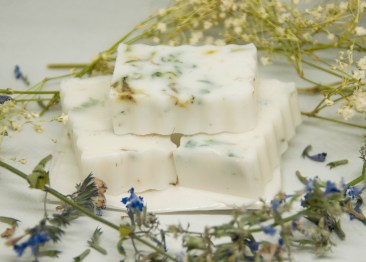
  • Garden Glory Soaps (1hr. with time to cure, lots of prepared materials, kid-friendly with help) – Soap is in high demand right now, and is always a good thing to have on hand. Grab some goat’s milk, coconut oil, shea butter, and your favorite garden flower petals or herbs to make some soap with! Personally, I’m partial to Lemon Verbena or Lemon Balm plants (they make the soap smell so good!) with bits of cornflower or calandula petals in it for a splash of color. By making your own soap, you reduce the plastic packaging that soaps come in and are reducing your Carbon Footprint! Yay!
  • Garden Luminaries (20-45min, lots of prepared materials, kid-friendly with help) – Are you sitting outside on your porch a lot right now? These luminaries, when combined with herb candles that repel mosquitoes, are great additions to porch-life! Collect and press your favorite garden flowers or plants, then sandwich them between wax paper and iron. Cut the wax paper-sandwiches into squares and tape together (I use floral washi tape to add some pizzazz, but clear works too) into 4-sided cubes. Place a candle inside and watch as the candle-light illuminates the pressed flowers! Maybe you can take your “compost” candle outside with you! Click here for more instructions.

Discussion Questions:

Looking to turn these DIY activities into educational tools? Below are some discussion questions to use when working with students. Apply them as needed!

  1. How does this project benefit the ecosystem? Is this helping animals or plants? How will animals use our creation? Will they use it as food, shelter, nesting location? What do animals need to survive and how are we helping them?
  2. How does this project reduce our own Carbon Footprint? What is a Carbon Footprint and why should we try to reduce it when possible?
  3. Does this project use single-use plastics? What are single-use plastics and why should they be avoided? How do plastics make an impact on the environment? How can we reduce our use of single-use plastics while creating these eco-friendly projects? (Click here for a Zero Waste Artistry Blog).
  4. Does this project use recycled/upcycled materials? While recycling is important, should we focus on recycling as the most important of the “R’s”, or are there others that we should utilize, like refusing or reducing? (Reduce, Reuse, Recycle, Refuse, & Rot)
  5. How can we use the skills here in other aspects of our life? Are we using skills of problem solving, collaboration, communication, or others? Are we using math, art, or science skills? How can we measure, record data and learn from this activity?
  6. Can we document changes in this project? For example, can we create a science journal to document our observations in the use of the toad home we created? What is the toad doing inside of it? How often is the home used? What do toads need to survive and how can we use that knowledge to make the toad home better? How does our bird box inhabitants change seasonally? What butterflies are using the host plants from the seed-starters? Recording your observations is a great way to learn more about the subject and find that you may have even more questions about them!
What else can you do outside to benefit the environment on your own or with your family in small groups? Tree plantings, gardening, picking up litter, or creating wildlife habitat are all great things to do to keep you immersed in nature on your own!

Supporting The Art of Ecology through the online shop or by becoming a Patron at any tier on Patreon can help keep educational content coming!